Journalism of Courage
 4 min read



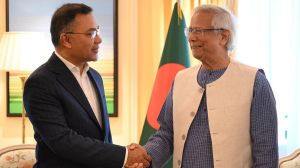
It is now confirmed that Pakistan8217;s former foreign secretary, Niaz Naik, visited Delhi and met Prime Minister Atal Behari Vajpayee, among others. If the Indian government was initially reluctant to reveal the details of the visit, it was only because it did not want to scuttle any effort at ensuring peace on the border. Obviously, the initiative came from the Pakistan government which had made a state aircraft available to Naik.
That the visit did not have the approval of some influential sections in Pakistan is clear from the deliberate leaking of the news about his secret mission. The Pakistan government8217;s explanation that the Naik visit was a private initiative does not carry conviction and is intended for domestic consumption.
Whatever be Pakistan8217;s compulsions, India need not be apologetic about facilitating the visit because its immediate objective is to reestablish status quo ante on the Line of Control LoC. If this can be brought about through diplomacy, there is nothing like it. In fact, it wasthis consideration that prompted India to welcome Pakistan8217;s foreign minister Sartaj Aziz8217;s visit to Delhi earlier this month. It was made clear to Aziz at that time that for any talks to be meaningful, Pakistan should first withdraw its forces from the Indian side of the LoC.
It is a measure of the justness of the Indian stand that today world opinion is decidedly against Pakistan. Western countries like the US have incontrovertible evidence that the Kargil conflict was engineered by the Pakistanis with or without the connivance of the political leadership there. Hence the primary responsibility for making the situation conducive for peaceful talks rests with the Nawaz Sharif government.
It was against this backdrop that India did not find any compelling reason to reciprocate Aziz8217;s much-publicised visit. If, despite this, Pakistan seemingly lays great store by diplomatic missions of the kind Naik undertook, it is to project itself as a peace-lover and thereby influence public opinion.
But there isanother factor at work too. The battle in Kargil has already made it clear that it is only a matter of time before India recaptures all its lost positions and the last infiltrator is driven out. It will not be long before the general public in Pakistan gets to know about the Kargil fiasco and the heavy price the nation has had to pay for it in terms of human and material resources.
Its fallout can be dangerous even for a leader of Nawaz Sharif8217;s stature, more so when the hawks in the army will surely bay for his blood. After all the Kargil adventure was not exactly to grab Kashmir but to enable Pakistan to bargain from a position of strength. Sharif believes that if India can be forced to accept multilateralism as a way of solving the Kashmir dispute or agree to a renegotiation of the LoC, he can withstand pressures from the army and his political detractors. Obviously, he is ignorant of public opinion in India which will not approve of any compromise on the question of Pakistan ending its aggression. Andonce this condition is fulfilled, the two countries can settle all their disputes bilaterally. India should have no difficulty in stating this to whoever Nawaz Sharif or, for that matter, anyone sends to India in a bid to resolve the Kargil issue.