Journalism of Courage
 6 min read



India is facing a severe uranium crunch 8212; one in the short term and another in the long term. The short-term crunch affects the operation of the India-designed and built Pressurised Heavy Water Reactors PHWR. The PHWR capacity is now about 3500 MW and will go up to about 4500 MW by the end of 2008.
India began exploring for uranium about 50 years ago and mining activities have been going on for some 40 years. In the early years of the programme, India8217;s uranium needs were modest; it was required to fuel the research reactor CIRUS and Rajasthan reactors 1 and 2. Uranium production was in excess of our needs and so a stockpile got built up. When new power reactors were built at Kalpakkam, Narora, Kakrapar, Kaiga and elsewhere, the stockpile of uranium was drawn down.
In the period 1985 to 1995, the India-built PHWRs were going through a learning curve process and so operated at low capacity factors. As a result of intensive efforts put in by the engineers and scientists of the Nuclear Power Corporation of India, the Bhabha Atomic Research Centre and other units of the DAE, our PHWR units operated, during 1995-2005, at 85 to 90 per cent capacity factor. In fact, the two units at Kakrapar registered the best capacity factors globally, being around 95 per cent. This situation required availability of uranium annually, at a rate much higher than what was being mined in the country.
During the latter half of 1980s, the DAE had commenced work on new uranium mines beyond the first one at Jadugudda. However, some complacency seems to have set in, during the early 1990s, on the urgency of opening up new uranium mines. The leadership of DAE may have taken an accountant8217;s view of the uranium inventory that was continuing to be held.
In the post-1990 situation, when India faced a severe economic crisis and public investments in many areas were curtailed, work on the new uranium mines was actually stopped. The improvement in operations of our PHWRs and the resulting increase in demand for uranium appear to have been overlooked. It is also possible that the attention of the leaders of the atomic energy programme was directed to developing the nuclear deterrent, thus de-emphasising the immediate relevance of nuclear power.
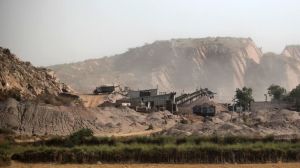
It was only post-1997 that the importance of nuclear power in India8217;s energy mix was recognised once again. The activities on Tarapur 3 and 4, India8217;s large PHWRs of 540 MW and Kudankulam were revived. Serious attention to starting work on new uranium mines seems to have been restarted only after 2000. Earlier attempts may have received setbacks due to local opposition, objection to permitting mining activities in forest lands and other such factors common to opening of any new mine in the country. While execution of new mines are in progress in Jharkhand and Andhra Pradesh and may be taken up soon in Meghalaya and Karnataka, if our PHWRs are to be fuelled with Indian uranium only, their capacity factors are likely to be only at 50 per cent for the next five years. The situation would improve thereafter when the new mines start production.
If India were to succeed in the present efforts to re-enter international civil nuclear commerce, let us say in 2008, we could import natural uranium from overseas and target for capacity factors of about 90 per cent from 2009 onwards.
Let us look at the longer term picture. India has about 100,000 tonnes of uranium in the ground. This will be adequate to support 10,000 MW of PHWR capacity over its lifetime. India wishes to use thorium as an energy source, as it has a large reserve of thorium. But the Fast Breeder Reactor capacity of the second stage that can be supported by 10,000 MW of PHWR will still be too small to permit a large-scale use of thorium even after two or three decades. We must have some 30,000 to 50,000 MW of the first stage programme using natural and enriched uranium to allow us to exploit the thorium resources in a significant manner.
If India manages to overcome the opposition to the Indo-US nuclear deal and moves ahead, it can import natural uranium from Africa, central Asia, Canada, Brazil and maybe Australia too if they change their policies. This would enable us to put up 10,000 MW of additional PHWRs making a total of 20,000 MW. More importantly, India can import some 20,000 to 30,000 MW of Light Water Reactors LWRs from Russia, France, US with Japan collaborating with the US. The plutonium produced in the Indian-built PHWRs and the imported LWRs can both be used as fuel in Fast Breeder Reactors FBRs.
Thorium can then be irradiated in the FBRs to produce Uranium-233 in large enough quantities to be used as fuel in U-233-Thorium reactors. BARC has designed a 300 MW reactor using this fuel cycle and heavy water as moderator. Work can commence soon and India will have pioneered this new concept.
India expects to produce between 275,000 to 300,000 MW of nuclear power by 2052. Of this, some 200,000 MW could come from FBRs and U-233-Thorium systems. The balance would have to come from uranium systems 8212; natural or low-enriched. For this ambitious programme to be realised, India must 8216;cross the rubicon8217; of the Indo-US nuclear agreement. Ultra-patriotic sabre-rattling of an unrestricted nuclear arsenal or freedom to test, without invoking international response, are theoretical objections. Pragmatism demands that India take decisions based on the realities on the ground and not based on mental blocks. History has shown repeatedly that ideology seldom wins. In the end, it is hard-headed common sense that yields the best results.