Journalism of Courage
 4 min read



With the increasing globalisation, interdependence on international affairs and as a basic confidence-building measure, there is a considerable increase in conducting joint exercises with foreign countries in the territorial limits of the country. For this purpose, according to the internationally recognised conventions and customs, participating states are required to sign an memorandum of understanding MoU and the Armed Forces is bound by the terms and conditions agreed upon.
It is an open secret that during such an exercise, intelligence agents are secretly activated to gather information about Indian capabilities and installations, besides cultivating 8216;sources8217; on permanent basis. Such 8216;sources8217;, whether within or outside the Armed Forces, are duly rewarded and taken care of.
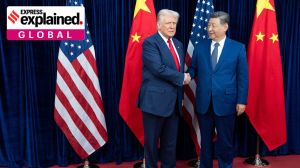
According to media reports, the Indian Armed Forces will shortly conduct a joint exercise with the Chinese Army on the Indian soil. Has any such MoU been signed between Indian and China? If yes, whether legal advice was obtained from the Judge Advocate Generals of the Army, Air Force and Navy? Will the soldiers of Chinese Armed Forces be subject to the laws of India while operating within the territorial limits of India or their conduct will be regulated by and they will be governed by their respective laws if they happen to commit offences against the people and the country? The answer to theses questions directly affects the sovereignty of the country.
This issue is being raised in the view of some past experience. During 2005, a similar joint exercise 8216;Emerald Mercury8217; was conducted in India with the British Armed Forces and an MoU was signed between the two countries. In order to resolve and settle the legal issue of subjectivity of the British troops to Indian laws, Lt Cdr RN DGS Foster of British High Commission in India in their letter No. DEF206/110/1 dated December 17, 2004, had specifically mentioned that 8220;Major General Kumar I believe the Chief Indian Army Judge Advocate met a Group Captain Boothby from our joint doctrine and concepts during a recent India/UK PSO working group. During their discussions, Group Captain Boothby was given a copy of a statutory provision and some associated commentary as an indication of the position under the Indian law. In essence, it is thought that Major General Kumar suggested that a 8216;foreign army8217; cannot be subjected to Indian jurisdiction and that it would imply that the UK would enjoy exclusive jurisdiction8221;.
However, the Judge Advocate General Air Force gave a correct legal advice 8220;The Section 2 of the Indian Penal Code determines the liability and punishment of persons who have committed offences within India. The section asserts categorically that every person will be liable for punishment under the code for every act or omission contrary to the provisions of the code and of which he shall be guilty within India.8221; The object of this section is to declare the liability of every person, irrespective of rank, nationality, caste or creed, to be punished under its provisions. In this respect it makes no distinction between an Indian citizen and a foreigner.
The legal opinion expressed by JAG Army at Army Headquarter should be reviewed as it is contrary to the internationally recognised legal position. I hope sovereignty and security have not been compromised for the joint exercise with the Chinese troops.