3 min read
📣 For more lifestyle news, click here to join our WhatsApp Channel and also follow us on Instagram
© IE Online Media Services Pvt Ltd



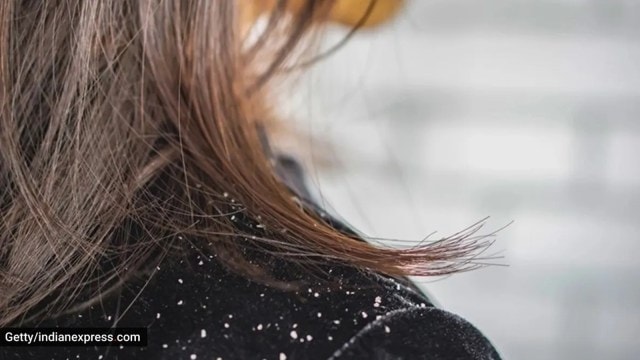 Say no to dandruff with these tips (Source: Getty Images/Thinkstock)
If you’re experiencing more dandruff during winter season, you’re not alone. As the colder months approach, the challenge of dealing with dandruff becomes more pronounced, affecting both hair strands and the scalp. The colder weather, coupled with various factors, contributes to the escalation of dandruff-related issues.
Dr Raina N. Nahar, senior consultant – dermatology, Hair Transplant Clinic, Nanavati Max Super Speciality Hospital, Mumbai said that the shifts in the scalp‘s environment prompted by colder weather conditions can cause dandruff. “The natural fungus present on the skin, known as Malassezia, undergoes increased proliferation in lower temperatures. This heightened fungal activity triggers an inflammatory response in the scalp, resulting in irritation, itchiness, and an exacerbation of dandruff.”
The drop in temperature prompts individuals to crank up indoor heating, resulting in reduced humidity levels. “This dry environment strips the scalp of its natural moisture, leading to dryness and flakiness. Simultaneously, exposure to the harsh winter winds outside can further sap the skin’s hydration,” said Dr Rinky Kapoor, consultant dermatologist, cosmetic dermatologist and dermato-surgeon, The Esthetic Clinics.
Moreover, people tend to take warmer showers during the winter to counter the cold, inadvertently aggravating the issue. “Hot water can strip the scalp of its essential oils, leaving it parched and prone to dandruff,” explained Dr Kapoor.
Managing dandruff aggravated by winter conditions requires a comprehensive approach. Utilising an anti-dandruff shampoo infused with newer antifungal properties can effectively target and address the specific fungus responsible for dandruff. “A recommended practice involves washing the hair every other day with this specialised shampoo, alternating with a regular shampoo to maintain scalp health,” said Dr Nahar.
Moreover, there are specific lotions formulated to combat dandruff that can be applied to the scalp on alternate days, left overnight, and then washed off the following day.
According to Dr Nahar, contrary to common belief, applying oil to the hair isn’t an optimal solution for dandruff during winter. Oil might exacerbate flakiness and clumping of the scalp, worsening the condition.
 Count on these tips (Source: Getty Images/Thinkstock)
Dr Kapoor recommends incorporating a humidifier into your indoor space can also counteract the drying effects of artificial heating. “Staying hydrated by consuming an adequate amount of water helps to nourish the scalp from within,” she added.
Consistently adhering to a proper hair care routine, incorporating specialised shampoos and targeted lotions, can effectively manage and reduce dandruff during colder months. “However, if the symptoms persist or intensify, seeking guidance from a dermatologist or healthcare professional is advisable for personalised treatment and further evaluation,” said Dr Nahar.