Journalism of Courage



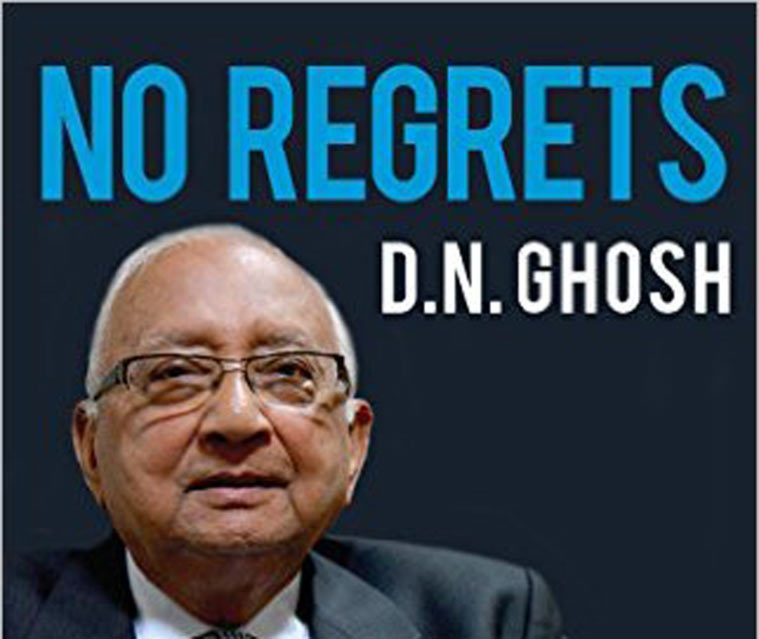
Book: No Regrets
Author: D.N.Ghosh
Publisher: Rupa
Pages: 392 pages
Price: Rs 695
The nationalisation of 14 banks on July 19, 1969, a decision taken by Prime Minister Indira Gandhi, and the events surrounding it are a seminal part of India’s economic and political history. Much has been written about them over the last four decades, including the political challenge to Gandhi with the nomination of N. Sanjiva Reddy as presidential candidate of the Congress and her confrontation with the Kamaraj-led “syndicate”. It is also fairly well known that it was her advisor and principal secretary P.N. Haksar who mooted the idea, saying that such a step would help her gain support and get the better of her political rivals.
Much of the narrative has focused onpolitical battles in the Congress and the efforts by Gandhi to wrest control of the party, the ouster of finance minister and deputyPM Morarji Desai, who was opposed to the idea of taking over banks controlled by industrial groups.
Just about half a dozen people were pivy to that momentous decision, given the need to keep it well under wraps.
One of them was D.N. Ghosh, then a deputy secretary in the finance ministry, who later on went to become the chairman of India’s largest bank — the State Bank of India — in the mid ’80s. And over 45 years later, Ghosh narrates the sequence of events in his memoir. It starts with a midnight call from Haksar to Ghosh, an officer low down in the pecking order of the Indian civil service, asking him to work on an ordinance for the nationalisation of banks in just a day, to the drafting of it in great secrecy and the actual execution of the decision. That’s presumably because Gandhi didn’t want secretary, economic affairs, I.G. Patel and then RBI governor L.K. Jha, who was opposed to the move, to catch on.
The wheels turned swiftly after that. And virtually overnight, four or five officials sat at the RBI guest house on top of the central bank’s office in Parliament Street to draft the ordinance before acting president V.V. Giri filed his papers as an independent candidate for presidentship on July 20, 1969.
Ghosh has a rich account of this, the courtroom battle which followed the enactment of the law, the fallout of the decision and worries about political interference in the running of banks which turned out be true later. It is a decision which led to considerable debate then and later. Whatever its merits and demerits, it did lead to the vast spread of banking in India with its impact on growth.
The new department of banking in the ministry of finance had to handle multiple challenges after the acquisition of the banks. The relationship between the RBI and the finance ministry was as sensitive as it appears to be now.
Ghosh’s personalised account provides a better understanding of economic policy of the time. Like a few other SBI chiefs such as Talwar and Kakodkar, Ghosh too has written about life at SBI in the early days of the opening up of the economy in the 1980s under Rajiv Gandhi. That was the period when the bank opened a new investment bank arm, SBI Caps, and promoted a mutual fund, the first one after UTI. Unlike the bank’s public offering in 1993-94, which met with a huge response and had the bank’s staffers working for it enthusiastically, Ghosh had to lean on Hindustan Lever chief Ashok Ganguly and Dhirubhai Ambani of Reliance to ensure that the issue did well. To get even a credit rating done for the bank in those days needed political approval. Later, Ghosh went on to play a leadership role in building ICRA, the rating agency.
Over the last few years, there has been a number of books on economic history and the financial sector. When practioners and policymakers who have “seen and done it” add to that oeuvre, it enhances our understanding. In a modest way, Ghosh’s book does that.

 4 min read