A bench of Justices A Muhamed Mustaque and Harisankar V Menon was hearing an appeal filed by ‘Vengad Resorts & Retreats Limited’ which runs an amusement park in Valanchery of Malappuram district.

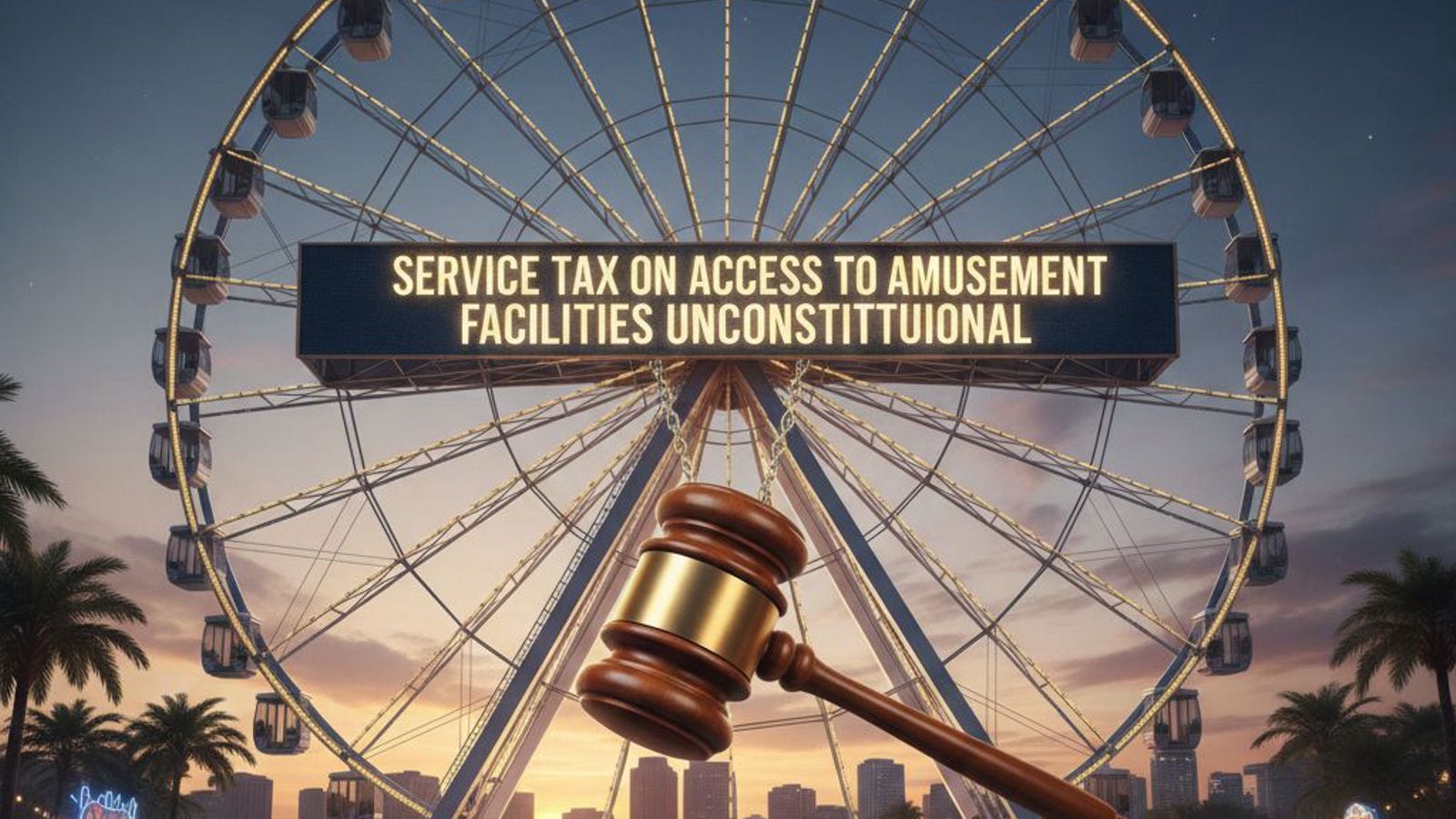
“Consequently, this appeal would stand allowed by setting aside the judgment of the learned Single Judge and declaring the attempt to impose service tax on “access to amusement facilities” as unconstitutional,” the bench said, adding that it can be levied only by state governments.
Case
In 2015, the Central government removed “admission to entertainment events or access to amusement facilities” from the negative list under the Finance Act, 1994.
The move gave the Centre power to levy service tax on amusement parks. The company moved high court challenging this decision.
However, a single judge bench on March 22, 2016 dismissed the petition.
Arguments
The appellant company, the owner of the amusement facility challenged the Centre’s move, arguing that entertainment and amusement taxes fall under the state’s powers, not the Centre’s.
Story continues below this ad
The company informed the court that the move amounted to an unconstitutional encroachment on the state’s taxing power under Entry 62 of List II (State List) of the Constitution, which covers taxes on luxuries, entertainments and amusements.
Kerala already collects entertainment tax under the Kerala Local Authorities Entertainments Tax Act, 1961, it said.
The company also said that charging service tax again was illegal and amounted to double taxation.
Observations
Setting aside the earlier single-judge order, the court declared the service tax on access to amusement facilities as unconstitutional.
Story continues below this ad
The bench said that the Kerala Local Authorities Entertainments Tax Act, 1961 already provides for an all-encompassing levy on both admission and entertainment, leaving “nothing further” to be taxed by the Union under its residuary powers.
The Constitution clearly gives states the power to tax entertainment and amusement facilities, it said.
Since the state law already covers admission fees and entertainment activities, the Centre cannot use its “residuary” powers to impose service tax on the same activity, the bench said.
Stating that both taxes were being imposed on the same thing- entertainment, the court said the service tax by the Central was “unconstitutional”.
Story continues below this ad
The court also noted the absence of any statutory mechanism to segregate a “service element” from the entertainment tax already imposed by the state, holding that dual taxation on the same transaction was impermissible.
The court rejected the Centre’s reliance on the “aspect theory,” clarifying that unlike cases involving broadcasting or professional services, the very same aspect of ‘entertainment and amusement’ was sought to be taxed by both the state and the Centre in this case.


 4 min read