11 min read
© The Indian Express Pvt Ltd



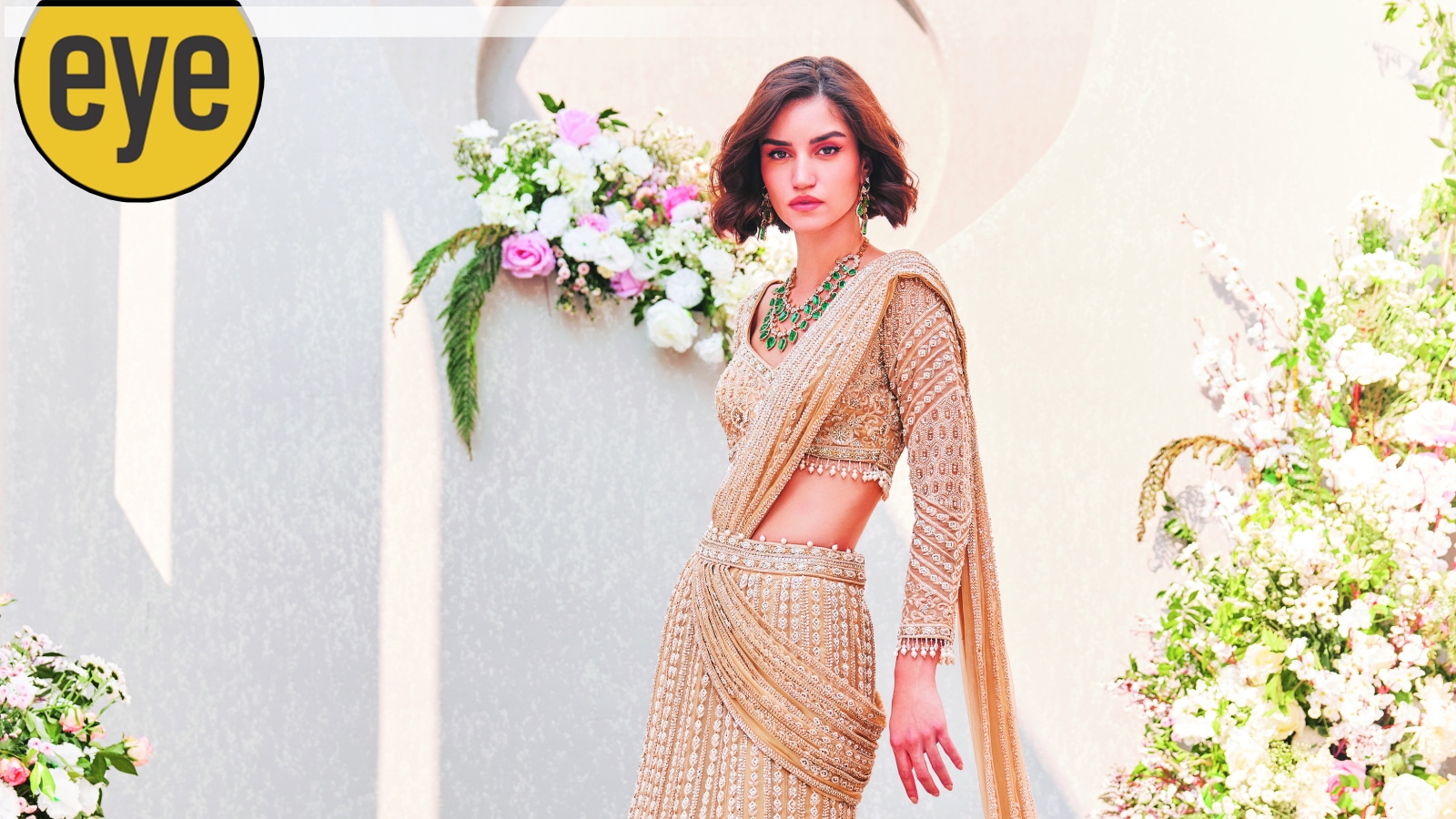 Designer Saisha's fish cut lehenga sari allows traditional draping without any stiffnes (image: file)
On a rained out evening in an old London pub, where the snug warmth of wood wrapped around conversations over ale, in walked a woman in a sari, wearing Dr Martens boots, a jacket, coat and a beret. Everybody looked up as she drank a pint. Somebody took a photo and hashtagged it #travelstyle. It went viral and the kashta sari became a boho chic statement among Londoners a month ago. “Who would have thought that this dhoti-like drape, worn originally by rural women in Maharashtra, would have a fashion moment,” says Ashwini Narayan, sari revivalist and stylist who is “on a mission to make the sari hip.”
Her kashta style is now a favourite with concert-goers. The sari is possibly the only garment that has been deified for its classic elegance, being the ultimate definer of the wearer, plebeian or patrician. However, post-Covid, a new generation of Zoomers or Gen Z, has reclaimed it on its terms, deconstructed it and refashioned it to break the stranglehold of branded labels, the ubiquity of kurta-jeans or the sameness of the salwar-kurta. Be it as pre-pleated saris, tribal drapes with belts, sash style gowns or high-hemmed, harem pant twists, young women, and even some men, are now rediscovering the sari as aptly comfortable for daily commute, coffee dates, boardroom presentations and evening cocktails. Youngsters have made it malleable, dismantling its ceremoniousness with everydayness, its grammar with fluidity.
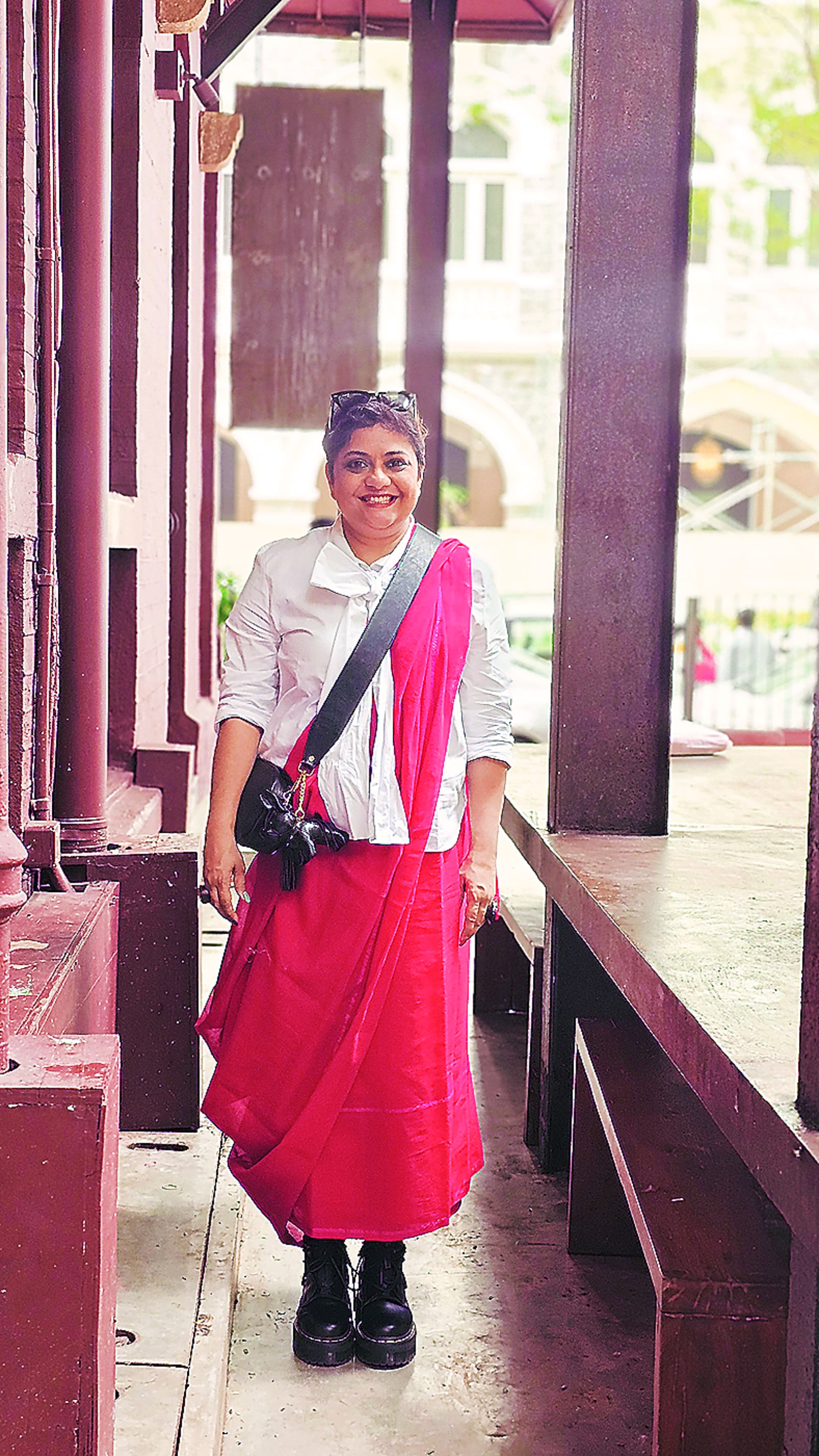 Ashwini Narayan styles up the sari
“Most importantly, it is the easiest fashion tool for self-expression. Whenever I walk into the boardroom, the sari is my body language. It fronts the ideas that I bring to the table,” says Sasha Verma, 29, an MNC executive in Gurugram, who always pairs her sari with a big bow shirt, sometimes draping it like a wrap skirt or pleating it like a ruffled gown. “For us, the future is about panic and uncertainty. We are seeking emotional anchorage in a world that was nicer. Heritage has memories, there is safety there. The sari is about finding a way back to the past and drawing energy from it,” says Sameera Andhe, 27, who runs a pharma export startup in Hyderabad.
A search for identity
For Narayan, 49, who began as a voiceover artiste, the sari became a protest tool. Post-liberalisation, in the early 2000s, the obsession with global brands and the swamp of Chinese silks led her to explore our own silk, and by extension, our textile heritage. “Everybody frets about the falls and the pleats. I simply did away with them and chose the wrap style that Santhals use a lot of, to make sari-wearing a five-minute drill, comfortable and easy,” says Ahmedabad-based Narayan, who, from posting reels, now has masterclasses on sari draping, encompassing everything from how-to-know-your fabric to how-to-wear tips.
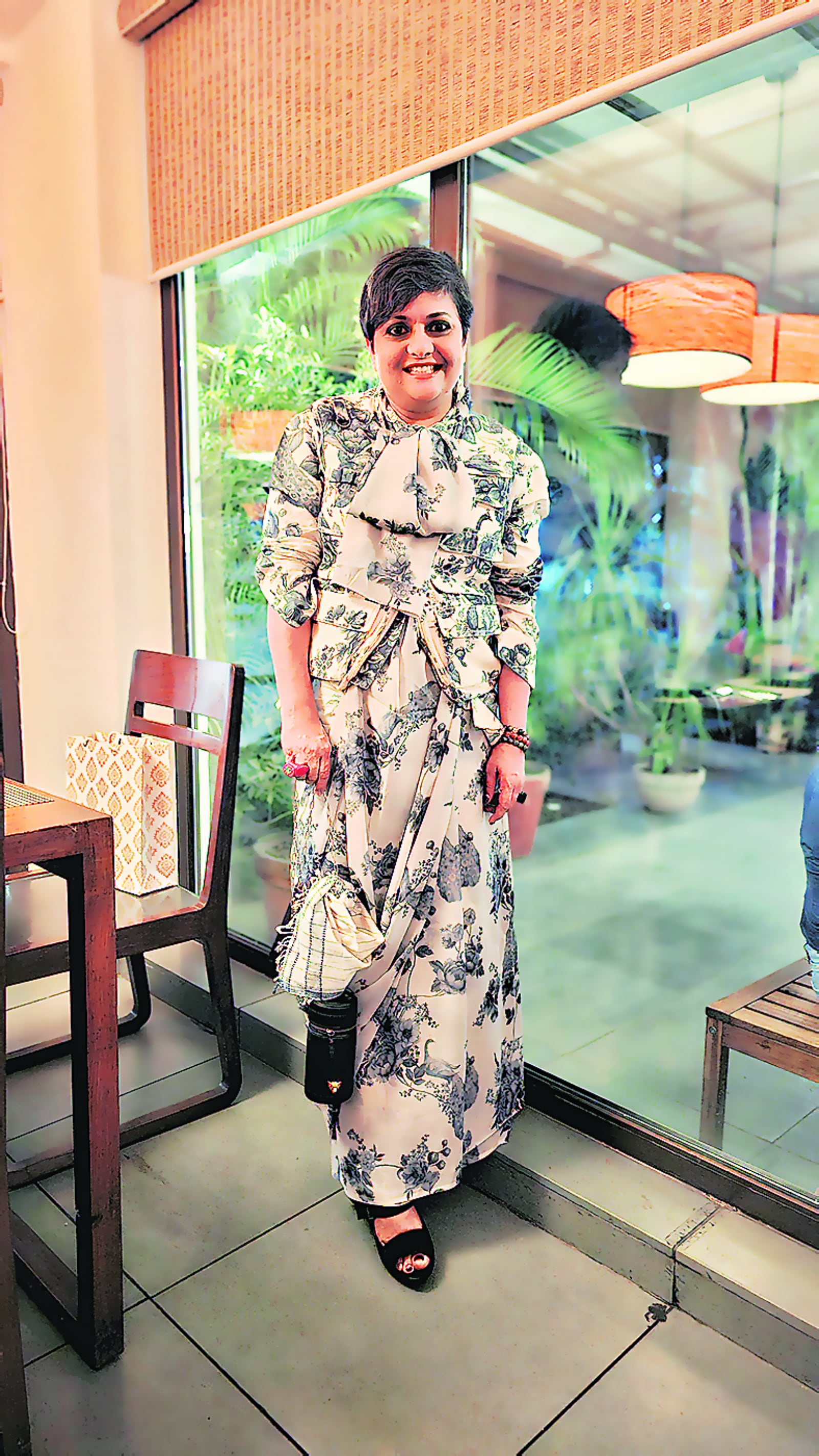 Ashwini Narayan styles up the sari
In November 2020, she was invited by the Peabody Essex Museum near Boston to create a series of “how to” videos of sari looks inspired by the masters on display at that museum. “That drew me into how cultural expression could be deeply entwined with identity. I used a kantha sari to interpret The Worshippers by Arpita Singh, teamed up a khadi sari with a red beret inspired by MF Husain’s Dacoit, restyled the Parsi Gara, drawing on The Parsi Family by Bhupen Khakhar and referenced an untitled work by K Ramanujan with a Koorainadu sari,” says Narayan who drew a lot from the books of sari historian Rta Kapur Chishti.
“I think the sari books created the first wave of interest. Workshops fuelled it further. Not only the ones in Delhi and metros but also those in smaller towns and cities such as Amravati, Panaji, Pune, Ahmedabad as well as those abroad in Belgium, France, Japan and the US. But I think the two-minute videos on 84 wearing styles, which are available on YouTube, appealed to young people,” says Chishti, who is followed most by youngsters today to experiment with their wearing styles.
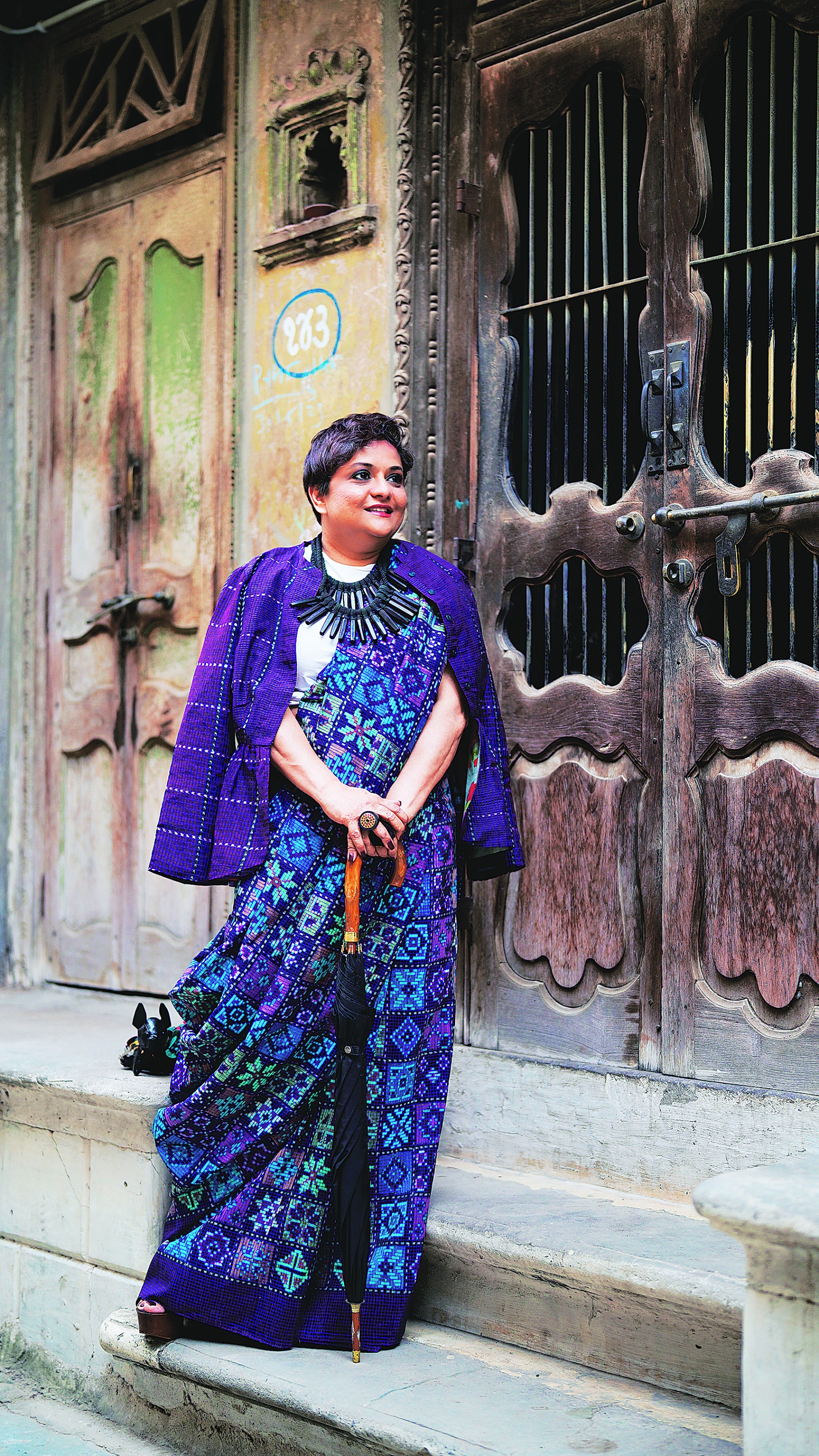 Ashwini Narayan styles up the sari
“A new-found confidence and adventure was visible especially in the first two decades of the 21st century, which was prepared to step out of the imitative jeans, dresses and gowns that had taken over from the widespread use of the salwar kameez from northern Jammu and Kashmir to Kerala in the deep south. The adaptability of the sari, which could be refashioned according to occasion and personality, was also an assertion of self with a wider range of material combinations, regional design vocabularies, colour and drape,” says Chishti.
However, she feels that sari as everyday wear has yet to happen and break down norms. Except among power professionals or lawyers, who often keep a discreet sari closet to assert a serious cultural presence. For crafts influencers like Ankita Katuri, 38, the sari has become the most visible expression of decolonising ourselves and appropriating cropped tops, tees, tunics, halter necks, denim shirts and the décolletage into our lexicon. “Indians are not immune to racist hitbacks at various places around the world. The cultural misappropriation by fashion labels — like the Ibiza dress, which is a take on our kurtis — are angering us,” she adds.
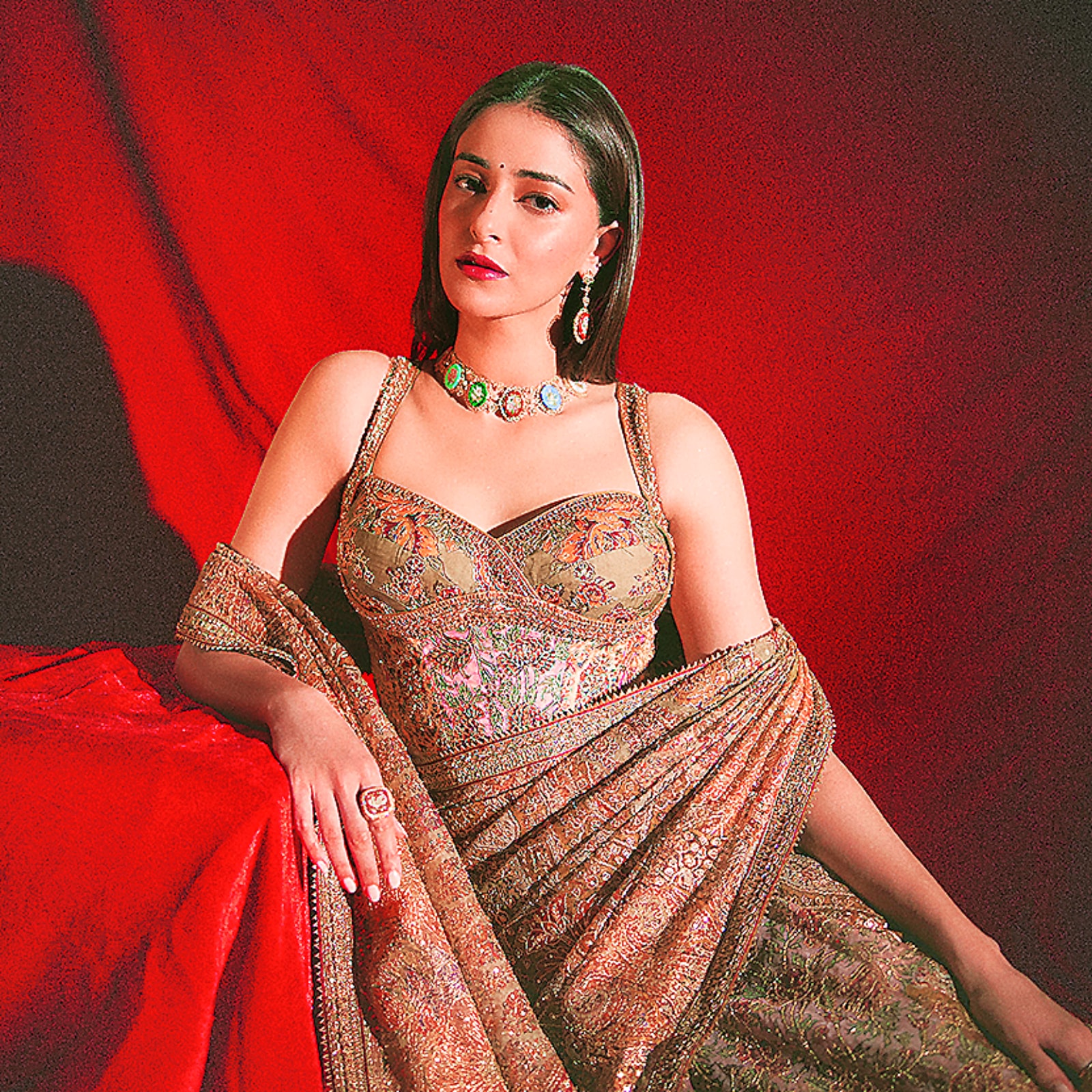 The Pitch Patch sari by Ritu Kumar
The online boom
It is to register a strong cultural presence that journalist Anju Kadam and entrepreneur Ally Matthan began the #100SariPact in 2015 on social media, which had women wear saris for 100 days, and share stories behind each one of them. It became viral and evolved into a full-fledged movement, birthing more such initiatives. Stylists like Narayan and crafts influencers like Katuri have just taken it forward. “What worked for the sari obsession online were two things. First was the sari aligned with the idea of body positivity, that it could look good on any body type.
Second, it could lend itself to any kind of accessorisation. Third, it is much better to stand out than blend in and a sari lets you do that with least effort and cost. Yes, you can even style up a plain cotton sari,” says Katuri, who has even accessorised a heavy brocade sari with silver rather than being fixated on gold. “The sari is so earthy that nothing looks out of place in it,” she says.
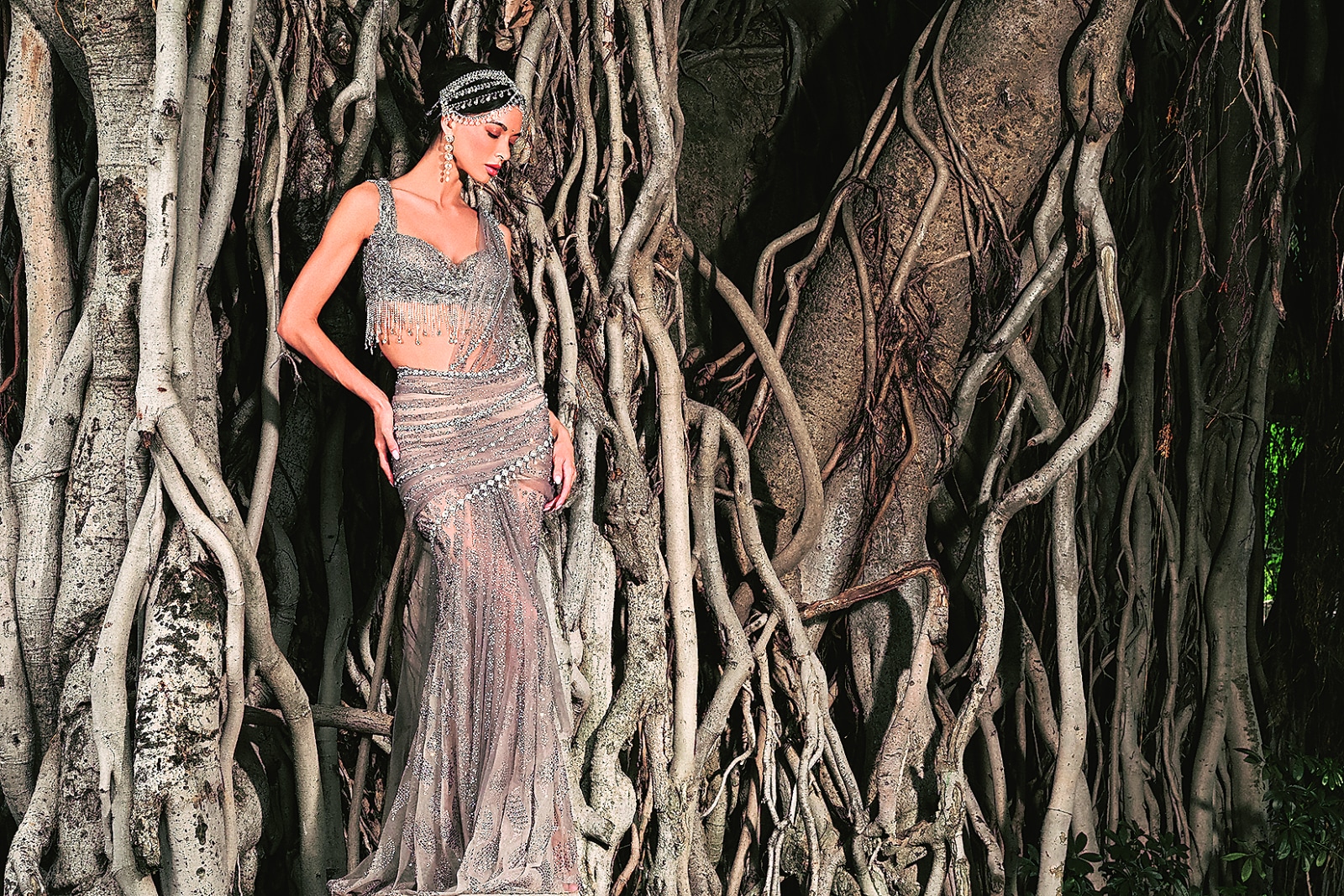 Concept Sari by Ratun Tahiliani (image: file)
Gen Z is driving up the demand for artisanal and weaver collectives who retail online. This resurgence is compelling even mainline designers like Tarun Tahiliani, Ritu Kumar, Masaba Gupta and Amit Agarwal to customise lines for a younger audience.
Stylists like Narayan now fly down to your city and teach you how to drape your sari for a fee, ranging between Rs 20,000 and Rs 1 lakh for young brides. For the casual look, she pairs them with clothing that youngsters would wear with jeans — a leather jacket, lace, kimonos or Manga comic tops. “In my head, the sari is substituting the blue jeans that we all love,” she says.
Sense and sustainability
The sari is more than a thread of legacy, it easily lends itself to the “reduce, reuse, recycle” mantra. Andhe’s sustainability choices came from the handloom sari collection her mother guarded at their home in Mahbubnagar. “My mother is a IVF specialist and has travelled to global conferences wearing a sari. About 10 years ago, she bought a crop top from Zara and wore it over sneakers. Those fun variations were my muse,” says Andhe, who is now a gatekeeper for her mother’s soft muls, handblock prints, jamdanis and French lace saris.
In fact, Andhe just invested in two saris for her wedding and has exactly six blouses in primary colours. One sari was in pure silver zari, another in gold. Her grandmother once got her silver zari melted after her sari got damaged. It was repurposed into a small plate which she now keeps on her nightstand as memory. Sari conversion, be it a dress or a corset blouse, has turned the nine yards into an investable option. “It is the new boutique statement. I travel to weavers’ villages to pick them up, doing my bit to ensure that tradition seems profitable to them,” says Verma.
One of the most inclusive sari moments has got to be its adoption by men. Sari man Himanshu Verma challenged gender norms in the early 2000s, saying, “as an open-ended garment, the sari was meant to flow with the wearer’s personality.” His sari project, the latest one being on wearing a Narayanpet, is not just about owning heritage, it is about redefining masculinity through fluid, artistic drapes. As a student at the Azim Premji University in Bengaluru, Andhe had many boys wearing sari on campus. “They were all heterogenous and found the sari more amenable to different drapes and colours than the staid dhoti. They even styled the pallu as an uttariya. Many of them told me that they found mul saris to be most comfortable in summer than the starchy dhotis. In fact, there was a space that encouraged cross-dressing so that we could break down gender barriers in clothing,” she says.
The renewed interest in sari, believes Chishti, has now opened up possibilities to preserve regional weaves. “Who would have thought the Khann/choli fabric producing village/township of Gulledgud in Karnataka would be weaving saris one day? Yet, the combination of enterprise and ingenuity has brought this about in the last five years. I think more regional centres await this kind of interest from the enterprising youth. Some of these that come to mind are Malikarmuru in Karnataka, Dharmavaram in Andhra, Maunath Bhanjan in Uttar Pradesh,” says Chishti. All waiting to be spooled.
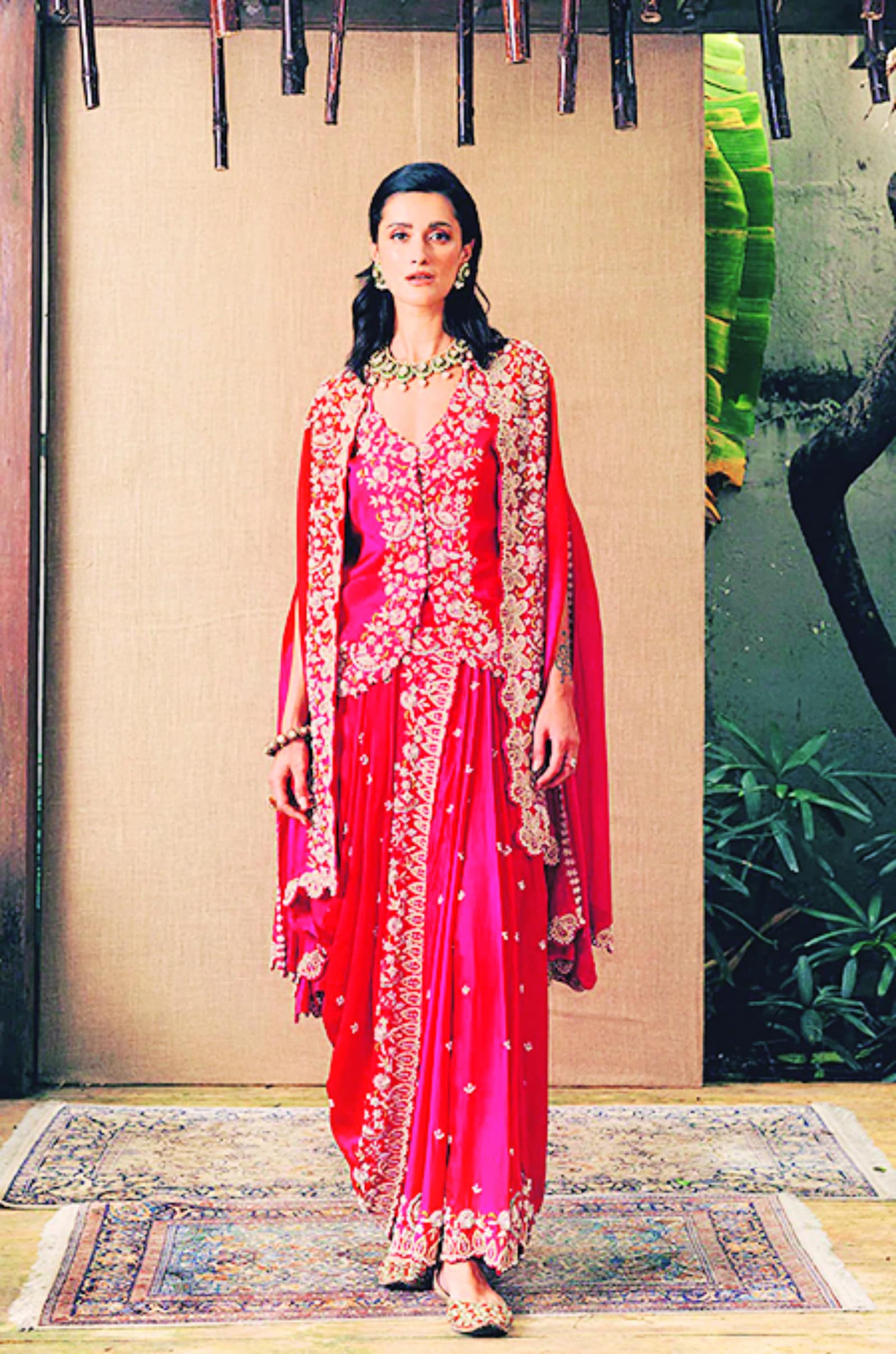 Minimally wrapped sari by Archie Chopra, Gaia by Archie
The Pitch Patch sari and blouse follows a philosophy of reworking archival craftsmanship into a fresher, more sculpted shape. The organza base is chosen for its weightlessness and translucence. The surface is embellished with fine Ari and Zardozi gold work, adding dimension without overwhelming the fabric. Paired with a silk dupion corset blouse, the ensemble brings together refined hand work, archive-based detailing and a sculpted form. This look aligns with Gen Z’s bold thought-through design.
This is a classic Tarun Tahiliani bejewelled sari, a sheer concept drape, with Swarovski crystals. The concept saris blend traditional draping with innovative silhouettes and contemporary cuts using fabrics such as chiffon and georgette.
This sari from Khushboo Bagri is wrapped minimally around the waist, then layered over a floaty cape replacing the conventional pallu. The pleats are cinched framing the body while the sheer cape glides behind. The embellished jacket replaces the blouse giving the sari an Indo-Western look. Top pick of Gen Z.