7 min read
© IE Online Media Services Pvt Ltd



 Wilderness in Goa (Getty images)
When most people think of Goa, they imagine beaches, churches and casinos, or maybe a spicy fish thali. Recently, the tragic nightclub fire that claimed 25 lives (mostly migrant workers employed at the club) has been in the headlines. This underscores a rampant, unregulated party culture and illegally constructed venues that lure throngs of tourists. However, for some of us the prime attraction of our winter home in Goa lies in the natural beauty and wildlife that surround us.
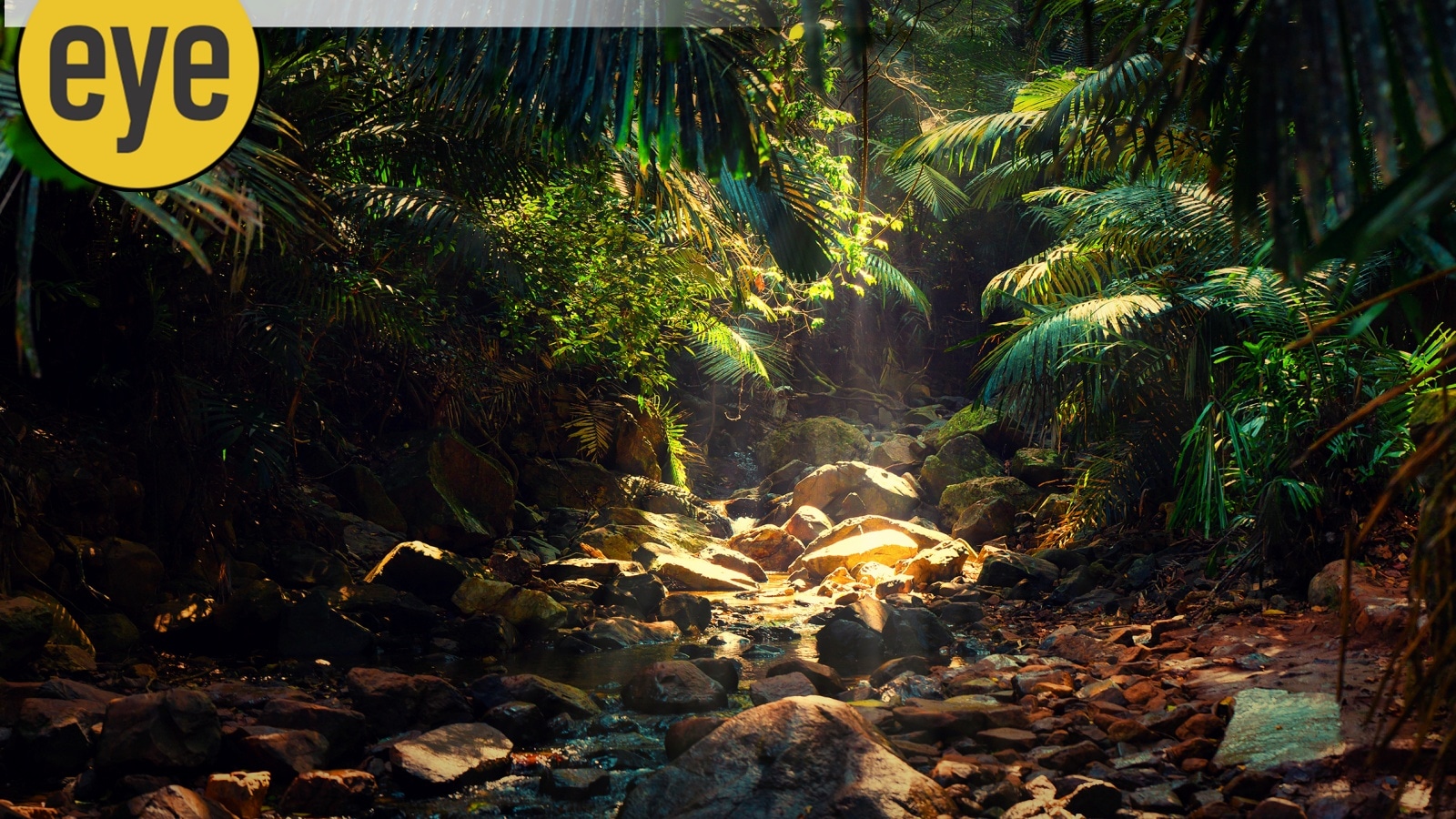
Until this year, the balcony of our flat overlooked a dense jungle of variegated foliage. Sitting outside at daybreak, I would be serenaded by a dawn chorus of dozens of different birdcalls. The exuberant fanfare of a koel was accompanied by the persistent kutroo kutruk of a brown-headed barbet, while racquet-tailed drongos chimed in and oriental magpie robins or red-whiskered bulbuls each added their own songs. As the sun rose, the birds became visible and the high point of our mornings has always been the daily fly past of a flock of great hornbills.
This summer, the mechanical roar of chainsaws replaced those wild harmonies and the trees to the east of us began to topple one by one. We had known that a new housing complex was planned adjacent to ours, but we had held out hope that somehow it wouldn’t happen. Perhaps the builders might not be able to raise funds or a last-minute legal dispute would leave the forest standing for another few years. But no such luck! Though the trees within our complex partially shield us from the devastation on the other side of the wall, JCB earthmovers have ploughed up the remaining stumps and roots, leaving a broad gash of red earth.
 Buffaloes in a wetland (Photo by Stephen Alter)
All around us similar developments are being constructed to provide apartments and villas for people escaping from Delhi and other cities. Of course, my wife and I can’t really complain because we are migrants too. For the past 12 years, the two of us have fled the cold winters in Mussoorie for the warmth and greenery of Goa. Initially, we came for only a month but gradually we have extended our time here to more than half the year. Instead of huddling around a smoky bukhari in the mountains or bundling up in down jackets and wool caps, we can sit outdoors in shirtsleeves and shorts even on the coldest day in December.
Neither of us are beach goers and we give the annual Sunburn Festival a miss, though we do enjoy some of the restaurants and the easy-going susegado lifestyle in Goa. There’s plenty to do here if you have the inclination, whether it’s kite surfing or visiting old Portuguese forts but we are the happiest staying at home and enjoying our natural surroundings. For anyone who has an interest in species other than our own, Goa is full of opportunities to explore the biodiversity of the Western Ghats and the Konkan Coast.
 Buffaloes in a wetland (Photo by Stephen Alter)
A fragile chain of protected forests lie along the Western Ghats in Goa, including Bhagwan Mahavir Wildlife Sanctuary and Mollem National Park. These precious biomes are full of fascinating lifeforms from gaur, black panthers and giant squirrels to skittering frogs and spider-hunting wasps. Bioluminescent fungi and zombie mushrooms proliferate in the monsoon, while hump-nosed pit vipers and bronze-backed tree snakes lurk in the leaf litter. Birding or herping (searching for reptiles and amphibians) with naturalists like Omkar Dharwadkar of Mrugaya Xpeditions is a rewarding experience that reveals another side of Goa, far removed from the crowded tourist traps.
Goa’s riverine ecology, where a network of waterways flow out of the hills and into the Arabian Sea, offers a vibrant, constantly changing landscape. Kayaking through mangrove jungles along the Chapora River near our home provides an intimate glimpse of an intertidal world where half-submerged trees draw oxygen and filter saltwater through snorkel-like roots called pneumatophores. Paddling amidst the fluid green shadows, we traverse the verdant margins of the river, which are full of unusual creatures like mudskippers and fiddler crabs. On a birdwatching expedition aboard a motorised canoe in the backwaters of the Zuari river, I have seen five different species of kingfishers, as well as enormous mugger crocodiles as big as our boat.
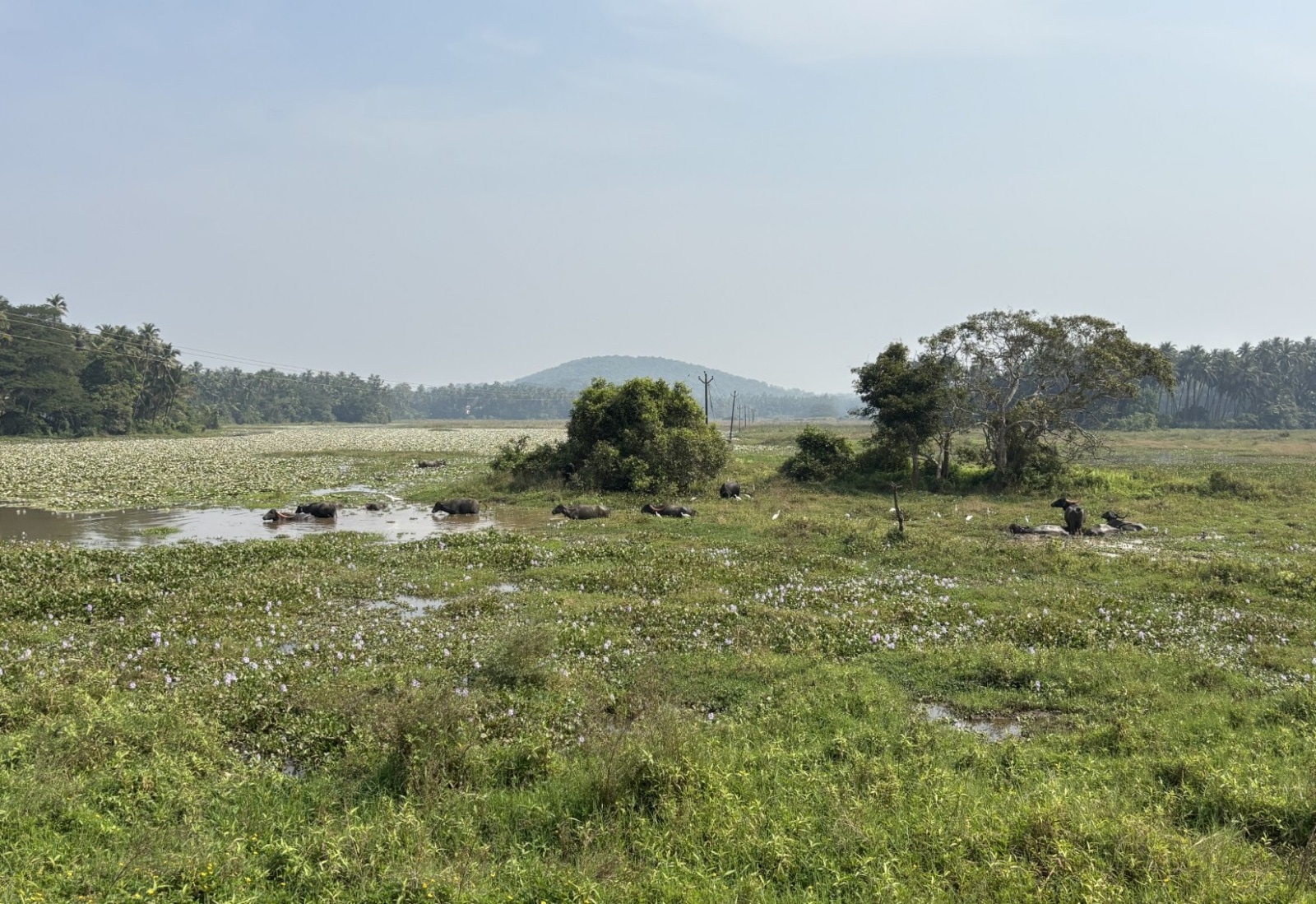
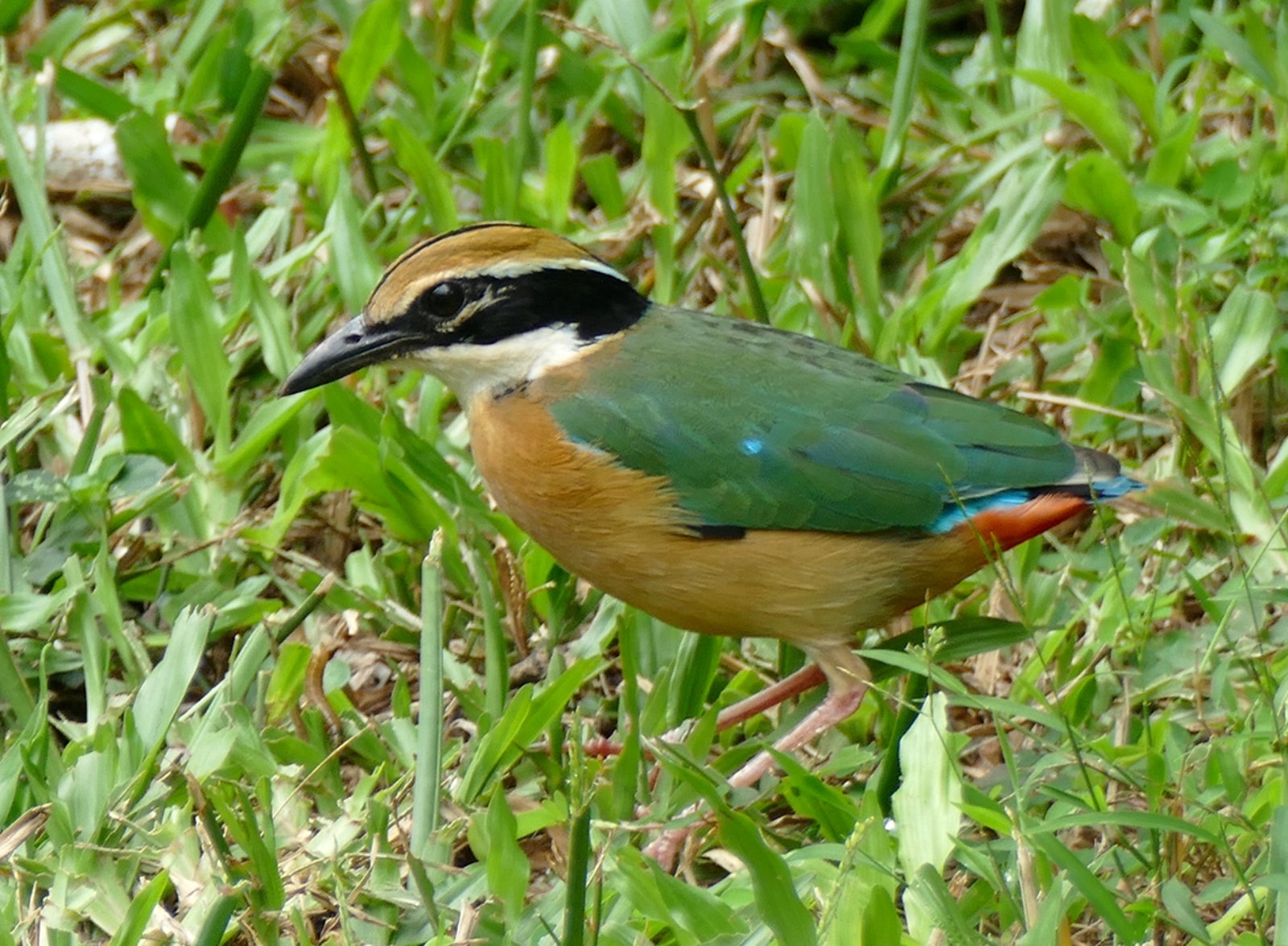
Migration is an essential part of nature’s rhythms, keeping all of us on the move. Not every creature travels as far as the pitta, which flies more than 2,000 kms south in winter, just as we do. Some birds, like the great hornbills that wing their way past our balcony, spend the night roosting in a line of low hills less than a kilometre north of us. Every morning and evening they complete a daily commute, returning to feed in the ficus trees southeast of our home. Another daily journey that we observe is a herd of more than 20 buffaloes that walk in procession every morning from their stables nearby to a wetland, about 3 km away, where they spend the day wallowing amidst white water lilies and feeding on aquatic plants. Oblivious of the buses and scooters that ply on the road, these enormous black lotus-eaters with swept-back horns move at their own pace and need no one to guide them along their prescribed route.
Tourism is a form of human migration and Goa’s warm climate attracts flocks of visitors from different parts of India as well as Europe and Russia. With toxic air pollution in Delhi and other cities in the north, more and more people are looking to make Goa their second home. Sadly, housing developments that cater to their demands are encroaching on wild spaces that harbour endangered birds and other animals.
This winter we have been listening anxiously for the pitta’s call but with the destruction of the neighbouring forest, our fellow migrant may have moved on.