6 min read
© The Indian Express Pvt Ltd



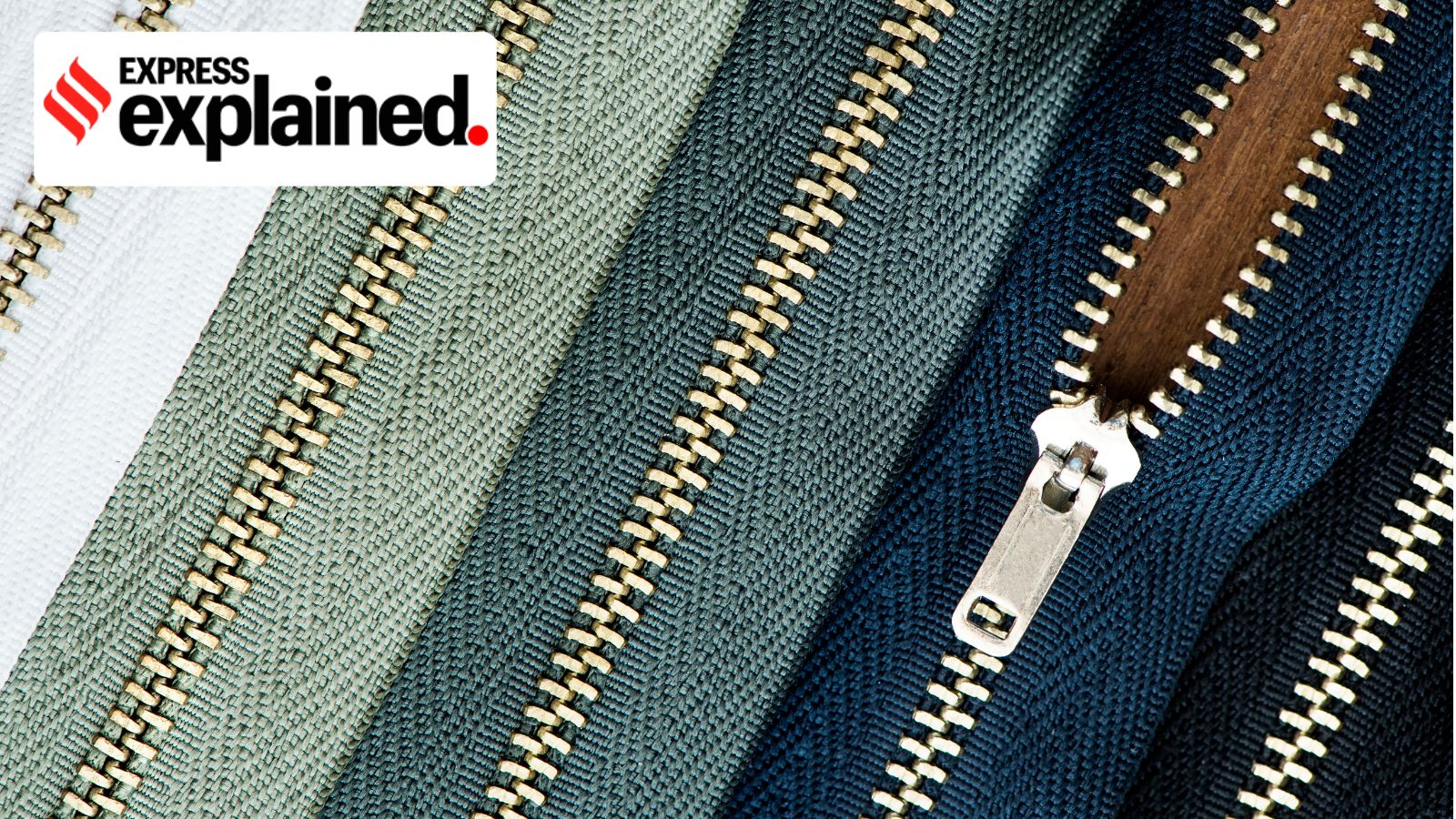 The basic Y-shaped design may now become a thing of the past as YKK launches its newest variant, the AiryString tapeless zipper. (Freepik)
The zipper has virtually been unchanged ever since it debuted over a century ago: two interlocking rows of metal or plastic teeth, a sliding fastener, and the fabric tape that constitutes the mechanism. It is found everywhere, from jackets to shoes to bags.
And one Japanese company, YKK Corp, has dominated zipper production over this period. It operates in 73 countries through 100 wholly-owned subsidiaries. YKK manufactures 10 billion zippers annually, and one would very likely find the company’s logo on the zipper of their clothes.
However, the basic Y-shaped design may now become a thing of the past as the company launches its newest variant, the AiryString tapeless zipper. Here is what to know.
One of the earliest designs of the zipper was provided by Whitcomb L. Judson, an American inventor from Chicago, in the 1890s. However, this model was clunky and unreliable. The zipper as we know it today was finessed by Gideon Sundback, a Swedish-American engineer, in 1913, creating the design with the interlocking teeth that could be sealed with a sliding fastener.
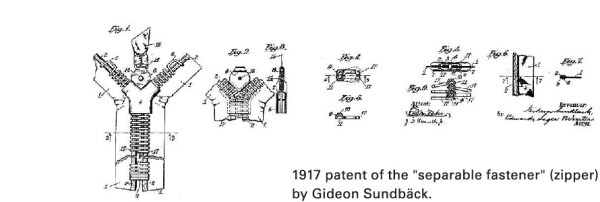 Gideon Sundback’s 1917 patent of the zipper (YKK Digital Showroom)
The name ‘zipper’ is credited to the BF Goodrich Company. In 1923, they installed these fasteners on their rubber boots, which made a “zipping” sound.
Zippers came to replace buttons on everything from luggage to clothing over the following decades.
In 1934, Japanese company San-S Shokai, founded by Tadao Yoshida in Tokyo, entered the fastening business, specialising in their sales. Yoshida had encountered the zipper during the early 1930s while working in import-export, then still a novelty. He saw an opportunity at the time, with Japan increasingly favouring Western clothing instead of traditional wear. By some accounts, Yoshida was motivated to enter the manufacture of zippers out of frustration with the inconsistent quality and unreliable supply of the zippers he sourced.
The company was renamed Yoshida Kogyosho in 1938, according to the company’s website.
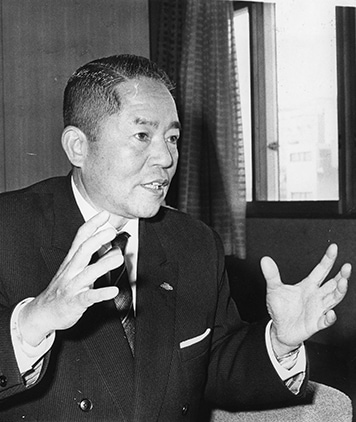 Tadao Yoshida (YKK Fastening)
After making zippers by hand initially, he mechanised this process in 1950, when he purchased four expensive chain machines. This significantly improved the quality of the final product compared to the cheap, disposable Japanese zippers on the market. Another significant development was the relocation of the YKK factory to the resource-rich Kurobe area, situated on the opposite end of the coastline from Tokyo, wherein the company consolidated its production.
Faced with increased prices of zinc and copper during the Korean War (1950-53), YKK produced an alloy called aluminium 56S, for use not only in zippers but also in window pane sashes. This prompted Yoshida to launch YKK’s first factory of architectural products in Kurobe in 1959, according to a Bloomberg profile of the company. YKK launched a US subsidiary a year later in New York, operating out of Manhattan’s Garment District. This put it in direct competition with Talon, a US manufacturer. YKK went on to expand across the country, serving high-fashion customers in Philadelphia, Baltimore and Boston, supplying jeans manufacturers in Texas and Georgia, and workwear and outerwear manufacturers in Chicago and Los Angeles.
Today, YKK operates as 112 separate branches under the YKK Group, a privately held corporation that earned $6.9 billion in revenue in FY2024-25. Kurobe remains the heart of the company’s operations, housing one of the 500-plus factories globally, as well as a research and development facility.
For the longest time, the zipper has remained largely the same, sturdy, reliable and easy to incorporate. However, over the decades, newer fabrics and materials have become a part of fashion. The need for light-weight materials has thus extended to the zippers too, to allow greater flexibility in its use with cloths such as stretchy fabrics, light-weight synthetic nylons, and skin-feel technical blends.
“There has been a growing demand from the market for lighter and more flexible garments,” Makoto Nishizaki, vice president of YKK’s Application Development Division, told Wired magazine last month. “And similar expectations have extended to zippers.”
However, removing the fabric tape component of the zipper removed the structure that zippers have that allows tailors to sew through. This meant YKK needed to rethink its process entirely, redesigning the teeth, introducing a new manufacturing process with new machines to attach the zipper to garments. The result is AiryString, which reportedly allows garments to flow and be less rigid.
YKK claims that the AiryString also reduces the material and labour involved in sewing zippers and is environmentally friendly, with one version of the new zipper being made of 100 percent recycled materials. However, factories worldwide would need to install the specialised hardware and redesign their processes, making their uptake costly in the short run.
The idea to do away with the fabric component of the zipper resulted from a collaboration between YKK and Juki Corp, a leader of industrial sewing machines, dating back to 2017. Their collaboration has resulted in the early adoption of the AiryString by companies such as Descente Japan and The North Face, both makers of performance wear.
Billions of zippers made by the Japanese company are widely used across the fashion industry, from jeansmaker Levi’s to sportswear brand Adidas, high fashion companies like Prada to fast-fashion makers Zara and H&M. Today, YKK serves about 40% of the global apparel industry, according to the Bloomberg profile.
YKK also makes zippers for luggage, purses, tents, sleeping bags and several other types of equipment. If anything can be fastened, YKK likely has a zipper ready for use. Its services extend to unlikely industries too, with automakers using YKK’s Velcro-type hook-and-loop system to keep upholstery intact on car seats.
Similarly, in the realm of medical devices, continuous positive airway pressure (CPAP) machines, used for sleep apnoea, make use of a similar YKK product to keep their devices’ breathing apparatus in place. A YKK “medical stud,” which can be snapped on, connects electrodes to the electrocardiography (ECG) machines to monitor a patient’s heartbeat.