Premium
This is an archive article published on October 27, 2020

Explained: The plasma therapy debate

India's largest ever trial has found convalescent plasma therapy ineffective in Covid-19. ICMR is cautious about the option, some states still push it. In what circumstances do experts recommend this therapy?

Blood bank MaharashtraBlood donations have dipped again in February, prompting the State Blood Transfusion Council (SBTC) to write a fresh appeal to all 373 blood banks in Maharashtra to renew their efforts in holding blood donation camps(Express Photo: Tashi Tobgyal)

Recently published findings on convalescent plasma therapy on Covid-19 patients have triggered a debate over its efficacy. After the country’s largest such trial, known by the acronym PLACID, found that convalescent plasma was ineffective in arresting Covid-19, the Indian Council of Medical Research (ICMR) has been considering dropping this option from the national guidelines. However, in several states including most-affected Maharashtra and Delhi, health authorities continue to push the option while those running plasma blood banks promote it with anecdotal accounts on social media.

What is plasma therapy?

Plasma is the liquid part of the blood. Convalescent plasma, extracted from the blood of patients recovering from an infection, is a source of antibodies against the infection. The therapy involves using their plasma to help others recover. For Covid-19, this has been one of the treatment options. The donor would have to be a documented case of Covid-19 and healthy for 28 days since the last symptoms.

What has happened to spark the debate?

An ICMR study has found convalescent plasma was not associated with a reduction in progression to severe Covid-19 or all-cause mortality. The results of the PLACID trial at multiple centres, first out on a pre-print server in September, were published in the peer-reviewed British Medical Journal on October 22.

At a recent media briefing, ICMR Director General Dr Balram Bhargava had said they were contemplating deleting convalescent plasma as a definitive therapy from the national guidelines for Covid-19 treatment.

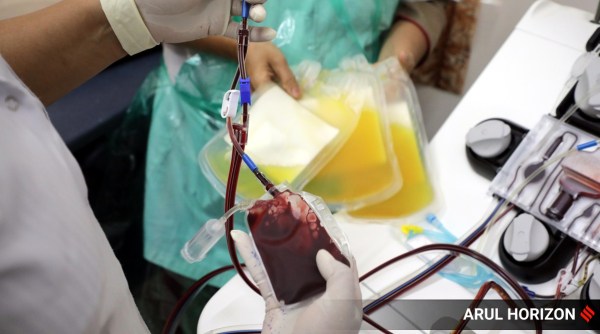
plasma therapy, plasma therapy for covid, ICMR on plasma therapy, what is plasma therapy, plasma therapy explained, Indian Express Maharashtra State Reserve Police Force personnel donate plasma at a plasma donation drive at Sassoon hospital in Pune. (Express Photo: Arul Horizon)
What are the trial findings?

While use of convalescent plasma seemed to improve resolution of shortness of breath and fatigue in patients with moderate Covid-19, this did not translate into a reduction in 28-day mortality or progression to severe disease.

PLACID was a randomised controlled trial in 39 hospitals spread across 14 states and Union Territories and representing 25 cities. It covered 464 adults admitted to hospital (screened April 22 to July 14) with confirmed moderate Covid-19, of whom 235 were assigned to convalescent plasma therapy while 229 were randomised to receive the best standard of care. The group of 235 received two doses of 200 ml convalescent plasma, 24 hours apart.

Story continues below this ad

Progression to severe disease or death at 28 days after enrolment occurred in 44 (19%) of the participants in the intervention arm as compared to 41 (18%) in the control arm . A higher proportion of patients in the intervention arm showed resolution of shortness of breath and fatigue at day 7, whereas resolution of fever and cough did not differ between the two arm. “These are clinically meaningful results,” said Dr Aparna Mukherjee, Principal Investigator of the PLACID trial.

Have there been such results elsewhere?

In China, a controlled trial of 103 patients with severe Covid-19 reported no effect of convalescent plasma treatment in terms of time to clinical improvement. In the Netherlands, the ConCOVID trial, prematurely terminated after 86 patients had been enrolled, could not find any effect on mortality at 60 days, hospital stay, or disease severity at 15 days.

So, who all are still pushing convalescent plasma therapy?

Delhi Health Minister Satyendra Jain has said convalescent plasma played a big part in his recovery and many lives have been saved. In Maharashtra, the government has been conducting the Platina trial in severely ill patients. It is the brainchild of the Medical Education Department and CM Uddhav Thackeray.

Story continues below this ad

Dr Mohammed Faizal, state coordinator of the Platina Project, said at least 40% of the trial has been completed. “We should be able to complete the trial in another three months. We have recruited 132 patients and the total target is 472,” Dr Faizal said.

Officials said that there is no order or letter from ICMR regarding stopping use of convalescent plasma. “However, ours is a scientific research trial and irrespective of the PLACID Trial findings, the PLATINA trial will continue,” Dr Faizal said. 📣 Follow Express Explained on Telegram

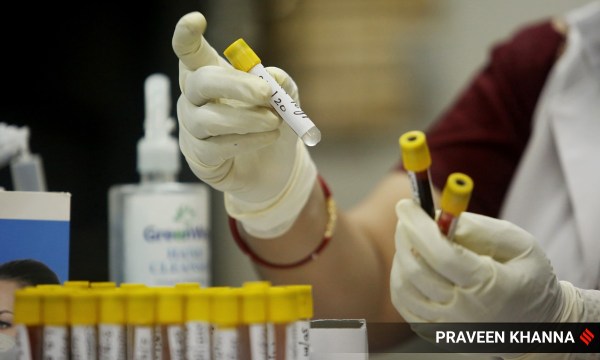
plasma therapy, plasma therapy for covid, ICMR on plasma therapy, what is plasma therapy, plasma therapy explained, Indian Express A health worker collects blood samples at a local health centre for Covid-19 in New Delhi. (Express Photo: Praveen Khanna)

What happens if ICMR does remove the therapy from its guidelines?

The ICMR has been cautious because of the trial findings. Experts said, however, that guidelines are not necessarily binding and it is too early to dismiss convalescent plasma therapy.

Story continues below this ad

But there are other issues. The authorisation of convalescent plasma as treatment for Covid-19 in India has led to questionable practices such as calls for donors on social media, and the sale of convalescent plasma on the black market. Although convalescent plasma is a safe form of treatment when transfused in accordance to the regulations, it involves resource-intensive processes such as plasmapheresis, plasma storage, and measurement of neutralising antibodies. A limited number of institutes in India have the capacity to undertake these procedures in a quality-assured manner, the BMJ paper said.

What is the way forward, then?

This is a new virus, and around the world evidence is still emerging on the best therapeutic options. For example, remdesivir has been sanctioned as a drug of choice by the US drug regulator, while the World Health Organization’s Solidarity Trial has found it had little or no effect on 28-day Covid mortality. And experts said use of convalescent therapy has saved some lives but concerns have been raised by the PLACID trial.

Dr Shashank Joshi, member of the Maharashtra task force on Covid-19 and Dean, College of Physicians, said that much before the evidence from trials, the task force had introduced some safeguards to check indiscriminate use of drugs such as remdesivir. “Covid care is individualised care. Use of the right drugs in the right patient does work. Some of the therapies can be continued on compassionate grounds,” Dr Joshi said. He said there were limitations in the Solidarity trial — it was not placebo controlled. While results of the Platina trial are awaited, Dr Joshi said the results of one or two trials are not going to change the outcome of a recommendation.

Story continues below this ad

Don’t miss from Explained | School closure, work from home, ban on public events — which works best to restrict Covid-19?

Elizabeth Pathak, president, Women’s Institute for Independent Social Enquiry, who has written in the BMJ on the trial findings, said: “The potential harms of the non-immune components of convalescent plasma should be rigorously investigated, only donor plasma with detectable titers of neutralizing antibodies should be given to trial participants, to ensure that the potential for benefit exists for all intervention arm patients.”

Anuradha Mascarenhas is a Senior Editor at The Indian Express, based in Pune. With a career spanning three decades, she is one of the most respected voices in Indian journalism regarding healthcare, science and environment and research developments. She also takes a keen interest in covering women's issues . Professional Background Education: A gold medalist in Communication and Journalism from Savitribai Phule Pune University and a Master’s degree in Literature. Author: She authored the biography At The Wheel Of Research, which chronicles the life and work of Dr. Soumya Swaminathan, the former Chief Scientist at the WHO. Key Focus: She combines scientific accuracy with storytelling, translating complex medical research into compelling public and human-interest narratives. Awards and Recognition Anuradha has won several awards including the Press Council of India's national award for excellence in journalism under the gender based reporting category in 2019 and the Laadli Media award (gender sensitivity -2024). A recipient of the Lokmat journalism award (gender category-2022), she was also shortlisted for the RedInk awards for excellence in journalism-2021. Her debut book At The Wheel Of Research, an exclusive biography of Dr Soumya Swaminathan the inaugural chief scientist of World Health Organisation was also nominated in the Popular Choice Category of JK Paper AUTHER awards. She has also secured competitive fellowships including the Laadli Media Fellowship (2022), the Survivors Against TB – New Research in TB Media Fellowship (2023) and is part of the prestigious 2025 India Cohort of the WomenLift Health Leadership Journey.” Recent Notable Articles (Late 2025) 1. Cancer & Specialized Medical Care "Tata Memorial finds way to kill drug-resistant cancer cells" (Nov 26, 2025): Reporting on a breakthrough for triple-negative breast cancer, one of the most aggressive forms of the disease. ``Discipline, diet and purpose; How a 97-year-old professor defies ageing'' (Nov 15, 2025) Report about Prof Gururaj Mutalik, the first Head of Department at Pune's B J Government Medical College who at 97 credits his longevity to healthy habits and a strong sense of purpose. 2. Environmental Health (The "Breathless Pune" Series) "Long-term exposure even to 'moderate' air leads to chronic heart, lung, kidney issues" (Nov 26, 2025): Part of an investigative series highlighting that even "safe" pollution levels are damaging to vital organs. "For every 10 µg/m3 increase in PM2.5 level, there was 6-8% jump in medicine sales" (Nov 23, 2025): Using commercial data to prove the direct link between air quality and respiratory illnesses in Pune. 3. Lifestyle & Wellness News "They didn't let cancer, diabetes and heart disease stop them from travelling" (Dec 22, 2025): A collaborative piece featuring survivors who share practical tips for traveling with chronic conditions. ``At 17, his BP shot up to 200/120 mmHG; Lancet study flags why child and teen hypertension doubled between 2000 and 2020'' (Nov 12,2025)--A report that focusses on 17-year-old-boy's hypertensive crisis and reflects the rising global trend of high blood pressure among children and adolescents. 4. Scientific Recognition & Infrastructure "For promoting sci-comm, gender diversity: IUCAA woman prof highlighted in Nature" (Nov 25, 2025): Covering the global recognition of Indian women scientists in gender studies and physics. ``Pune researchers find a spiral galaxy like the Milky Way from early universe'' (December 3, 2025)- A report on how Indian researchers discovered a massive galaxy that existed when the universe was just 1.5 billion years old , one of the earliest to have been observed so far. Signature Beat: Health, Science & Women in Leadership Anuradha is known for her COVID-19 reportage, where she was one of the first journalists to provide detailed insights into the Covishield and Covaxin trials. She has a dedicated interest in gender diversity in health and science, often profiling women researchers who are breaking the "leaky pipeline" in STEM fields. Her writing style is scrupulous, often featuring interviews with top-tier scientists and health experts from various institutions. X (Twitter): @runaanu   ... Read More

 

Latest Comment
Post Comment
Read Comments
Advertisement
Advertisement
Advertisement
Advertisement