© The Indian Express Pvt Ltd
 7 min read


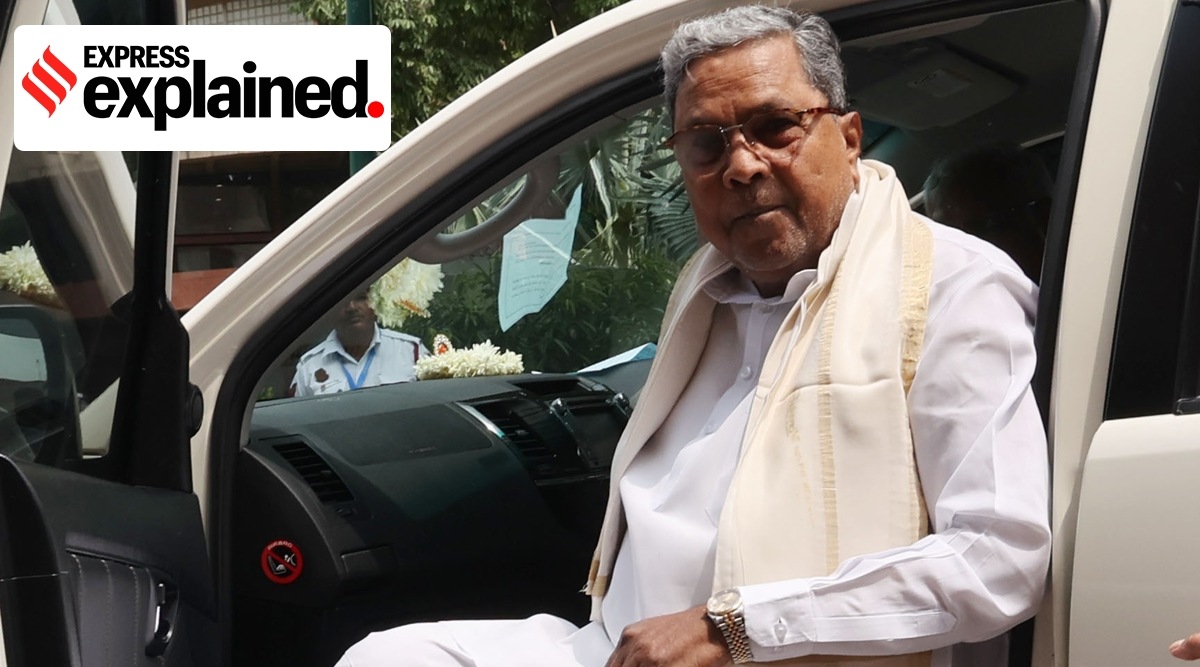 As per a statement released by his office, Karnataka CM Siddaramaiah was of the view that curbing fake news was essential as it was responsible for the 'weakening of democracy and polarisation in society'. (Express Photo by Prem Nath Pandey)
 The Karnataka government’s decision to create a fact-checking unit to curb fake news on social media has raised concerns regarding the move possibly impinging upon the freedom of press. The Editors Guild of India has issued a statement that any move to check the spread of fake news should not be draconian in nature, and should be fair, independent and democratic.
Since coming to power in Karnataka with a thumping majority of 135 seats in a 224-seat state assembly, the Congress government has stated that it would introduce measures to curb the spread of fake news through social media channels.
The proposal is being seen as part of the Congress’s strategy to curb fake news and rumours, which have in the past used social media to target its government, especially in instances of suspicious deaths.
On August 21, a meeting chaired by Chief Minister Siddaramaiah to create a cyber security police for the state approved the formation of fact-checking units to tackle ‘fake news syndicates’.
“The CM was of the view that curbing fake news was essential as it was responsible for the weakening of democracy and polarisation in society,” a statement from the Chief Minister’s Office said after the cabinet meeting.
The government would introduce legislation against the propagation of fake news and propose punishment for the spread of fake news, the cabinet decided. The fact checking units would work towards detecting syndicates that spread fake news and prevent the dissemination of such news. The unit will consist of a supervisory committee, fact-finding teams and analysis teams, the CMO statement said.
During the meeting, the state home minister G Parameshwara suggested creating the unit immediately as fake news — though in its infancy — could become a global menace. There were suggestions to coordinate with the information technology ministry for the formation of the fact checking unit.
The progress is creating fact check units
On August 26, the Bengaluru police commissioner B Dayananda announced the setting up of social media monitoring units of the police at three different levels for Bengaluru city.
“When there are law and order incidents we have found that many times the cause of the incidents are social media posts, some are provocative posts, some are hate posts, these posts provoke and agitate people and are responsible for law and order situations,” the Bengaluru police commissioner B Dayananda said.
“If there are instances of fake posts and fake news going viral then we will fact check and provide the correct information based on the facts. There will be teams at the station level, at the DCP office level and at the CoP office level,” the police commissioner said.
Some personnel have been trained at the station level to identify provocative and fake posts and how to establish the truth, he said.
“Now we have decided that in all police stations some technically qualified personnel should keep a watch and monitor such posts. If there is false information and provocative messages that are circulated action should be taken at the police station level and directions have been issued to that extent,” Dayananda said.
“At the division level in the offices of the DCP small teams will be created to monitor social media activities and at the office of the Commissioner of Police a large team will be constituted and every day we will be watching over social media,” he said.
Karnataka police already running fact checking service
The Karnataka police has been running a fact checking service on its website for the last couple of years, to debunk problematic messages that could create a law and order problem. The police have also, in several instances in recent years, registered FIRs under Indian Penal Code sections for promoting enmity, outraging religious feelings and previously for sedition.
Last year in April, following the death of a 19-year-old youth in west Bengaluru, BJP leaders claimed that the cause of the murder was the inability of the victim to speak in Urdu. The then Bengaluru police commissioner indicated that the incident was one of road rage following an accident even as the then Karnataka BJP home minister Araga Jnanendra initially contradicted the police.
The home minister withdrew his statements on the motive for the murder after a fact check service provided by the Karnataka police website debunked messages floated on social media and on some local TV channels that put out unverified motives for the murder.
Concerns voiced by the Editors Guild of India
The Editors Guild of India, in a statement dated August 27, expressed concerns over some aspects of the Karnataka government’s decision.
The statement urged the Karnataka government to “clearly specify the scope of and powers of the proposed fact-checking unit, as well as the governing mechanism under which it will operate”.
“While admittedly there is a problem of misinformation and fake news especially in the online space, efforts to check such content have to be by independent bodies that are not under the sole purview of the government lest they become tools to clampdown on voices of dissent. Any such monitoring network should follow principles of natural justice including giving prior notice, right to appeal and judicial oversight,” the Editors Guild of India said.
“Such units should also be set up with due consultation and involvement of all stakeholders, including journalists and media bodies so that press freedom is not tampered with,” it said.
The Karnataka IT/BT, Rural Development and Panchayat Raj minister Priyank Kharge has stated that the fact checking would not “impinge upon the freedom of the press” and would uphold an “apolitical stance devoid of bias and will transparently explain the methodologies employed to the public.”.
Kharge said that the government was in the process of “establishing independent bodies that will be enlisted to assist us in combating fake news and misinformation…Rest assured, we will diligently follow the tenets of natural justice. Let it be clear that the establishment of this unit is in no way an attempt to impinge upon the freedom of the press.”