Journalism of Courage
Advertisement
Premium

Explained: What is the West Nile Virus, how does it spread?

The West Nile Virus is a mosquito-borne, single-stranded RNA virus. According to the WHO, it is “a member of the flavivirus genus and belongs to the Japanese Encephalitis antigenic complex of the family Flaviviridae”.

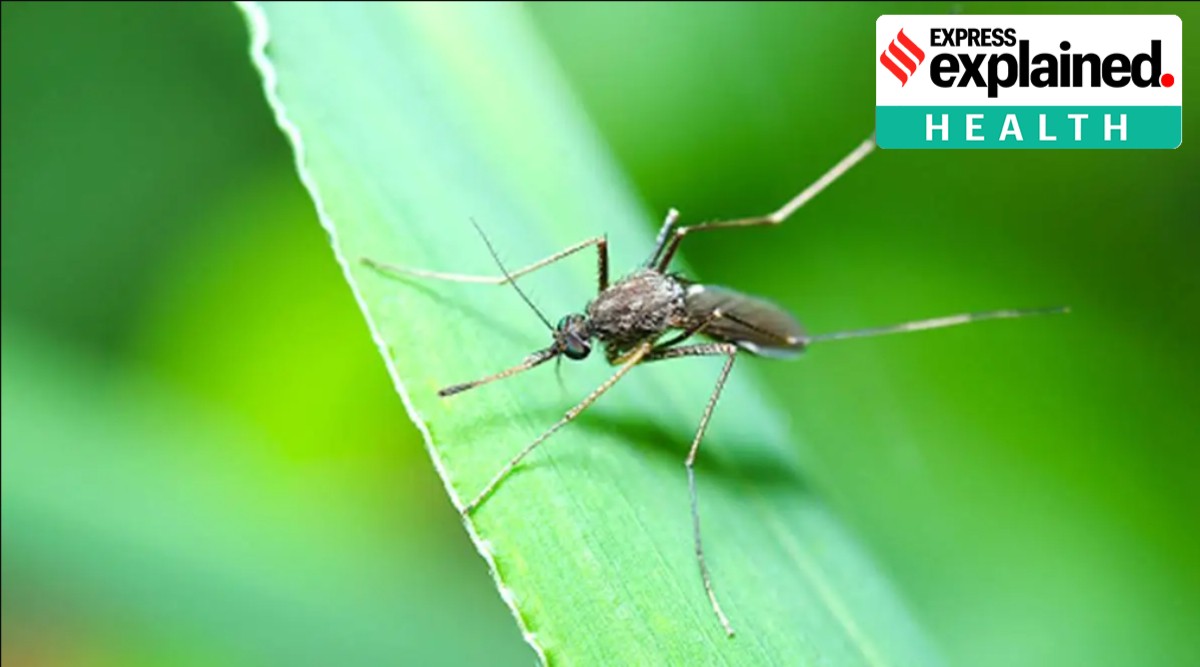
The virus was first reported in the state in Alappuzha in 2006 and then in Ernakulam in 2011. (Representational)The virus was first reported in the state in Alappuzha in 2006 and then in Ernakulam in 2011. (Representational)

The Kerala health department is on alert after the death of a 47-year-old from Thrissur due to the West Nile Virus. Earlier in 2019, a six-year-old boy in Malappuram district had died of the same infection. The virus was first reported in the state in Alappuzha in 2006 and then in Ernakulam in 2011. What is the West Nile Virus and how does it spread?

The virus, its transmission

The West Nile Virus is a mosquito-borne, single-stranded RNA virus. It is a flavivirus related to the viruses that cause St. Louis encephalitis, Japanese encephalitis, and yellow fever.

Buy Now | Our best subscription plan now has a special price

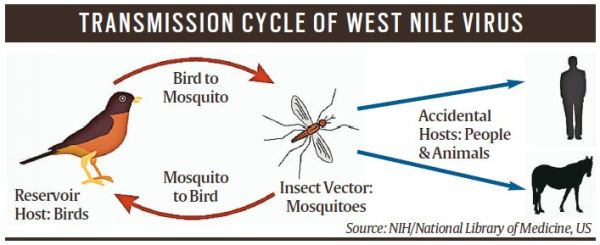
Culex species of mosquitoes act as the principal vectors for transmission. It is transmitted by infected mosquitoes between and among humans and animals, including birds, which are the reservoir host of the virus.

“Mosquitoes become infected when they feed on infected birds, which circulate the virus in their blood for a few days. The virus eventually gets into the mosquito’s salivary glands. During later blood meals (when mosquitoes bite), the virus may be injected into humans and animals, where it can multiply and possibly cause illness,” says the WHO.

WNV can also spread through blood transfusion, from an infected mother to her child, or through exposure to the virus in laboratories. It is not known to spread by contact with infected humans or animals.

According to the US Centre for Disease Control and Prevention (CDC), it does not spread “through eating infected animals, including birds. Always follow instructions for fully cooking meat”.

Story continues below this ad

The CDC notes that the incubation period for WNV disease is typically 2 to 6 days, but can range from 2 to 14 days, and can be several weeks in immunocompromised people.

To date, no human-to-human transmission of WNV through casual contact has been documented, says the WHO.

Symptoms

The disease is asymptomatic in 80% of the infected people. The rest develop what is called the West Nile fever or severe West Nile disease.

In these 20% cases, the symptoms include fever, headache, fatigue, body aches, nausea, rash, and swollen glands.

Story continues below this ad

Severe infection can lead to neuroinvasive disease such as West Nile encephalitis or meningitis or West Nile poliomyelitis or acute flaccid paralysis. WNV-associated Guillain-Barré syndrome and radiculopathy have also been reported.

“It is estimated that approximately 1 in 150 persons infected with the West Nile Virus will develop a more severe form of disease…. Recovery from severe illness might take several weeks or months. Some effects to the central nervous system might be permanent,” says the CDC.

It usually turns fatal in persons with co-morbidities and immuno-compromised persons (such as transplant patients).

Detection of WNV

The virus was first isolated in a woman in the West Nile district of Uganda in 1937. It was identified in birds (crows and columbiformes like doves and pigeons) in the Nile delta region in 1953. Before 1997, WNV was not considered pathogenic for birds, but then, a more virulent strain caused the death in Israel of different bird species, presenting signs of encephalitis and paralysis.

Story continues below this ad

In 1999, a WMV strain, believed to be one circulating in Israel and Tunisia, reached New York producing a large outbreak that spread across the United States and eventually across the Americas, from Canada to Venezuela.

According to the WHO, human infections attributable to WNV have been reported in many countries in the world for over 50 years.

WNV outbreak sites are found along major bird migratory routes.

Today, the virus is found commonly in Africa, Europe, the Middle East, North America, and West Asia.

WMV in India

Story continues below this ad

In India, antibodies against WNV were first detected in humans in Mumbai in 1952 and virus activity has since been reported in southern, central, and western India. WNV has been isolated in India from Culex vishnui mosquitoes in Andhra Pradesh and Tamil Nadu, from Culex quinquefasciatus mosquitoes in Maharashtra, and from humans in Karnataka.

Febrile illness and encephalitis cases in epidemic form were observed in Udaipur district of Rajasthan, Buldhana, Marathwada and Khandesh districts of Maharashtra.

Further, human sera collected from Tamil Nadu, Karnataka, Andhra Pradesh, Maharashtra, Gujarat, Madhya Pradesh, Odisha, Rajasthan and Assam has shown presence of WNV neutralising antibodies.

Serologically confirmed cases of WNV infections were reported from Vellore and Kolar districts during 1977, 1978 and 1981, and in West Bengal in 2017.

Story continues below this ad

In 2013, the complete genome sequence of WNV was isolated from human samples during an acute encephalitis outbreak in Kerala between May and June 2011.

A 2011 study in India had “clearly established” the association of WNV with ocular infection in Tamil Nadu during an epidemic of mysterious fever in the first half of 2010.

Preventive measures

In most countries, the peak for WNV infections generally coincides with the period when mosquito vectors are most active and the ambient temperature is sufficiently high for virus multiplication. Since WNV outbreaks in animals precede human cases, the establishment of an active animal health surveillance system to detect new cases in birds and horses is considered essential in providing early warning for veterinary and human public health authorities.

Newsletter | Click to get the day’s best explainers in your inbox

Story continues below this ad

The European Centre for Disease Control and Prevention (ECDC) has also often suggested in its annual epidemiological report that to prevent blood transfusion-transmitted WNV infections during the active virus transmission period. It is advised that “EU/EEA countries should implement 28-day blood donor deferral or nucleic acid testing of prospective donors who have visited or lived in an affected area” and similarly, donors of organs, tissues and cells living in or returning from an affected area should be tested for WNV infection.

Treatment

No WNV-specific prophylaxis, treatment or vaccine is available. So, only supportive treatments are given to neuroinvasive WNV patients. Health authorities globally advice for personal protective measures to reduce the risk of mosquito bites such as using mosquito repellents, and for public health departments to ensure larval source reduction especially at breeding and resting sites for the mosquito vectors.

Curated For You

Sohini Ghosh is a Senior Correspondent at The Indian Express. Previously based in Ahmedabad covering Gujarat, she recently moved to the New Delhi bureau, where she primarily covers legal developments at the Delhi High Court Professional Profile Background: An alumna of the Asian College of Journalism (ACJ), she previously worked with ET NOW before joining The Indian Express. Core Beats: Her reporting is currently centered on the Delhi High Court, with a focus on high-profile constitutional disputes, disputes over intellectual property, criminal and civil cases, issues of human rights and regulatory law (especially in the areas of technology and healthcare). Earlier Specialty: In Gujarat, she was known for her rigorous coverage in the beats of crime, law and policy, and social justice issues, including the 2002 riot cases, 2008 serial bomb blast case, 2016 flogging of Dalits in Una, among others. She has extensively covered health in the state, including being part of the team that revealed the segregation of wards at the state’s largest government hospital on lines of faith in April 2020. With Ahmedabad being a UNESCO heritage city, she has widely covered urban development and heritage issues, including the redevelopment of the Sabarmati Ashram Recent Notable Articles (Late 2025) Her recent reporting from the Delhi High Court covers major political, constitutional, corporate, and public-interest legal battles: High-Profile Case Coverage She has extensively covered the various legal battles - including for compensation under the aegis of North East Delhi Riots Claims Commission - pertaining to the 2020 northeast Delhi riots, as well as 1984 anti-Sikh riots. She has also led coverage at the intersection of technology and governance, and its impact on the citizenry, from, and beyond courtrooms — such as the government’s stakeholder consultations for framing AI-Deepfake policy. Signature Style Sohini is recognized for her sustained reporting from courtrooms and beyond. She specialises in breaking down dense legal arguments to make legalese accessible for readers. Her transition from Gujarat to Delhi has seen her expand her coverage on regulatory, corporate and intellectual property law, while maintaining a strong commitment to human rights and lacuna in the criminal justice system. X (Twitter): @thanda_ghosh ... Read More

Shaju Philip is a Senior Assistant Editor at The Indian Express, where he leads the publication's coverage from Kerala. With over 25 years of experience in mainstream journalism, he is one of the most authoritative voices on the socio-political, religious, and developmental landscape of South India. Expertise, Experience, and Authority Decades of Regional Specialization: Shaju has spent more than two decades documenting the "Kerala Model" of development, its complex communal dynamics, and its high-stakes political environment. Key Coverage Beats: His extensive reporting portfolio includes: Political & Governance Analysis: In-depth tracking of the LDF and UDF coalitions, the growth of the BJP in the state, and the intricate workings of the Kerala administration. Crime & Investigative Journalism: Noted for his coverage of high-profile cases such as the gold smuggling probe, political killings, and the state’s counter-terrorism efforts regarding radicalization modules. Crisis Management: He has led ground-level reporting during major regional crises, including the devastating 2018 floods, the Nipah virus outbreaks, and the Covid-19 pandemic response. ... Read More


Tags:
  • Express Explained Express Premium West Nile virus
Weather
Edition
Install the Express App for
a better experience
Featured
Trending Topics
News
Multimedia
Follow Us
Express PremiumAs Trump looks to crowd in US investments, why Venezuela oil may be a hard sell
X