In response to a clarification sought by the Bombay High Court, the Maharashtra government said on June 13 that it will be difficult to provide “additional reservations” to transgender persons in education and public employment, given the reservation that exists so far for various communities in India.
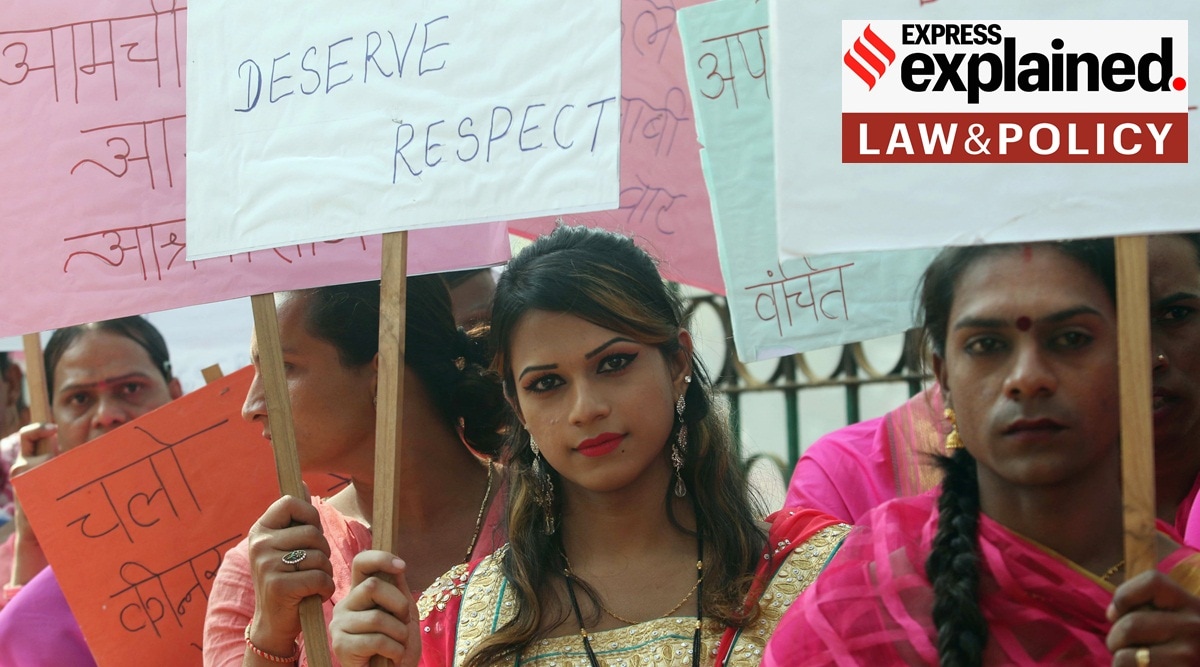
“Considering the extent of vertical and horizontal reservations which are already provided, providing additional reservations for transgender persons seems difficult. The issue is pending before the Supreme Court”, Advocate General Birendra Saraf, who was representing the Maharashtra government, told the High Court. On June 27, transgender persons in Mumbai protested against the state’s submission.

Trans persons in India have been fighting for the right to horizontal reservation for a long time. The demand for reservation has been raised by many prominent Dalit, Bahujan, Adivasi activists and trans persons as well, such as Grace Banu, Living Smile Vidya and Disha Pinky Shaikh.
What have the courts said on reservation for the transgender community?
In the National Legal Services Authority of India (NALSA) v Union of India (2014) case, the Supreme Court ruled that transgender persons have a right to reservation, owing to the fact that they “are a socially and educationally backward class”. With regards to reservation, the judgment noted: “We direct the Centre and the State Governments to take steps to treat them [transgender persons] as socially and educationally backward classes of citizens and extend all kinds of reservation in cases of admission in educational institutions and for public appointments.”
The NALSA judgment entitles trans persons to reservations on constitutional grounds. It does not, however, mention the nature of reservations – whether they are to be vertical or horizontal.
First, what are horizontal reservations?
In India, historically oppressed and disadvantaged communities have a right to affirmative action policies. Reservation in education and employment can be divided into two broad categories, namely, vertical and horizontal.
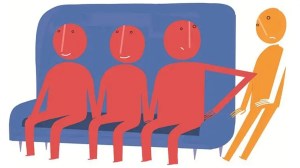
Vertical reservations are provisions aimed at addressing social asymmetry arising out of caste hierarchy, and in the case of OBCs, social and educational “backwardness”. These include reservations for Scheduled Castes (SC), Scheduled Tribes (ST) and Other Backward Classes (OBC). Horizontal reservation, on the other hand, cuts across all vertical groups to provide affirmative policies for disadvantaged groups within categories. For example, disabled persons are guaranteed horizontal reservation in all the aforementioned vertical categories, general and reserved (vertical) alike, by the Central government.
Story continues below this ad
States like Uttarakhand and Bihar have also rolled out policies that guarantee horizontal reservation for women. This means that a woman who belongs to the SC category should be able to avail reservation based on both caste and gender. The horizontal model ensures this. This is what transgender persons are fighting for, as well.
What is the demand for horizontal reservation?
It has to do with the need for mandating provisions for a community that has been historically marginalised in society and recognising the different aspects making up their social identity.
A study conducted by the National Human Rights Commission revealed that in 2017, only 6 percent of transgender people were formally employed. Informal work that a significant portion of the community currently engages in, like begging and sex work, have been criminalised in India under various Acts and laws. But trans persons are often employed in such work for reasons related to both ritual and survival.
In this regard, the NALSA verdict has largely been interpreted as directing reservations for transgender people in the OBC category. This perhaps stems from the bench identifying the community as “a socially and educationally backward class”. So far, no implementation has happened even to that end.
Story continues below this ad
Additionally, activists from the community say that this will come at a loss for Dalit, Bahujan and Adivasi transgender persons, as they will have to make a choice between availing reservation either based on caste and tribal identity or gender identity.
“This is in violation of the Constitution. SC, ST persons should be able to avail internal reservation in their categories. If trans persons from these categories do not have the choice to do that, they will be forced into two corners. Either compete with cis-gendered SC, ST persons. Or under OBC, compete with other savarna transgender persons, and cis-gendered persons from OBC communities,” Kanmani, a trans woman and lawyer, told The Indian Express.
What has happened so far on horizontal reservations?
Since the NALSA judgment, there has been no direction from the Central government on delivering on the right to reservation for trans persons.
In 2015, Rajya Sabha DMK MP Tiruchi Siva presented the Rights of Transgender Persons Bill. Prepared with inputs from the trans community, this Private Member’s Bill, in line with the NALSA judgment, had provisions for reservation for trans persons — in the public and private sector. After being passed in the Rajya Sabha, the Bill was rejected in the Lok Sabha. Instead, the Transgender Persons (Protection of Rights) Bill, 2016 was introduced by the Centre. It had no provision for reservations.
Story continues below this ad
In 2018, a parliamentary standing committee under the Ministry of Social Justice was set up. It was headed by BJP MP Ramesh Bais, now Governor of Maharashtra. The committee, again in line with the NALSA judgment, recommended reservations for transgender persons. Yet, the Transgender Persons (Protection of Rights) Act, 2019 did not have any mention of reservation — vertical or horizontal.
Alternatively, the Rights of Persons with Disabilities Act, 2016, included in its purview the right of disabled persons to accrue horizontal reservation. Since this Act has been implemented, horizontal reservation for disabled people is now ensured under the Central government.
In 2015, the Tamil Nadu government decided to categorise “transgender or eunuch (thirunangai or aravani)”, that is, only transwomen under the Most Backward Classes (MBC) category. After Sangama v State of Karnataka, Karnataka became the first and only state to offer one per cent horizontal reservation to transgender persons in 2021. In April this year, transgender persons were included in the OBC category in Madhya Pradesh.
“The aspect of the implementation [of the NALSA judgment] has really not gone anywhere. Currently, the primary challenges are legislative. This lack of action needs to be legally challenged,” Bittu K R, a genderqueer trans man and Associate Professor of Biology and Psychology at Ashoka University, told The Indian Express.
Story continues below this ad
Transgender persons have filed several petitions of late in the Delhi HC, Madras HC, Rajasthan HC, etc., asking for horizontal reservation in education and jobs.


 7 min read