4 min read
© The Indian Express Pvt Ltd



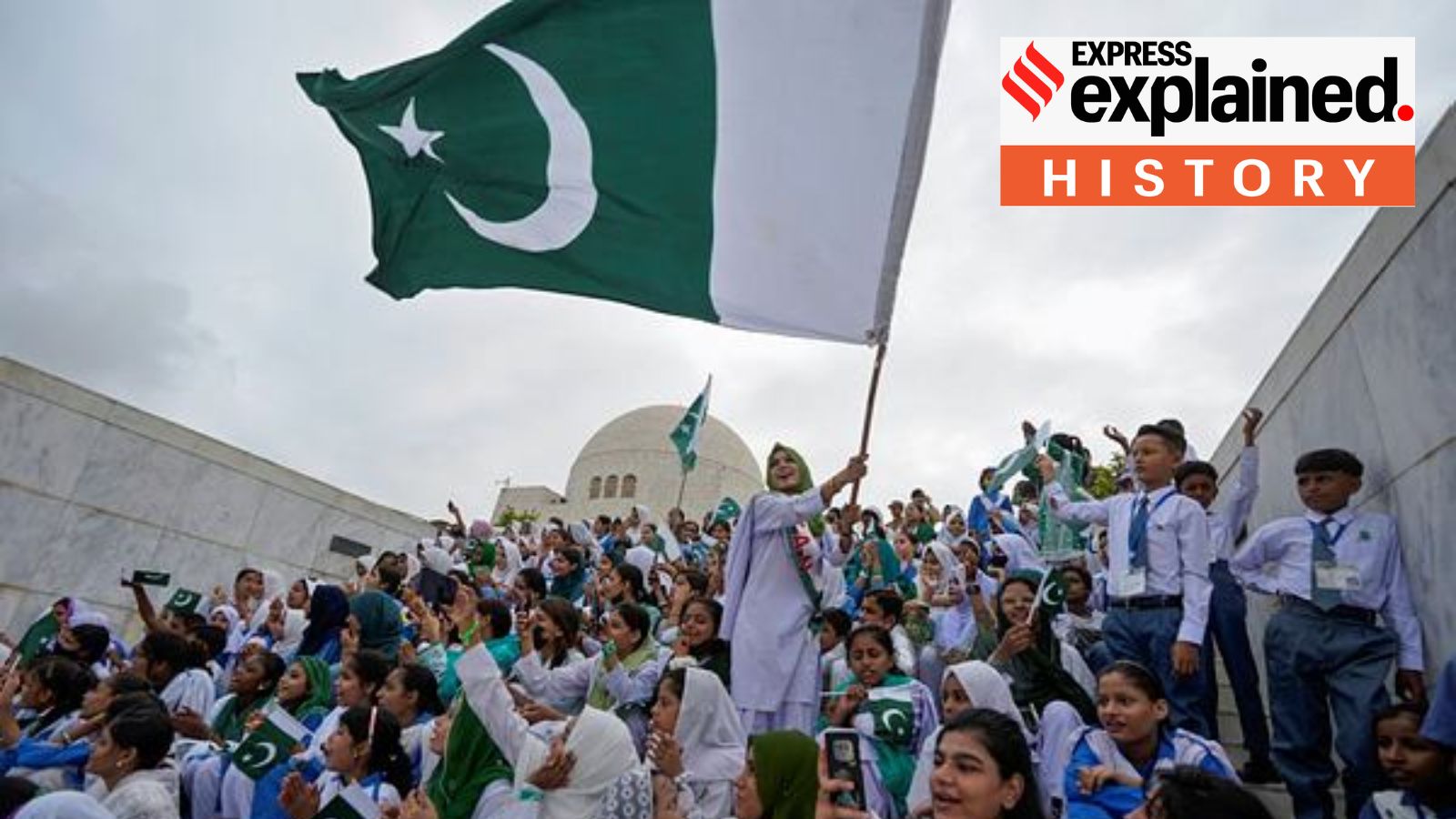 Students wave national flags during a ceremony to commemorate Pakistan Independence Day, at the mausoleum of Muhammad Ali Jinnah, founder of Pakistan, in Karachi, Pakistan, Wednesday, Aug. 14, 2024. (PTI Photo)
Pakistan celebrates its Independence Day on August 14, one day before India marks its Independence on August 15. Here is why.
Clement Atlee’s Labour government in Britain chose Lord Louis Mountbatten to be the Viceroy of India in February 1947, and gave him the mandate to transfer power into the hands of Indians no later than June 30, 1948. However, as C Rajagopalachari later said, if Mountbatten would have waited till June 1948, “there would have been no power left to transfer”.
Amidst growing communal tensions, and a devolving law and order situation, Mountbatten decided to advance the date of transfer of power to August 1947. At the time, he (quite foolishly, in retrospect) claimed that this would prevent violence and bloodshed. What is more likely is that Mountbatten simply wanted Britain to get out before the violence got really bad.
Based on Mountbatten’s inputs, the Indian Independence Bill was introduced in the British House of Commons on July 4, 1947. This was passed within a fortnight, and said that British rule in India would end on August 15, 1947 with the establishment of two dominions — India and Pakistan. However, the borders of the two new countries would not be made public till August 17.
Mountbatten later claimed, as quoted in Larry Collins’ and Dominique Lapierre’s Freedom at Midnight (1975), that “The date I chose came out of the blue… I was determined to show I was master of the whole event. When they asked had we set a date, I knew it had to be soon. I hadn’t worked it out exactly then — I thought it had to be about August or September and I then went out to the 15th August. Why? Because it was the second anniversary of Japan’s surrender.”
On August 15, 1945, Japanese Emperor Hirohito, in a recorded radio address, announced the surrender of Japan to the Allies, officially ending World War II. Mountbatten, as the Supreme Allied Commander of the Southeast Asia Command, signed the formal Japanese surrender of Singapore on September 4, 1945.
“So freedom finally came on a day that resonated with imperial pride rather than nationalist sentiment,” historian Ramachandra Guha wrote in India After Gandhi (2007). Many Indians would have preferred January 26, the day that had been observed as the Independence Day since 1930, after Congress’ Purna Swaraj Declaration.
So, why does Pakistan mark its independence on August 14? Did it get freedom one day in advance?
No. The Indian Independence Bill chose August 15 as the date of independence for both India and Pakistan. In fact, the first stamp issued by Pakistan mentioned August 15 as Independence Day. So did Muhammad Ali Jinnah, the Qaid-e-Azam (Great Leader) of Pakistan, in his first address to newly-independent Pakistan. Jinnah said: “August 15 is the birthday of the independent and sovereign state of Pakistan. It marks the fulfilment of the destiny of the Muslim nation which made great sacrifices in the past few years to have its homeland.”
The change to August 14 took place in 1948 for one of two reasons. First is that the ceremony for the transfer of power was actually held during the day on August 14, 1947 in Karachi. Mountbatten concluded the ceremony there before hopping onto an airplane to arrive at New Delhi, where the ceremony began at 11 pm on August 14 and the transfer of power officially took place at midnight. Second, August 14, 1947, was the 27th day in the month of Ramzan, a very holy date in the Islamic character.
Since 1948, Pakistan has maintained August 14 as its Independence Day while India keeps the original August 15 date.