This is an archive article published on July 26, 2019
Explained: Here’s what Census data show about migrations to Mumbai
Mumbai attracts migrants from every state in India. The state that sent the largest share of migrants to Mumbai (nearly 41 per cent) was Uttar Pradesh.
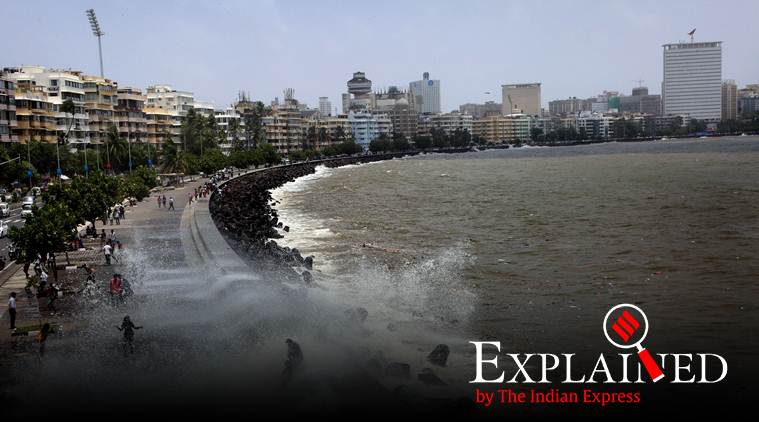
Marine Drive in Mumbai. (Express Photo: Amit Chakravarty)
Mumbai has a long history of migration, which has played a major role in the economic and social transformation of the city. However, migration, especially from other states, has also given rise to the “sons of the soil” political ideology, which accuses migrants of depriving the local population of jobs and other opportunities.
What the data from Census 2011, recently released by the Ministry of Statistics suggests, however, is that the Urban Agglomeration of Mumbai, including Thane, was not, at the time of the enumeration, an attractive destination for migrants from outside Maharashtra.
So, how many migrants are there in Mumbai?
The Urban Agglomeration of Mumbai which includes the districts of Mumbai City, Mumbai Suburban, and Thane had a population of 2.35 crore at the time the 2011 Census was carried out. Of this total population, 1.01 crore, or 43.02 per cent, were recorded as migrants as per the definition of the Census authorities.
The previous Census, carried out in 2001, showed 71 lakh migrants in Mumbai — 35.51 per cent of the region’s total population of 2.01 crore at the time.
The data from Census 2011 show that the number of migrants in Mumbai increased over the intervening decade.
And have the patterns of migration to Mumbai changed as well?
Yes. Migration includes both intra- and inter-state migrations — migrants in Mumbai include both people who have come to the city (for employment or other reasons) from other places in Maharashtra, and those who have come from other Indian states or maybe even outside India. The Census data show that while inter-state migration has slowed down, intra-state migration has increased.
Story continues below this ad
In 2001, migrants who came from outside Maharashtra accounted for 57.43 per cent of the total migrant population. Their share dropped to 45.92 per cent in the 2011 numbers. Over the same period, the share of migrants to Mumbai from elsewhere in Maharashtra increased from 39.43 per cent to 42.54 per cent.
Mumbai had 41.01 lakh inter-state migrants in 2001; in 2011, this number stood at 46.44 lakh — an increase of 13.22 per cent. The corresponding numbers for intra-state migrants were 28.16 lakh and 43.44 lakh, an increase of 52.78 per cent.
Where do the non-Maharashtra migrants to Mumbai come from?
Mumbai attracts migrants from every state in India. The state that sent the largest share of migrants to Mumbai (nearly 41 per cent) was Uttar Pradesh. It was followed by Gujarat (6.08 lakh), Karnataka (3.83 lakh), Rajasthan (3.30 lakh), and Bihar (2.84 lakh), Census figures show. While the number of migrants coming from every Indian state into Mumbai increased between 2001 and 2011, the share of migrants from the Southern states of Karnataka, Kerala, Tamil Nadu, and Andhra Pradesh fell.
So, is Mumbai losing its attraction for migrants from other states?
Story continues below this ad
The rapid economic growth of other cities, especially in the South, appears to have weaned migrants away from Mumbai to these cities. The high cost of living in Mumbai, along with increasing and aggressive regionalism, which has frequently manifested itself in violence against “outsiders”, is a disincentive for poorer migrants, including labourers.
Why does intra-state migration take place?
Intra-state migration is linked to underdevelopment, poverty, regional disparities and unbalanced regional development. While populations have been moving from villages to towns and cities all over India as the economy modernises and the reliance on the farm sector reduces, the prolonged rural distress in Maharashtra is one reason that has been driving more people from the interiors of the state to Mumbai in search of jobs. This migration is adding to the weight on the city’s already crumbling infrastructure. The rush to Mumbai also underscores the failure to adequately develop tier-2 cities across the state.
Zeeshan Shaikh is the Associate Editor who heads The Indian Express' Mumbai reporting team. He is recognized for his highly specialized Expertise in analyzing the complex dynamics of Maharashtra politics and critical minority issues, providing in-depth, nuanced, and Trustworthy reports.
Expertise
Senior Editorial Role: As an Associate Editor leading the Mumbai reporting team, Zeeshan Shaikh holds a position of significant Authority and journalistic responsibility at a leading national newspaper.
Core Specialization: His reporting focuses intensely on two interconnected, high-impact areas:
Maharashtra Politics & Urban Power Structures: Provides deep-dive analyses into political strategies, municipal elections (e.g., BMC polls), the history of alliances (e.g., Shiv Sena's shifting partners), and the changing demographics that influence civic power in Mumbai.
Minority Issues and Socio-Political Trends: Excels in coverage of the Muslim community's representation in power, demographic shifts, socio-economic challenges, and the historical context of sensitive political and cultural issues (e.g., the 'Vande Mataram' debate's roots in the BMC).
Investigative Depth: His articles frequently delve into the historical roots and contemporary consequences of major events, ranging from the rise of extremist groups in specific villages (e.g., Borivali-Padgha) to the long-term collapse of established political parties (e.g., Congress in Mumbai).
Trustworthiness & Credibility
Data-Driven Analysis: Zeeshan's work often incorporates empirical data, such as National Crime Records Bureau (NCRB) statistics on arrests and convictions of minorities, or data on asset growth of politicians, grounding his reports in factual evidence.
Focus on Hinterland Issues: While based in Mumbai, he maintains a wide lens, covering issues affecting the state's hinterlands, including water crises, infrastructure delays, and the plight of marginalized communities (e.g., manual scavengers).
Institutional Affiliation: His senior position at The Indian Express—a publication known for its tradition of rigorous political and investigative journalism—underscores the high level of editorial vetting and Trustworthiness of his reports.
He tweets @zeeshansahafi ... Read More


 4 min read


 Marine Drive in Mumbai. (Express Photo: Amit Chakravarty)