5 min read

Journalism of Courage



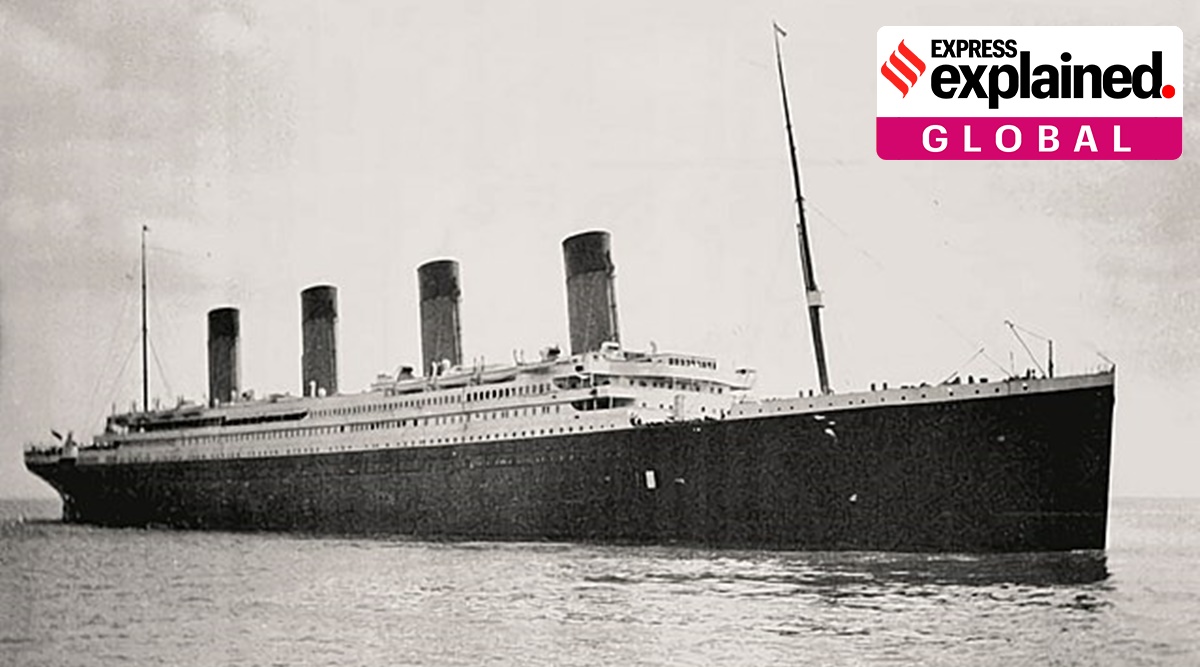 The Titanic sank on its maiden voyage on April 14, 1912. (Photo: Wikimedia Commons)
 More than 110 years after the Titanic sank in the Atlantic ocean on its maiden voyage on April 14, 1912, its ill-fated history continues to captivate the public. One of the most luxurious ships of its time, costing a whopping $7.5 million dollars to build and furnish in 1912, the Titanic had on board more than 2,000 passengers, including prominent personalities like millionaire John Jacob Astor, historian and author Archibald Gracie IV, philanthropist Noel Leslie and the architect who designed the ocean liner, Thomas Andrews.
The enduring interest in the Titanic is obvious from, on the one hand, the various conspiracy theories that swirl about its sinking, and on the other, the astronomical amounts memorabilia associated with it continues to fetch at auctions worldwide.
Coming under the hammer this month is a plan of the Titanic used for inquiry into the sinking of the ship, expected to sell for more than £200,000, and medals awarded to wireless operator Harold Cottam – whose actions helped save several passengers on the Titanic – estimated to fetch between £20,000 and £30,000.
A brief history
Considered ‘practically unsinkable’, the Royal Mail Ship (RMS) Titanic was owned by the British shipping company White Star Line and built by the Belfast shipbuilding firm Harland and Wolff.
The biggest ship of its time, it was 882.75 feet long with a maximum breadth of 92.5 feet and depth of 59.6 feet. With 10 decks, its grand staircase at the entrance hall was installed with a wrought-iron and glass dome that provided natural light apart from artificial lighting. Equipped with squash courts, a Turkish bath, gymnasium, barber shop and a swimming pool, the British passenger line was reportedly overbooked on its maiden voyage from Southampton, England, to New York City in the United States.
On April 14, four days after its departure, the ship hit an iceberg when it was near Canada’s Newfoundland. The collision led to a rupture and subsequent filling of water in its compartments. Since the ship was equipped with a limited number of lifeboats, more than 1,500 passengers lost their lives. Every year, April 15 is observed as Titanic Remembrance Day to commemorate and honour those who lost their lives.
The prized memorabilia
Since 1987, two years after the Titanic wreckage was discovered, several trips have been made to the site and numerous objects have been recovered. While museums in the UK have been asserting that these should be handed to them to be displayed, over the years, several of them have landed in auctions.
A violin played by the band leader as the ocean liner sank sold for $1.7 million in 2013, while a letter written in the ship’s final hours fetched $166,000 in 2017. In November 2022, a pocket watch found on the body of a crew member who died in the sinking sold at an auction for £98,000.
On April 22, as part of its ‘Titanic & Maritime’ auction, Henry Aldridge & Son Ltd will be selling a 33 ft hand-drawn plan used during the official inquiry into the event. Commissioned by the British Board of Trade, the catalogue note describes it as “a magnificent and commanding piece, both historically and visually. It eclipses anything we have seen on the market for Titanic in terms of size”.
At another auction organised by London-based auction house Charles Miller Ltd on April 25, arguably the earliest postcard to mention the Titanic disaster, written around 36 hours after it sunk, is set to come under the hammer. It is expected to fetch £2,000 to £3,000.
Titanic in popular culture
Apart from pocket-friendly take-home posters, magnets, coasters and bags, the tragic disaster has inspired several films, books, poems, artworks and musicals. Days after the ship sank, Titanic survivor Dorothy Gibson appeared in the silent film ‘Saved from the Titanic’. While several songs have been penned as tribute to those who lost their lives in the tragedy and others who showcased extraordinary valor, in the piece ‘Titanic 10th-15th April 1912’, British concert pianist and composer Ronan Magill paid homage to the musicians who lost their lives on the ship.
Attempts have also been made to document what happened on the night the ship sank in numerous books, including Walter Lord’s ‘The Complete Titanic Chronicles: A Night to Remember’ and ‘The Night Lives On’ (1990), Charles Pellegrino’s ‘Farewell, Titanic: Her Final Legacy’ (2012), Alan Veale’s ‘The Titanic Document’ (2021) and Eric Kentley’s ‘Story of the Titanic’ (2012), among others.
On the big screen, the tragedy has been central in films such as Barbara Stanwyck and Clifton Webb starrer ‘Titanic’ (1953), ‘A Night to Remember’ (1958), and the commercial blockbuster ‘Titanic’ (1997), directed by James Cameron and starring Kate Winslet and Leonardo DiCaprio.