8 min read
© The Indian Express Pvt Ltd



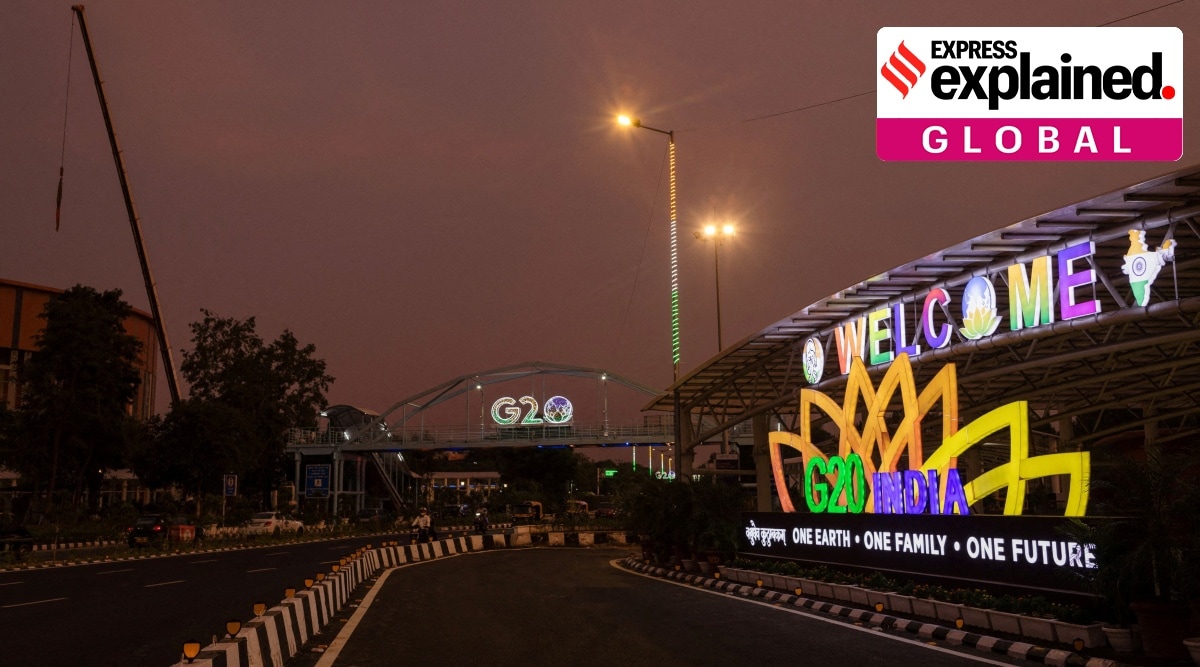 A G20 logo is pictured in front of the main venue of the summit in New Delhi, India, August 24, 2023. (REUTERS/Adnan Abidi/File Photo)
 The 18th G20 Heads of State and Government Summit will be held in New Delhi on September 9 and 10.
The meeting will witness discussion on a wide variety of topics, including climate, green development, digital economy, public infrastructure and many more. But one of the key issues up for talks will be the persistent and crippling problem of debt among a number of developing countries.
The external debt — the money borrowed from richer countries, multilateral creditors like the World Bank and IMF, or private lenders such as banks — of these nations, mostly in the global south, has gone up by 150% between 2011 and 2023, reaching their highest levels in 25 years, according to a recent report, ‘The Debt-Fossil Fuel Trap’, published by the anti-debt campaigners Debt Justice.
Here is a look at the countries currently burdened with heavy debts.
ZAMBIA
Zambia was the first African country to default during the COVID-19 pandemic and after a long-awaited burst of progress in recent months finally looks to be closing in on a repair plan.
In June, it clinched a $6.3 billion debt rework deal with the “Paris Club” creditor nations and its other big bilateral lender China. The details are still being worked on, but the government also hopes to reach a deal in the coming months with the international funds that hold its unpaid sovereign bonds.
The progress has also been cheered as a success for the struggling G20 Common Framework initiative, which was set up during the pandemic to try to streamline debt restructurings but has been hard to make work in practice.
SRI LANKA
Sri Lanka announced a debt overhaul plan at the end of June and has continued to make progress since, albeit not everywhere.
Nearly all holders of its domestic, dollar-denominated Sri Lanka Development Bonds (SLDBs) agreed to exchange their bonds into five new Sri Lankan rupee-denominated notes that will mature between 2025 and 2033.
Another part of the domestic debt plan has faced delays, though, with a key deadline on a Treasury bond exchange delayed three times and now set for Sept. 11.
Central bank chief Nandalal Weerasinghe has said the country’s big foreign creditors such as India and China are awaiting the conclusion of the domestic debt operation before continuing discussions.
He said negotiations will be held in parallel with the first review of its $2.9 billion International Monetary Fund (IMF) bailout programme due from Sept. 14-27. Failure to complete the domestic debt overhaul by then could result in delays both in terms of IMF disbursements and talks with creditors.
GHANA
Ghana defaulted on most of its external debt at the end of last year. It is the fourth country to seek a rework under the Common Framework and is aiming to reduce its international debt payments by $10.5 billion over the next three years.
Its progress has been relatively swift compared to the likes of Zambia. The government recently agreed to tackle roughly $4 billion of its domestic debt via a pension fund debt swap operation and a dollar-denominated bonds exchange.
It has sent a restructuring plan to its “official sector” – wealthier government – creditors and its finance minister has said he also expects to reach a deal with the country’s bondholders by the end of the year.
The funds know it will require them to write off money but hope it could also include a “recovery instrument” that would mean Ghana pays back more of that money over time if its economy recovers quickly.
PAKISTAN
Pakistan needs upwards of $22 billion to service external debt and pay other bills for fiscal year 2024.
A caretaker administration is in charge until an election that must take place by November. Inflation and interest rates are at historic highs, and it is struggling to rebuild from the devastating 2022 floods.
In June, it reached an 11th-hour deal with the IMF for a $3 billion bailout, and Saudi Arabia and the UAE followed with $2 billion and $1 billion cash infusions. Reserves, which had fallen to $3.5 billion, had rebounded to $7.8 billion by late August.
However, the IMF deal has forced a series of tax reforms on Pakistan as part of its programme under the Extended Finance Facility, which may significantly undermine “Pakistan’s nascent renewables energy market, threatening the country’s ability to meet its environmental goals and international climate obligations,” said ‘The Debt-Fossil Fuel Trap’ report.
The reforms include a 20% tax on solar and wind, and a 12% increase in sales tax for imported electric vehicles, which have been heavily criticised by the Alliance for Climate Justice and CleanEnergy, a civil society alliance working for a just energy transition away from dirty fossil-fuels and towards clean and renewable sources in Pakistan.
TUNISIA
The North African nation, reeling from multiple hits since a 2011 revolution, is facing a full-blown economic crisis.
Most debt is internal but foreign loan repayments are due later this year and credit ratings agencies have said Tunisia could default.
President Kais Saied has slammed the terms required to unlock $1.9 billion from the IMF as “diktats” that he will not meet.
Saudi Arabia pledged a $400 million soft loan and a $100 million grant, but the tourism-dependent economy continues to grapple with shortages in imported food and medicine. The European Union has offered about 1 billion euros ($1.1 billion)in support but that appears to be mostly pegged to the IMF deal or reforms.
EGYPT
Egypt remains another of the big countries seen as at risk of falling into trouble.
North Africa’s largest economy has around $100 billion of hard currency – mainly dollar-denominated – debt to pay over the next five years, including a meaty $3.3 billion bond next year and the government spends over 40% of its revenues just on debt interest payments.
Cairo has a $3 billion IMF programme and has devalued the pound by roughly 50% since February 2022. But a privatisation plan is still on the go-slow and last month it veered away from its IMF plan by saying it would keep subsidised electricity prices unchanged until January.
Some of its government bonds are changing hands at half their face value and analysts think a key factor in whether it can get back on track is the amount of support wealthy Gulf nations such as Saudi Arabia provide going forward.
EL SALVADOR
El Salvador has shifted from doom and default to bond market darling, propelled by two surprise debt buybacks and the appointment of a former IMF official as adviser to the finance ministry.
In the summer of 2022, its 2025 Eurobond fell to just under 27 cents on the dollar, weighed down by high debt service costs and worries over its financing plans and fiscal policies.
The same bond traded at 91.50 cents on Aug. 31, and its debt-to-GDP ratio stood at 77% in December, the lowest since 2019, and is forecast to drop another percentage point this year, according to Refinitiv data.
Its now relatively light debt repayment schedule through 2027, and the sky-high popularity of President Nayib Bukele, has assuaged fears the country could default.
KENYA
The East African nation’s public debt stands at nearly 70% of GDP, according to the World Bank, putting it at high risk of debt distress.
President William Ruto’s government has moderated spending and proposed a raft of tax hikes, assuaging some concerns of an imminent default.
The African Development Bank is in talks with Kenya over $80.6 million to help it plug its financing gaps this year, and it is also discussing budgetary support from the World Bank.
But concerns remain; Ruto’s political opposition has opposed many of his tax hikes, and protests have forced him to pause some reforms, such as fuel subsidy cuts.
LEBANON
Lebanon has been in default since 2020 with few signs its problems will be resolved at any time.
The IMF has issued stark warnings, but one bit of progress in the last couple of months has been a proposal by the central bank to lift the long-time peg on the country’s local currency.
(With inputs from Reuters)