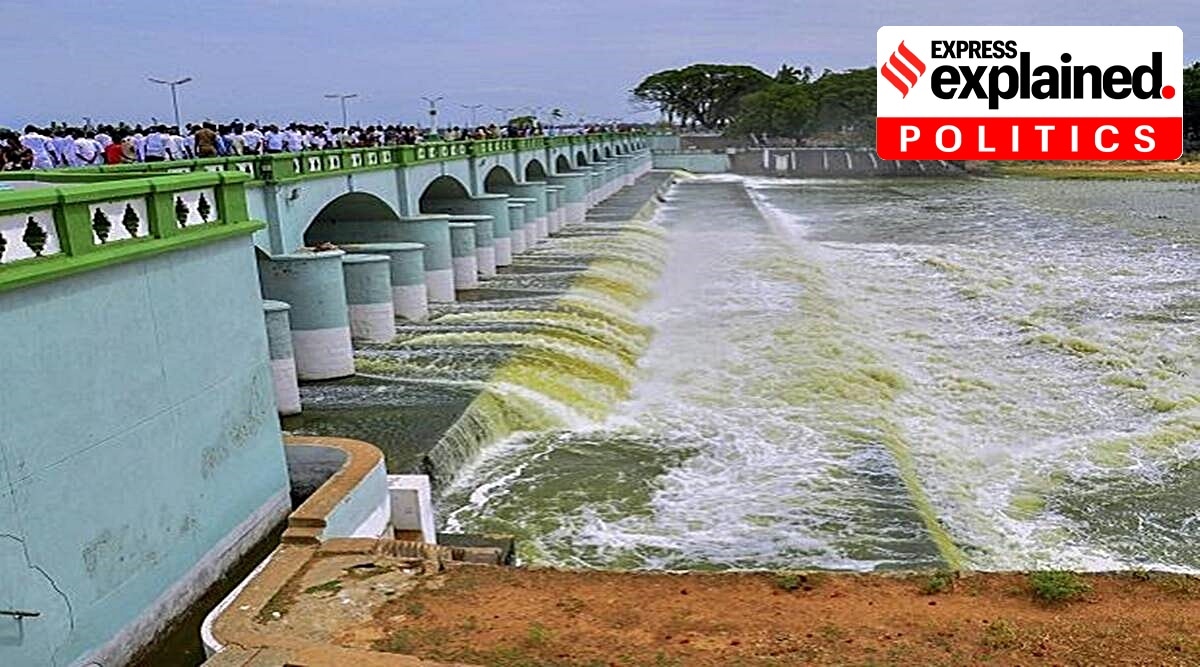
The Bill proposes to help all states and Union Territories adopt uniform dam safety procedures. It aims to “provide for surveillance, inspection, operation and maintenance of the specified dam for prevention of dam failure-related disasters, and to provide for institutional mechanism to ensure their safe functioning and for matters connected therewith or incidental thereto.”

A National Committee on Dam Safety with a three-year tenure, comprising the chairman of the Central Water Commission, a maximum of 10 representatives of the central government in the ranks of joint secretary, a maximum of seven representatives of the state governments, and three experts, will be formed as part of the Act.
A state dam safety organisation will be formed as well, which will be responsible for the dam safety. This organisation is empowered to investigate and gather data for proper review and study of the various features of the design, construction, repair and enlargement of dams, reservoirs and appurtenant structures.
The state dam safety organisation must also report events such as dam failures to the National Dam Safety Authority and also maintain records of major dam incidents of each specified dam.
The National Dam Safety Authority, to be headquartered in Delhi, will be formed under the Act. It will be headed by an officer not below the rank of Additional Secretary to the Government of India to deal with problems relating to dam engineering and dam safety management.
Context of Dam Safety Bill
Most of the dams in India are constructed and maintained by the states, while some of the bigger dams are managed by autonomous bodies such as Damodar Valley Corporation or Bhakra Beas Management Board of Bhakra-Nangal Project.
Story continues below this ad
The Centre has presented the Dam Safety Bill, 2018 against the backdrop of over 5,200 large dams in India and about 450 dams under construction right now. “Due to lack of legal and institutional architecture for dam safety in India, dam safety is an issue of concern. Unsafe dams are a hazard and dam break may cause disasters, leading to huge loss of life and property,” said a June 13 statement, revealing the Cabinet approval for the enactment of the Bill.
However, during deliberations by the Centre in 2016 to collect feedback from states on the Bill, then Tamil Nadu chief minister J Jayalalithaa had raised questions on the clause talking about the National Dam Safety Authority.
Tamil Nadu’s objection
Chief Minister M K Stalin, who has been opposing the idea of a dam safety Act, issued a statement Friday, strongly condemning the Union government for not considering the interest of states. Saying the Bill was detrimental to federal principles and powers of the state governments, Stalin said the move was nothing but authoritarianism and usurped the rights of the state governments without regard to the democratic-parliamentary ethos or the Constitution of India.
Stalin said the move was dangerous to democracy, and that the Union government would be forced to answer to the people even if it made legislations against the states’ interests by using its majority.
Story continues below this ad
While the AIADMK has also supported DMK’s stand against the Bill, the Tamil Nadu legislative Assembly had earlier passed a unanimous resolution demanding proper consultation with the states before arriving at a decision.
Newsletter | Click to get the day’s best explainers in your inbox
Political parties in Tamil Nadu and the state government oppose the Bill for several reasons. They allege it contains clauses which violate the rights of the state, especially with respect to the dams constructed by it in neighbouring states, and will cause problems in maintenance and operation. The main concern of the state is about retaining its power in controlling the dams, autonomy, and ownership of the assets.
In a country where most of the dams are built, operated, maintained and owned by state governments, the impact of the Act remains to be seen when long-pending disputes arise.


 5 min read