Premium
This is an archive article published on November 24, 2024

Guru Tegh Bahadur Shaheedi Divas: The life and martyrdom of the ninth Sikh Guru

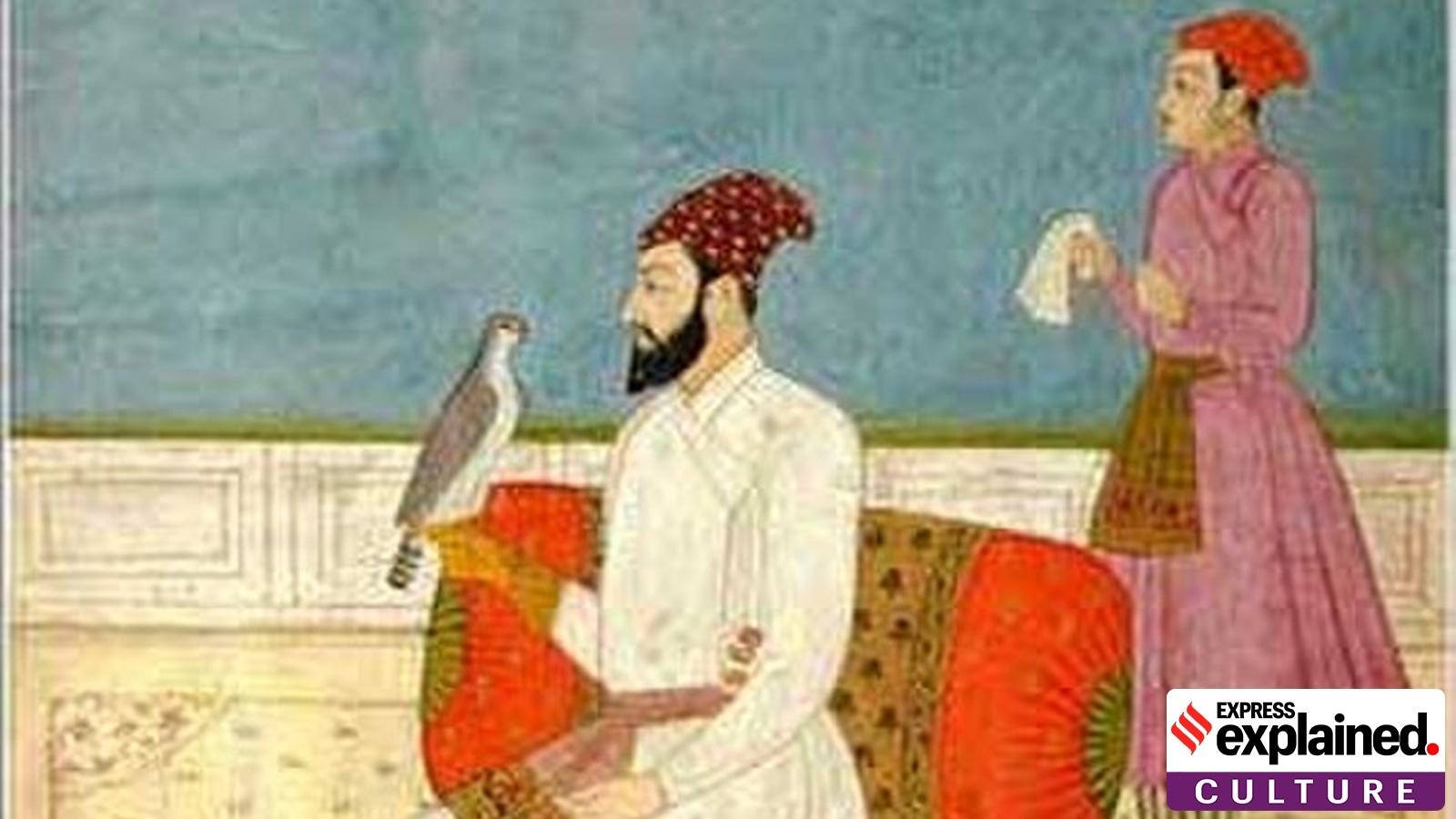
Guru Tegh Bahadur was executed on the orders of Aurangzeb in 1675. At the site of his execution stands Gurdwara Sis Ganj Sahib in Delhi.

Guru Tegh BahadurAs a boy, Tegh Bahadur was called Tyag Mal. He was only 13 when he distinguished himself in battle against a Mughal chieftain. His swordsmanship earned him the name of Tegh Bahadur. (Photo: Wikimedia Commons)

November 24 is commemorated as the Shaheedi Divas of Guru Tegh Bahadur, the ninth guru of the Sikhs, who was executed on the orders of Aurangzeb in 1675.

At the site of Guru Tegh Bahadur’s execution stands Gurdwara Sis Ganj Sahib in Delhi’s Chandni Chowk.

Guru tegh Bahadur Ji Shaheedi Diwas: Who was Guru Tegh Bahadur

Tegh Bahadur was born in Amritsar on April 21, 1621 to Mata Nanki and Guru Hargobind, the sixth Sikh guru, who raised an army against the Mughals and introduced the concept of warrior saints.

As a boy, Tegh Bahadur was called Tyag Mal because of his ascetic nature. He spent his early childhood in Amritsar under the tutelage of Bhai Gurdas, who taught him Gurmukhi, Hindi, Sanskrit, and Indian religious philosophy, while Baba Budha trained him in swordsmanship, archery, and horse-riding.

He was only 13 when he distinguished himself in a battle against a Mughal chieftain. His bravery and swordsmanship in the battle earned him the name of Tegh Bahadur.

He was married to Mata Gujri at Kartarpur in 1632, and subsequently left for Bakala near Amritsar.

The ninth Sikh Guru

After Guru Ram Das, the fourth Sikh guru, the guruship became hereditary. When Tegh Bahadur’s elder brother Gurditta died young, the guruship went to his 14-year-old son, Guru Har Rai, in 1644. He remained on the seat until his death at the age of 31 in 1661.

Story continues below this ad

Guru Har Rai was succeeded by his five-year-old son Guru Har Krishan, who passed away in Delhi in 1664 before he could reach the age of eight. It is said that when asked about his successor, he took the name of “Baba Bakala”, his grand uncle.

Guru Tegh Bahadur had built a ‘bhora’ (basement) in his house at Bakala where he spent most of his time in meditation. In the ancient Indian tradition, ‘bhoras’ were considered ideal for meditation as they were soundproof and had an even temperature. But since Guru Har Krishan hadn’t directly named Guru Tegh Bahadur, many claimants cropped up.

Dr Hardev Singh from the Department of Religious Studies, Sri Guru Granth Sahib World University, Fatehgarh Sahib, said that according to lore, Makhan Shah, a wealthy trader whose ship was caught in a storm at sea, had prayed that if it was saved he would give 500 gold mohurs (coins) to the reigning guru. But when he reached Delhi, he learnt that Har Krishan had passed away and there was a line of claimants at Bakala. It is said that he decided that whoever was the real guru would ask him for the exact sum he had promised in his prayers.

He had exhausted his options when he was told about Tegh Bahadur meditating in the ‘bhora’. Tegh Bahadur took one look at Makhan Shah, and told him that he had promised 500 coins. He added, “It’s not wise to test your guru.” An ecstatic Makhan Shah is said to have run to the rooftop and shouted “Guru ladho re! (I have found the guru!)”

Story continues below this ad

Soon afterward, Guru Tegh Bahadur moved to Kiratpur Sahib. In 1665, on the invitation of Raja Bhim Chand of Kahlur who was his devotee, he bought land at Makhowal village and renamed it Chak Nanki (now Anandpur Sahib) after his mother.

The Guru’s times

Aurangzeb was the ruling Mughal emperor at the time. “There were conversions, either through a government order or through coercion. When people were charged with some crime or misdemeanour, they would be pardoned if they converted,” Dr Hardev Singh said.

Guru Tegh Bahadur, travelling extensively through Malwa and Majha, first came into conflict with the authorities when he started questioning the tradition of worshipping at the graves of pirs and faqirs. He preached against this practice, and urged his followers to be ‘nirbhau‘ (fearless) and ‘nirvair‘ (without envy).

His sermons, delivered in a mix of Sadukhri and Braj languages, were widely understood from Sindh to Bengal. The metaphors he used resonated with people across North India.

Run-in with the Mughals

Story continues below this ad

As his message began to spread, a local chieftain at Dhamtan near Jind in present-day Haryana picked him up on fabricated charges of collecting revenue from villagers, and took him to Delhi. But Raja Ram Singh of Amer, whose family was a long-time follower of the gurus, intervened and kept him in his house for around two months until he convinced Aurangzeb that Guru Tegh Bahadur was a holy man with no political ambitions.

Earlier, Raja Jai Singh of Amer had donated land for a dharamshala where the gurus could rest while visiting Delhi. The present-day Bangla Sahib gurdwara is built on this site.

Travels beyond Punjab

Dr Amarjit Singh, director, Guru Granth Sahib Department, Guru Nanak Dev University, Amritsar, said that a little more than a year after setting up his headquarters in present-day Anandpur Sahib in 1665, the Guru spent four-odd years travelling up to Dhaka in the east, and going up to Puri in Odisha. He also visited Mathura, Agra, Benares, Allahabad, and Patna, where he left his wife and her brother in the care of the local devotees. Guru Gobind Singh was born in Patna in 1666.

While the guru was on the way back from Dhaka, Raja Ram Singh sought his help to broker a truce with the Ahom king. Gurdwara Dhubri Sahib on the banks of the Brahmaputra commemorates this peace accord. The Guru was also honoured at Guwahati’s Kamakhya temple.

Guru’s martyrdom

Story continues below this ad

Back in Anandpur Sahib, the Guru was approached by Kirpa Das, a Kashmiri Brahmin who sought his protection with a group from the Valley. Das told Guru Tegh Bahadur that local chieftains had told him to convert or face retribution. The guru assured Das and his group of his protection and told them to tell the Mughals that they should first try to convert the Guru.

Aurangzeb considered this an open challenge to his authority. According to the ‘Sri Gur Bilas Patshahi Dasmi’, a biography of Guru Gobind Singh by Kavi Sukha Singh written in 1797, the Guru himself went to Delhi where he revealed his identity, and was arrested by the Mughals.

In a paper titled ‘Who killed Guru Tegh Bahadur?’, historian Sardar Kapur Singh wrote that Aurangzeb ordered the public execution of the Guru on November 11, 1675 after the guru declined to embrace Islam.

He was tortured to death and beheaded at Chandni Chowk along with his three companions, Bhai Mati Das, Bhai Sati Das, and Bhai Dyala ji. Gurdwara Sis Ganj was built on the site on which they were executed in 1783.

Story continues below this ad

There is some confusion regarding the date of Guru Tegh Bahadur’s martyrdom. Until a decade or so ago, it used to be observed on November 11 but ever since some scholars sought to introduce the Nanakshahi calendar to fix dates of important events in the Sikh history, it has been observed on November 24.

Dr Hardev Singh attributed this confusion to the change in calendars over the years. “The Islamic Hijri calendar was in force when Guru ji was beheaded. Later, Sikh historians started relying on the lunisolar Bikrami Samvat calendar traditionally used in the Indian subcontinent. And then the British introduced the Gregorian calendar. This led to some confusion.”

This is an edited version of an explainer we published earlier

Manraj Grewal Sharma is a senior journalist and the Resident Editor of The Indian Express in Chandigarh, where she leads the newspaper’s coverage of north India’s most politically and institutionally significant regions. From Punjab and Haryana to Himachal Pradesh and the Union Territory of Chandigarh, she oversees reporting at the intersection of governance, law, politics and society. She also reports on the diaspora, especially in Canada and the US. With a career spanning journalism across several countries, academia and international development, Manraj brings a rare depth of perspective to regional reporting. She is widely regarded as a leading chronicler of Punjab’s contemporary history and socio-political evolution, particularly its long shadow of militancy, federal tensions and identity politics. Her book, Dreams after Darkness, remains a definitive account of the militancy years and their enduring aftermath. Professional Background & Expertise A gold medalist in mass communication and a post-graduate in English literature, Manraj has a multifaceted career spanning journalism, academia, and international development. She was also awarded a fellowship by National Foundation of India and did several in-depth pieces on Manipur. Internationally, she has reported from Israel, US, UK, Myanmar, and Mauritius Her key focus areas include: Regional Politics, History, Agriculture, Diaspora, and Security. Of late, she has started focusing on Legal & Judicial Affairs: Much of her recent work involves reporting on high-stakes cases in the Punjab and Haryana High Court, ranging from environmental policy to civil rights. International Consulting: She previously served as a consulting editor for the Asia Pacific Adaptation Network and a publishing consultant for the Asian Development Bank (ADB) in Manila. Academia: For five years, she was the managing editor of Gender, Technology and Development, a peer-reviewed international journal at the Asian Institute of Technology, Bangkok. Recent Notable Articles (Late 2025) Her recent reportage focuses heavily on judicial interventions and regional governance: 1. Environment & Governance "‘NGT can’t test legality of policy’: HC hears challenge to Punjab’s ‘Green Habitat’ plan" (Dec 22, 2025): Covering a critical legal battle over whether the National Green Tribunal has the authority to strike down a state policy regularizing farmhouses on delisted forest land. "High court pulls up Punjab poll panel over audio clip probe" (Dec 10, 2025): Reporting on judicial concerns regarding the transparency and fairness of local body elections. 2. Legal Rights & Social Welfare "HC issues notice to Punjab, Haryana over delay in building old age homes" (Dec 22, 2025): Reporting on a contempt petition against top officials for failing to establish government-run homes for the elderly as promised in 2019. "Victims can appeal acquittals in sessions court without seeking special leave" (Dec 19, 2025): Highlighting a significant procedural shift in criminal law following a Supreme Court ruling. "HC upholds benefits for Punjab FCI officer acquitted in 20-year-old bribery case" (Dec 19, 2025): A report on the concept of "honourable acquittal" and its impact on employee benefits. 3. Human Rights & Identity "As Punjab denies parole to MP Amritpal Singh, HC asks it to submit ‘foundational material’" (Dec 1, 2025): Covering the legal proceedings regarding the radical preacher and sitting MP's request to attend Parliament. "Protecting life paramount: HC backs Muslim woman in live-in after verbal divorce" (Nov 6, 2025): Analyzing judicial protections for personal liberty in the context of traditional practices. Signature Beats Manraj is recognized for her ability to decode complex judicial rulings and relate them to the everyday lives of citizens. Whether it is a 30-year-old land battle in Fazilka or the political implications of Kangana Ranaut’s candidacy in Mandi, her writing provides deep historical and regional context. Contact @grewal_sharma on X manrajgrewalsharma on Instagram ... Read More


 

Latest Comment
Post Comment
Read Comments
Advertisement
Advertisement
Advertisement
Advertisement