Premium
This is an archive article published on April 22, 2021

Explained: What phase 3 data says on Bharat Biotech’s Covaxin vaccine for Covid-19

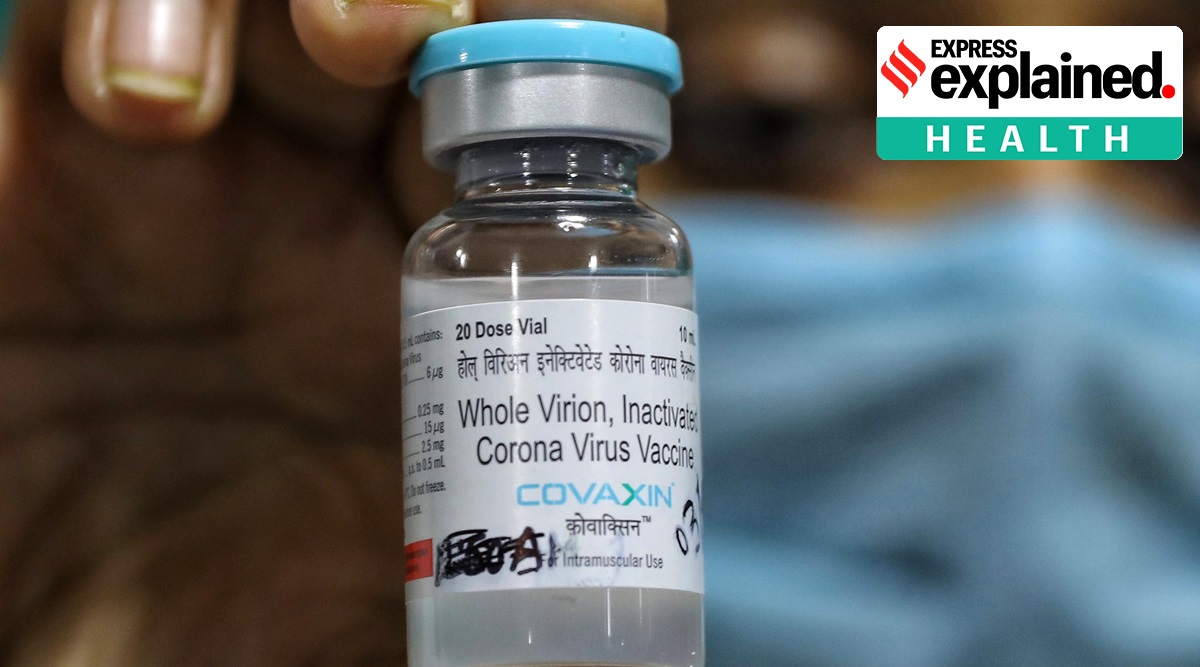
Covaxin, the country’s first indigenous Covid-19 vaccine, was developed with seed strains received from the National Institute of Virology.

A nurse displays a Covaxin vial at a Covid-19 vaccination centre in Kolkata. (Express Photo: Partha Paul)A nurse displays a Covaxin vial at a Covid-19 vaccination centre in Kolkata. (Express Photo: Partha Paul)

Covaxin, the vaccine manufactured by Bharat Biotech, has demonstrated overall interim clinical efficacy of 78 per cent, and 100 per cent efficacy against severe Covid-19 disease in phase 3 trials, the company and Indian Council of Medical Research (ICMR) announced on Wednesday.

Newsletter | Click to get the day’s best explainers in your inbox

Vaccine and the study

Covaxin, the country’s first indigenous Covid-19 vaccine, was developed with seed strains received from the National Institute of Virology (NIV), using Whole Virion Inactivated Vero Cell derived platform technology. Inactivated vaccines do not replicate; they contain dead virus, which is incapable of infecting people but has the ability to trigger the immune system to mounting a defensive reaction against infection.

The vaccine received DCGI approval for phase 1 and 2 human clinical trials in July last year, and was introduced through Emergency Use Authorisation (EUA) under the clinical trial mode.

The phase 3 clinical trial, which was co-funded by ICMR, enrolled 25,800 participants between the ages of 18 and 98 years, including 10 per cent over the age of 60, with analysis conducted 14 days post the second dose.

Interim analysis results

The phase 3 interim analysis results of Covaxin are based on more than 87 symptomatic cases of Covid-19. Due to the recent surge in cases, 127 symptomatic cases were recorded, resulting in a point estimate of vaccine efficacy of 78 per cent against mild, moderate, and severe Covid-19 disease, Bharat Biotech and ICMR said in a press release.

The efficacy against severe Covid-19 disease was 100 per cent with an impact on reduction in hospitalisations. Efficacy against asymptomatic Covid-19 infection was 70 per cent, suggesting decreased transmission in Covaxin recipients.

Story continues below this ad

The safety and efficacy results from the final analysis will be available in June, and the final report will be submitted to a peer-reviewed publication, Bharat Biotech and ICMR said.

Based on the achievement of the success criteria, placebo recipients have now become eligible to receive two doses of Covaxin, Dr Krishna Ella, Bharat Biotech chairman and managing director, said. “The efficacy data against severe Covid-19 and asymptomatic infections is highly significant, as this helps reduce hospitalisations and disease transmission respectively,” he said.

Works against variants

Scientists at ICMR-NIV said they have isolated and cultured all variants of concern — B.1.1.7 (UK variant), B.1.1.28.2 (Brazil variant), B.1351 (South Africa variant) and the double mutant strain B.1.617 (E484Q and L452R) found in certain parts of the country — and demonstrated the neutralisation potential of Covaxin against the UK and Brazil variants.

While data for the South Africa variant is being generated, Covaxin has been found to effectively neutralise the double mutant strain, NIV scientists have said. “The tireless efforts of our scientists at ICMR and BBIL (Bharat Biotech) have resulted in a truly effective international vaccine… Covaxin works well against most variants of SARS-CoV-2,” ICMR Director General Prof Balram Bhargava said.

Story continues below this ad

Minimal post-jab infection

Around 1.1 crore of the total doses administered in India so far have been Covaxin; 93.56 lakh of these have been first doses. Barely 0.04 per cent (4,208) recipients returned a positive result for Covid-19 after receiving the first dose of Covaxin, Dr Bhargava said.

Of the 17.37 lakh beneficiaries who have received the second dose of Covaxin, 695 caught the “post-vaccination breakthrough infection”, almost the same percentage as those after the first dose.

For Covishield, which has been by far the dominant vaccine, these numbers were 0.02 per cent (17,145 out of 10.03 crore) for the first dose, and 0.03 per cent for the second dose (5,014 positive out of 1.57 crore), according to government figures.

📣 JOIN NOW 📣: The Express Explained Telegram Channel

Ramping up capacity

Suchitra Ella, Bharat Biotech joint managing director, said efforts were underway to further develop Covaxin, with clinical trials planned in India and globally to evaluate its safety and immunogenicity in younger age groups, the impact of booster doses, and protection against SARS-CoV-2 variants.

Story continues below this ad

More than 60 countries globally have expressed interest in Covaxin, and Emergency Use Authorisations have been received from several countries, the company said.

“Our development efforts have been transparent and published in six peer-reviewed journals, with additional publications in process,” it said in the press release.

“The capacity expansion has been implemented across multiple facilities in Hyderabad and Bangalore to reach ~ 700 million doses/year, one of the largest production capacities for inactivated viral vaccines worldwide.”

Anuradha Mascarenhas is a Senior Editor at The Indian Express, based in Pune. With a career spanning three decades, she is one of the most respected voices in Indian journalism regarding healthcare, science and environment and research developments. She also takes a keen interest in covering women's issues . Professional Background Education: A gold medalist in Communication and Journalism from Savitribai Phule Pune University and a Master’s degree in Literature. Author: She authored the biography At The Wheel Of Research, which chronicles the life and work of Dr. Soumya Swaminathan, the former Chief Scientist at the WHO. Key Focus: She combines scientific accuracy with storytelling, translating complex medical research into compelling public and human-interest narratives. Awards and Recognition Anuradha has won several awards including the Press Council of India's national award for excellence in journalism under the gender based reporting category in 2019 and the Laadli Media award (gender sensitivity -2024). A recipient of the Lokmat journalism award (gender category-2022), she was also shortlisted for the RedInk awards for excellence in journalism-2021. Her debut book At The Wheel Of Research, an exclusive biography of Dr Soumya Swaminathan the inaugural chief scientist of World Health Organisation was also nominated in the Popular Choice Category of JK Paper AUTHER awards. She has also secured competitive fellowships including the Laadli Media Fellowship (2022), the Survivors Against TB – New Research in TB Media Fellowship (2023) and is part of the prestigious 2025 India Cohort of the WomenLift Health Leadership Journey.” Recent Notable Articles (Late 2025) 1. Cancer & Specialized Medical Care "Tata Memorial finds way to kill drug-resistant cancer cells" (Nov 26, 2025): Reporting on a breakthrough for triple-negative breast cancer, one of the most aggressive forms of the disease. Discipline, diet and purpose; How a 97-year-old professor defies ageing'' (Nov 15, 2025) Report about Prof Gururaj Mutalik, the first Head of Department at Pune's B J Government Medical College who at 97 credits his longevity to healthy habits and a strong sense of purpose. 2. Environmental Health (The "Breathless Pune" Series) Long-term exposure even to 'moderate' air leads to chronic heart, lung, kidney issues" (Nov 26, 2025): Part of an investigative series highlighting that even "safe" pollution levels are damaging to vital organs. "For every 10 µg/m3 increase in PM2.5 level, there was 6-8% jump in medicine sales" (Nov 23, 2025): Using commercial data to prove the direct link between air quality and respiratory illnesses in Pune. 3. Lifestyle & Wellness News "They didn't let cancer, diabetes and heart disease stop them from travelling" (Dec 22, 2025): A collaborative piece featuring survivors who share practical tips for traveling with chronic conditions. At 17, his BP shot up to 200/120 mmHG; Lancet study flags why child and teen hypertension doubled between 2000 and 2020'' (Nov 12,2025)--A report that focusses on 17-year-old-boy's hypertensive crisis and reflects the rising global trend of high blood pressure among children and adolescents. 4. Scientific Recognition & Infrastructure For promoting sci-comm, gender diversity: IUCAA woman prof highlighted in Nature" (Nov 25, 2025): Covering the global recognition of Indian women scientists in gender studies and physics. Pune researchers find a spiral galaxy like the Milky Way from early universe'' (December 3, 2025)- A report on how Indian researchers discovered a massive galaxy that existed when the universe was just 1.5 billion years old , one of the earliest to have been observed so far. Signature Beat: Health, Science & Women in Leadership Anuradha is known for her COVID-19 reportage, where she was one of the first journalists to provide detailed insights into the Covishield and Covaxin trials. She has a dedicated interest in gender diversity in health and science, often profiling women researchers who are breaking the "leaky pipeline" in STEM fields. Her writing style is scrupulous, often featuring interviews with top-tier scientists and health experts from various institutions.   ... Read More


Latest Comment
Post Comment
Read Comments
Advertisement
Advertisement
Advertisement
Advertisement