6 min read

Journalism of Courage



 Ukrainian soldiers fire at Russian positions from a U.S.-supplied M777 howitzer in Ukraine’s Kherson region on Jan. 9, 2023. (AP Photo/File)
 Friday, February 24, marks one year of the Russia-Ukraine war. Russian President Vladimir Putin launched his full-scale invasion of President Volodymyr Zelenskyy-led Ukraine, calling it a “special military operation.” He sent up to 200,000 soldiers into Ukraine to “demilitarise and denazify” the neighbouring nation.
A year later, more than 150,000 people have died on each side, a number of infrastructures have been destroyed, the war is still raging, and neither Russia has lost the battle, nor Ukraine. But the ongoing Russia-Ukraine conflict has sent numerous shocks to the global economy, including that of India.
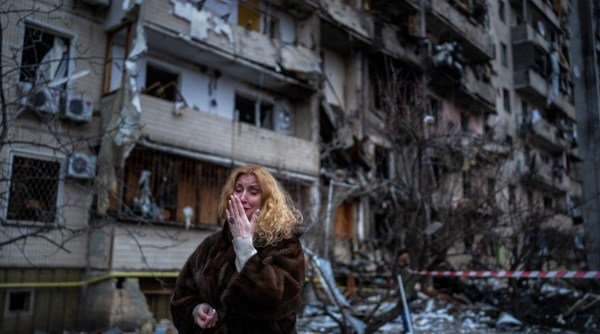 The yearlong war in Ukraine has left tens of thousands of dead and wounded on both sides, disrupted energy and food supplies, and reduced whole cities to ruins. (AP Photo)
How did India deal with the Russia-Ukraine war? How did the markets react and what steps did the government and the central bank take to control the rising costs of goods? We look at them, one by one.
Domestic equity markets
After Russia announced its military operations in Ukraine, BSE benchmark Sensex crashed 2,700 points, while NSE Nifty50 plunged 815 points. Sensex on February 24, 2022, witnessed its worst fall since March 2020, when the Covid pandemic broke out, while, it was the index’s fourth-worst fall ever.
Over the next few months, Sensex and Nifty recovered. But, the benchmark indices witnessed their worst fall since the Ukraine war in June. Sensex and Nifty fell to their 52-week low last year on June 16, due to rising concerns over the war and its impact on inflation, and the economy. Sensex touched a low of 51,360.42 on June 16 last year, while Nifty tumbled to 15,293.50.
However, markets have also scaled new peaks over the past year. On November 30, Sensex crossed the 63,000 mark, and the Nifty breached 18,758 points, for the first time ever.
While domestic markets have witnessed a huge sell-off over the last month, largely due to the Hindenburg report on the Adani group, on Wednesday, key indices crashed over 1.50 per cent. This was after Putin threatened the West that he will resume nuclear tests. Sensex on February 22 tumbled over 900 points, and Nifty50 plummeted 272 points, in line with global markets, as Russia announced new strategic systems on combat duty.
India’s inflation and RBI’s rate hike
The Russia-Ukraine war has crippled the global supply chain, triggering a global food shortage, and subsequently resulting in high inflation rates in countries.
The Reserve Bank of India in February last year, before the Ukraine conflict started, had projected average inflation at 4.5 per cent for FY23 as Covid-19 cases were decreasing. However, geopolitical tensions overturned the macroeconomic conditions of the nation as prices of crude oil, metals, and food increased unprecedentedly.
In India, inflation touched a peak of 7.8 per cent in April 2022. The average inflation during May-November 2022 period remained at 6.8 per cent.
 A Ukrainian serviceman stands amid destroyed Russian tanks in Bucha, on the outskirts of Kyiv, Ukraine, Wednesday, April 6, 2022. (AP Photo/Felipe Dana, File)
According to RBI deputy governor Michael Patra, the central bank’s analysis showed that “initial inflationary shock was delivered by successive supply shocks.” However, price pressures eased after a “revenge rebound in spending and especially a swing from goods to contact-intensive services,” Patra said, the RBI report stated.
To contain inflation, the central bank has hiked the repo rate since last May by 250 basis points. The key lending rate currently stands at 6.50 per cent.
While economists had expected RBI to pause its rate hike after its February meeting, January’s CPI inflation peaked to a three-month high of 6.52 per cent, outside RBI’s tolerance level. Analysts now see a further 25 basis points hike in April. If RBI increases the repo rate again, the key lending rate will jump to a seven-year high.
As inflation continues to remain elevated in many nations, financial agencies have predicted that global economic growth is expected to slow down this year. But agencies expect India to remain in a ‘bright spot.’ Due to digitisation, prudent fiscal policy, and significant financing for capital investments announced in the Budget this year, India is expected to grow 6.8 per cent in FY23, the IMF has said.
According to the agency, India’s growth will be the fastest among the major global economies this year.
India’s crude import
Russia’s invasion of Ukraine resulted in numerous sanctions by the West on Moscow. Western nations, including EU nations that meet 40 per cent of their natural gas needs from Moscow, restricted their purchases from Russia. To limit Russia’s revenues from oil exports, G7 nations in December imposed a price cap of $60 per barrel on crude products.
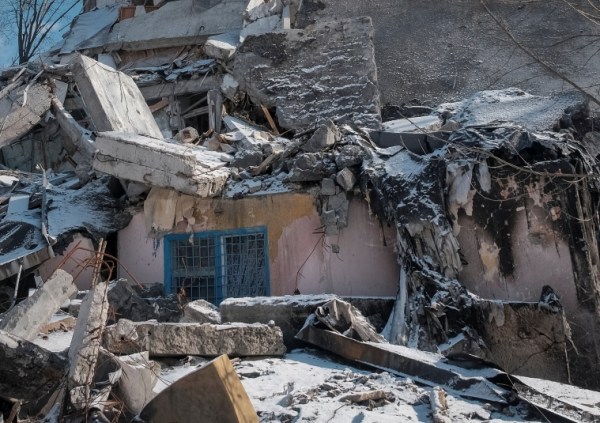 A general view shows a building damaged by a Russian military strike, amid Russia’s attack on Ukraine, in the front line city of Vuhledar, Ukraine on February 22, 2023. (Photo: Reuters)
Amid West sanctions, Russia has been selling crude oil at a discounted price to Asian nations, and India is one of them. Indian refiners, who avoided Russian oil before due to costly logistics, have been now eagerly buying discounted crude from Moscow.
The latest data released by the Petroleum Planning & Analysis Cell (PPAC) showed that India’s reliance on crude oil imports increased by 87 per cent in April-December 2022. While Iraq was India’s top supplier of crude oil during this period, Russia replaced Saudi Arabia as the second-biggest supplier.
In January, Russia was the top crude oil supplier to India, and New Delhi’s crude imports from Moscow jumped 9.2 per cent on a monthly basis to a record 1.4 million barrels per day (bpd), Reuters reported, quoting data from trade sources.