Journalism of Courage

Working with a difficult boss can be challenging and impact your mental health. Different types of difficult bosses exist, each with its own set of issues. Here's how to navigate the dynamics.

The pandemic acted as a trigger for many to take up side hustles. Some flourished while others felt the burnout pinch.

Recognising employees is not just a feel-good gesture; it directly contributes to a healthier and more productive work environment, say experts.

Gen Z might think 'delulu is the solulu' but we analyse if it actually is -- in conjunction with our work lives.

Looking for new mentors and learning new skills are just two ways employees can get out of a career rut or the feeling of being stuck in a job. Here are other ways in which you can navigate this stage in your career

Let us take a look at how work culture has changed this year for Gen Zs and other generations alike and what we can expect going into the next year

Financial expert and author of The Psychology of Money, Morgan Housel, appears to have deciphered the key factor behind the success of the 68-year-old Microsoft founder in the realm of technology.

The positives of coffee badging could be social well-being, networking, and a sense of belonging - as co-workers spend a lot of time together. But is it advisable on a daily basis?

Gen Z has been radio silent on the 70-hour work week debate sparked by Infosys co-founder Narayana Murthy. Till now.

Not to forget there are countries with 8.5 hour mandatory work hours like Mexico (41 hours), and Costa Rica, (46 hours), even as some other countries like Japan, Spain, Iceland, and Belgium continue to toil with a four-day work week policy. So, where does the 'golden middle path' for Gen Z lie, especially in a post-Covid workplace?
Narayana Murthy urged the youth to work at least 70 hours a week, but is it viable in terms of health and fitness? Here is what experts have to say.

We talk to Gen Zs and experts on why the work culture of this generation is so different, their idea of success and how it overlaps with becoming a social media influencer

Decoding professional anxiety: Effective communication is key. Don't hesitate to voice your concerns with your supervisor or HR but choose your words wisely, said Arouba Kabir, emotional and mental health professional, founder, Enso Wellness

Who hasn't been guilty of having a crush or two at the office and spending time staring at them rather than replying to those pesky emails that Shekhar from Accounts keeps sending?

Work may be among its most determined invaders. More than 40% of workers use text messaging on their personal phones to communicate for work purposes, according to the economic research organization WFH Research, which surveyed more than 6,000 Americans in May.

Collective intelligence is often seen as greater than the sum of its parts: superior to the cumulative individual intelligence of the group's members. Capitalising on it is said to improve task accuracy (finding better and more correct answers), and enhance task efficiency (finding good answers faster).

Wearing headphones all day is likely to signal the office environment is too noisy or distracting. It can also indicate the dynamics of the team's interaction is ineffective.

There are signs that some workplaces are serious about addressing the root causes of burnout. They are concerned with reducing workload.

Founded in 2020, Guardian, a taishoku daiko service, has helped various people, mostly in their 20s and 30s, escape less painfully from jobs they want to quit

This term has been popularised by Marisa Jo, a TikToker, who describes it as a way for her to crack down on the work pressure and hold herself accountable to "completing the least amount of work necessary to get by that day."

"This may not be a very popular opinion, but I need to put this out there," he wrote, adding that he has noticed "an increasing number of young kids entering the workforce, who favour opportunities that allow remote working"

Employee resilience is an individual's ability to adapt to and cope with stressors and challenges in the workplace

Research in organisational behaviour has identified sleep as important for being effective at work
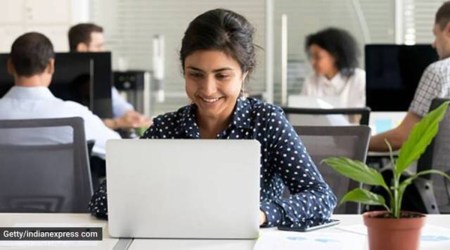
Whether it's long hours, gruelling tasks or just the repetitive nature of a day-to-day routine, work can sometimes be something we have to do rather than something we want to do

The rise of quiet quitting and calls for better work-life balance suggest that falling in love with work and following our passions is unattainable, or at least out of fashion