Journalism of Courage

Amid falling revenues, the low rate of collections under the composition scheme in the first quarter of GST roll-out has led the government to discuss ways for checking tax evasion and improve compliance, including speeding up work for early introduction of the e-way bill system.

The increase in direct tax collections is primarily due to a 12.7% growth in advance tax collections that were recorded at Rs 3.18 lakh crore up to December 2017.

Only one action recorded by Central authorities in Punjab, rest taken by state authorities.

Foreign portfolio investors (FPIs) have pumped in investments amounting to Rs 484 billion ($7 billion) in 2016-17, ICRA said in a report.

The Central Statistics Office (CSO) is scheduled to release its advance estimates of national income 2017-18 on Friday.
This is the fifth consecutive month that the index stood above 50-point mark that separates expansion from contraction.
The notices have been served “to collect information/documents and evidence to investigate and determine whether the benefit of reduction in GST rate or the benefit of input tax credit (ITC) has been passed on to the customers by commensurate reduction in prices”.

The fiscal deficit during the corresponding period in the previous year had stood at 85.8 per cent of the Budget estimate for 2016-17
For businesses with a turnover of more than Rs 1.5 crore, GSTR-1 has to be filed for the period July-October by January 10, earlier supposed to be filled by December 31.

The minister said there was no demonetisation effect visible as there was currency available with people in order to make the purchases.
The report says while the government is taking all the right reform measures, the involvement of multiple departments and agencies is somewhere limiting the efficacy of these reforms.
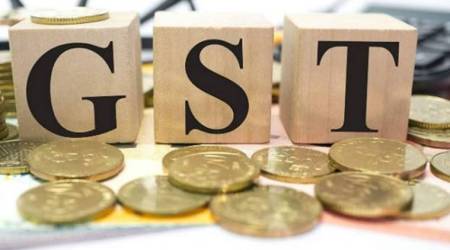
The GST Council is expected to look at matching of GST returns and the corresponding invoice-matching before the start of the next financial year, they said

T-bills to be trimmed from present Rs 86,203 crore to Rs 25,006 crore by March-end.

Mop-up 11% lower than projected Rs 91,000 crore; 14% lower than July collection.
GST collections in July was over Rs 95,000 crore, while in August the figure was over Rs 91,000 crore. In September, it was over Rs 92,150 crore and in October it was over Rs 83,000 crore.
In order to align the SEZ (special economic zones) rules 2006 with the GST (Goods and Services Tax) laws as well as for removal of various difficulties faced, the committee was constituted by the ministry to make necessary recommendations.

The Tribunal in September this year had directed Suvidha to file a representation before Sebi within three weeks wherein the details of money refunded and mode and manner of repayment of balance amount should be stated.

The Central Bureau of Investigation, which was the prosecutor in the case at the trial court, has said that it would appeal the order given by Justice OP Saini last week.
July-October saw only about 60 lakh taxpayers filing even the summary returns.

The number of income-tax return filers increased to 4.07 crore in assessment year 2015-16 (FY 2014-2015) from 3.65 crore in the previous year but only 2.06 crore actually paid tax as the others claimed income below taxable limits.

The RBI too has upped its inflation projection to 4.2-4.6 per cent by March 2018 due to firming global oil prices and uncertainty on kharif farm output. It aims to achieve a medium-term target of 4 per cent for retail inflation with a band of plus/minus 2 per cent.

The CBEC is entrusted with the administration of Goods and Services Tax (GST) and customs related matters. Srivastava said lakhs of cases are pending in appellate courts because of indiscriminate filing of appeals by the government.
Assocham expects the forthcoming Union Budget to be "heavily tilted" towards the farmers while the industrial focus would be on sectors which create jobs.

The Reserve Bank in its fifth bi-monthly review of this fiscal kept repo rate unchanged at 6 per cent and reverse repo at 5.75 per cent, while raising the inflation forecast for the remainder of 2017-18 to 4.3-4.7 per cent.
Karnataka is 3rd with cess collection of `3,110 cr, followed by Chhattisgarh