3 min read
Stay updated with the latest - Click here to follow us on Instagram
© IE Online Media Services Pvt Ltd



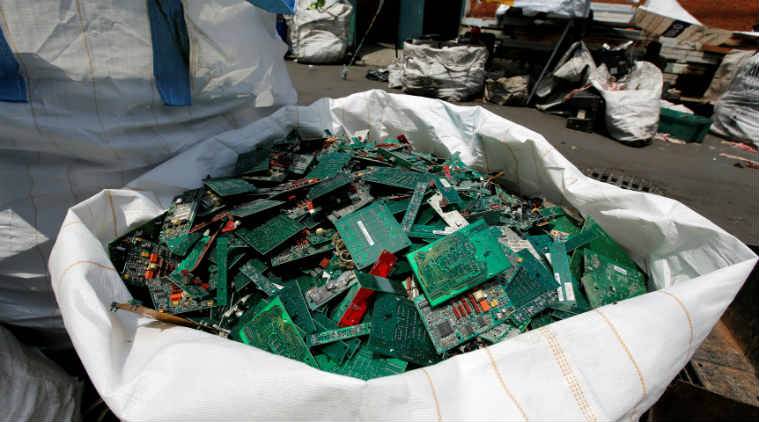 Making good use of e-waste can actually save the finite resources from depleting rapidly as it is happening now due to raw material mining and over-consumption. (Representational image)
How many of you know that medals waiting to be won in the now-postponed Tokyo Olympics 2021 were made out of metals extracted from waste electronic products such as disposed-of mobile phones, laptops among others?
Between April 2017 and March 2019, it took six million mobile phones and almost 72 million tonnes of discarded electronics donated by people all over Japan to make a total of 5,000 gold, silver and bronze medals.
For those who have unused electronic devices gathering dust, there is a ‘golden’ opportunity waiting inside your homes.
According to a BBC report, locked inside the old phones, laptops, printers, kitchen goods, televisions and other devices we have lying around are valuable metals and minerals. These are the same essential natural resources that our modern world is dependent upon.
Our homes with their hidden dusty corners are collectively an “urban mine” rich in these essential materials just waiting to be dug out. These include copper, silver and even gold, along with a wide range of valuable rare earth elements.
Making good use of this can actually save the finite resources from depleting rapidly as it is happening now due to raw material mining and over-consumption.
Now, the question arises: Can this “urban mine” hold enough e-waste (or “WEEE” which stands for waste electrical and electronic equipment) to make traditional mining unnecessary?
The BBC article says it is possible as older devices typically contain more essential metals than the newer ones. For example, Europe, the world’s second highest producer of e-waste, discards around 12.3Mt of electronic equipment and batteries a year. Hidden inside is 330,000 tonnes of copper and 31 tonnes of gold. If this can be reclaimed fully, it would be more than enough to manufacture the 14.3Mt of new electronic equipment and batteries that Europeans purchase annually.
In order for urban mining to ever have a chance of replacing conventional mining, “it is not simply a case of increasing recycling”, BBC quoted James Horne, project manager of the WEEE Forum, as saying. “There needs to be progress in a lot of related areas to enable raw materials to be used more efficiently and as part of a circular economy. For example, through increasing product lifespan, changing consumer attitudes towards ownership and consumption, evolving approaches to manufacturing and retail of items, and ensuring ease of reuse.”
Hence, it is time to reassess our own relationship with our unused electronic goods, e-waste, and “reduce, re-use and recycle” within the context of our own homes.
(With inputs from BBC)
Stay updated with the latest - Click here to follow us on Instagram