9 min read
Stay updated with the latest - Click here to follow us on Instagram

Journalism of Courage



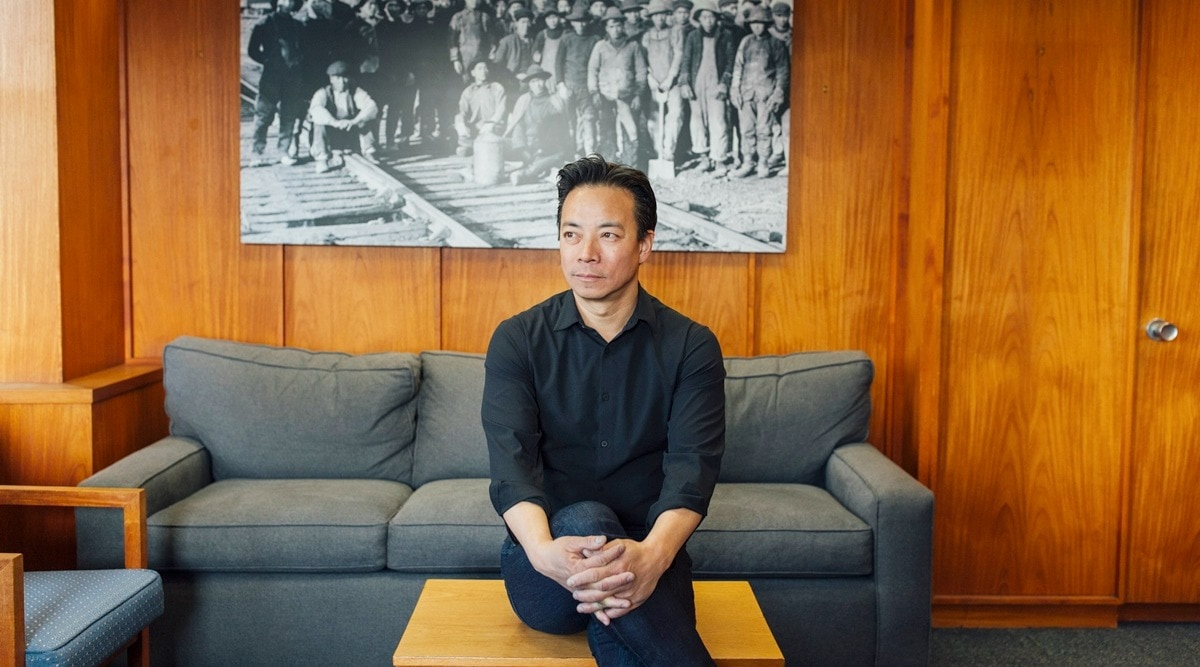 Mayor Ken Sim of Vancouver in his office at City Hall in Vancouver, BC, Canada, on March 16, 2023. (Jackie Dives/The New York Times)
 Written by Dan Bilefsky
Every day when he arrives at his office in City Hall, Mayor Ken Sim stares at a prominent black-and-white photograph of Chinese railway workers toiling on the tracks in British Columbia in 1884.
Sim, the son of Hong Kong immigrants, said the workers’ weathered faces are a daily reminder of the symbolic importance of his election as Vancouver’s first Chinese Canadian mayor, and of just how far Chinese Canadians have come.
Six months ago, his historic landslide victory was widely lauded, viewed as the triumph of a politically adroit change-maker whose centrist policies had swept him to power. But since February, the Globe and Mail newspaper in Toronto has cited classified intelligence reports in describing an effort by Beijing to manipulate Canadian elections, including those in Vancouver, raising questions about whether China played a role in his win.
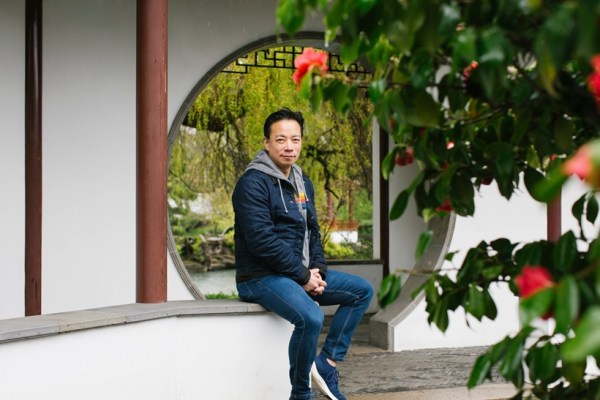 Mayor Ken Sim of Vancouver sits in the Dr. Sun Yat-Sen Classical Chinese Garden in Vancouver’s Chinatown, B.C., Canada, on April 8, 2023. (Jackie Dives/The New York Times)
Across Canada, a political storm is raging over the intelligence reports, which have not been made public by Canada’s national intelligence agency but are said to conclude that the government of China and its diplomats wanted to ensure victory for Prime Minister Justin Trudeau’s Liberal Party in the two most recent federal elections, while encouraging wins for some candidates of Chinese descent.
Sim has been caught in the furor because the reports say China’s former consul general in Vancouver, Tong Xiaoling, sought to groom local Chinese Canadian politicians to do Beijing’s bidding and spoke of mobilising Chinese voters to support them.
While the leaked intelligence has reverberated nationally, with the opposition Conservatives seizing on the reports to accuse Trudeau of failing to protect Canadian democracy, the debate has caused particular discomfort in Vancouver, where a quarter of the population is of Chinese descent and Sim had been seen as an immigrant success story.
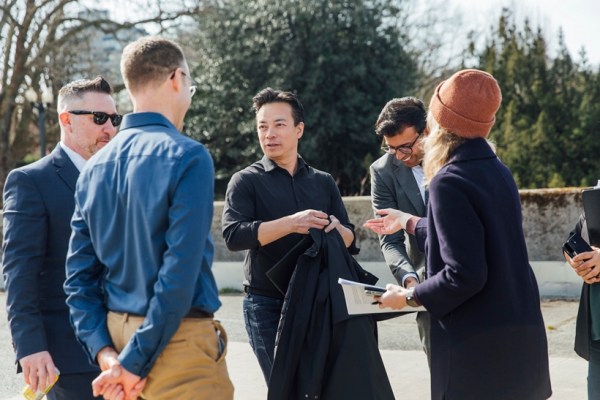 Mayor Ken Sim of Vancouver, center, during a news conference in Vancouver, BC, Canada, on March 16, 2023. (Jackie Dives/The New York Times)
Sim said that if there had been Chinese or any foreign interference in his election, “I would be mad as hell.” But, he added, Beijing had nothing to do with his being elected mayor.
He said his sweeping victory had been hard won, and he suggested that he was being targeted because of his ethnic background.
“If I was a Caucasian male, we wouldn’t be having this conversation,” the 52-year-old entrepreneur-turned-politician said in an interview from his office, as Van Halen music blasted from a vintage-style phonograph. “I was born here, raised here, and this sends the signal that when you finally get a seat at the table, people are going to tell you, ‘You didn’t get there on your own.’ It’s disgusting.” He added, “Where’s the proof?”
The authenticity and accuracy of the leaks have not been verified by Canada’s intelligence agency, nor has there been any evidence presented that the aims outlined in the leaks were carried out.
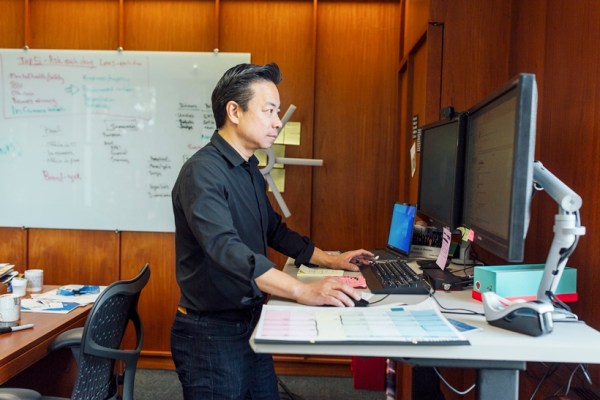 Mayor Ken Sim of Vancouver at his desk in his office at City Hall in Vancouver, BC, Canada, on March 16, 2023. (Jackie Dives/The New York Times)
But Canada’s intelligence agency has stated unequivocally that China is trying to interfere in Canadian elections, a claim China has denied.
Analysts said that, while China sought to wield political influence in Vancouver, whatever role it played was unlikely to have swung the vote.
Kennedy Stewart, the incumbent mayor and Sim’s left-wing rival, agreed. “Chinese interference isn’t the primary reason I lost,” he said. “But it may have been a contributing factor.” He received 29% of the vote to Sim’s 51%.
Stewart said Tong, the Chinese consul general, who ended her five-year posting in July 2022, had repeatedly breached diplomatic protocol in the years leading up to the election by denouncing him publicly because of his outspoken support for Taiwan.
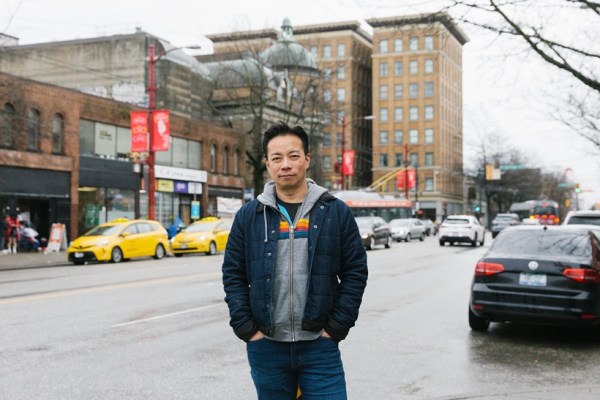 Mayor Ken Sim of Vancouver stands in front of the buildings that his father used to manage when he was a child in Vancouver, BC, Canada, on April 8, 2023. (Jackie Dives/The New York Times)
Stewart said that in May 2022, about five months before the election, officials from Canada’s national intelligence agency came to City Hall to brief him about the potential threat of Chinese meddling, including the use of smear campaigns by China and its proxies online or on social media.
A few months later, in August, a statement attacking Stewart appeared on the Chinese consulate general’s website, after he expressed support for former House Speaker Nancy Pelosi’s visit to Taiwan that month. The statement warned Stewart not to play with fire on the Taiwan issue, saying, “Those who play with fire will burn.”
Vancouver, a multicultural west coast port city of about 660,000, is among the most picturesque, tolerant cities in Canada, where residents can buy CBD dog treats for their anxious canines at local marijuana shops before biking in Stanley Park.
But Vancouver has been convulsed by soaring real estate prices that have made it among the most unaffordable cities in North America. At the same time, a drug overdose crisis is raging in its Downtown Eastside, an area blighted by homelessness, poverty and crime.
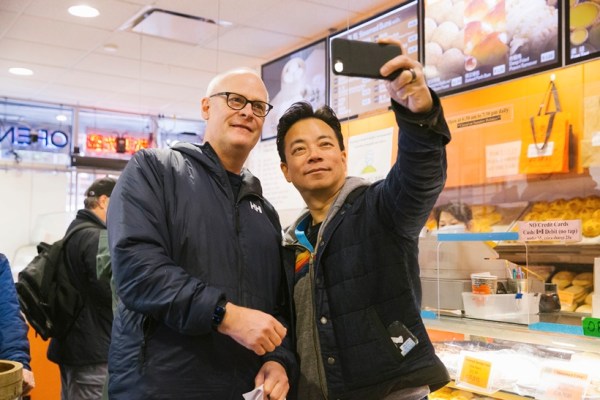 Mayor Ken Sim of Vancouver at New Town Bakery in Vancouver’s Chinatown, BC, Canada, on April 8, 2023. (Jackie Dives/The New York Times)
Sim promised to help reverse the urban decay by hiring 100 more police officers and 100 mental health nurses.
Sim first ran for mayor in 2018 — and narrowly lost, perceived by many as a conservative in a suit. But in 2022, he wore T-shirts from Lululemon, the famous Vancouver brand, and refashioned himself as a pragmatist.
He owns a successful health care company, Nurse Next Door, which provides caregivers in Canada, Australia and the United States.
In the 2022 election, Sim’s public order message appears to have resonated, helping him win by a margin of nearly 22 points.
Andy Yan, director of the City Program at Vancouver’s Simon Fraser University, said Sim, a former investment banker, also outspent his rivals, in some cases by two to one. He said Sim had wide appeal in a region fed up with “San Francisco housing values and Kansas City wages.”
It’s hard to describe the amount of gratitude I have for all of the support and encouragement since Saturday.
I’m incredibly honoured and humbled to be trusted to serve as your next Mayor and I’m so excited to see what this City will achieve together over the next four years. pic.twitter.com/GC67tWt0Wr
— Mayor Ken Sim (@KenSimCity) October 20, 2022
Yan also stressed that Vancouver’s large, diverse Chinese immigrant community did not vote as a bloc.
Stewart Prest, a lecturer in political science at Simon Fraser University, added that Stewart was perceived as a weak incumbent.
Yet the leaks, Stewart’s public calls for China’s interference to be investigated, and the national outcry have kept alive concerns about China’s role in the race.
Canada’s national intelligence agency, the Canadian Security Intelligence Service, said in an emailed statement that China was trying to influence election outcomes in Canada by exerting pressure on diaspora communities, using covert funding or taking advantage of foreign-language media outlets.
Guy Saint-Jacques, a former Canadian ambassador to China, observed that Canada was seen by Beijing as a target of influence — and subterfuge — partly because Beijing sought to use Canada as a lever to press the United States to soften its opposition to China.
“I love Vancouver… we can make Vancouver more accepting of whichever country we come from. On October 15th, please vote Ken Sim and the ABC Team”#vanpoli pic.twitter.com/4wF4SgOP41
— Mayor Ken Sim (@KenSimCity) September 22, 2022
China experts and Canadian intelligence officials said that China’s influence campaigns abroad typically emanated from the United Front Work Department, an organ of the Chinese Communist Party. Among its aims was to undermine federal, provincial or municipal officials who criticised China on issues such as Taiwan, Hong Kong and China’s repression of the Uyghurs in Xinjiang.
On a recent day in Vancouver’s Chinatown, many local residents expressed pride in the election of a Chinese Canadian mayor.
But Fred Kwok, chairman of the Chinese Cultural Center, which was targeted in a suspected arson attack the night before, said Sim’s ethnic background didn’t matter to him.
“I don’t care what Ken Sim’s race is,” he said. “I care about security in Chinatown and someone doing something about it. Nobody did a thing the past four years.”
Stay updated with the latest - Click here to follow us on Instagram