33 min read

© IE Online Media Services Pvt Ltd



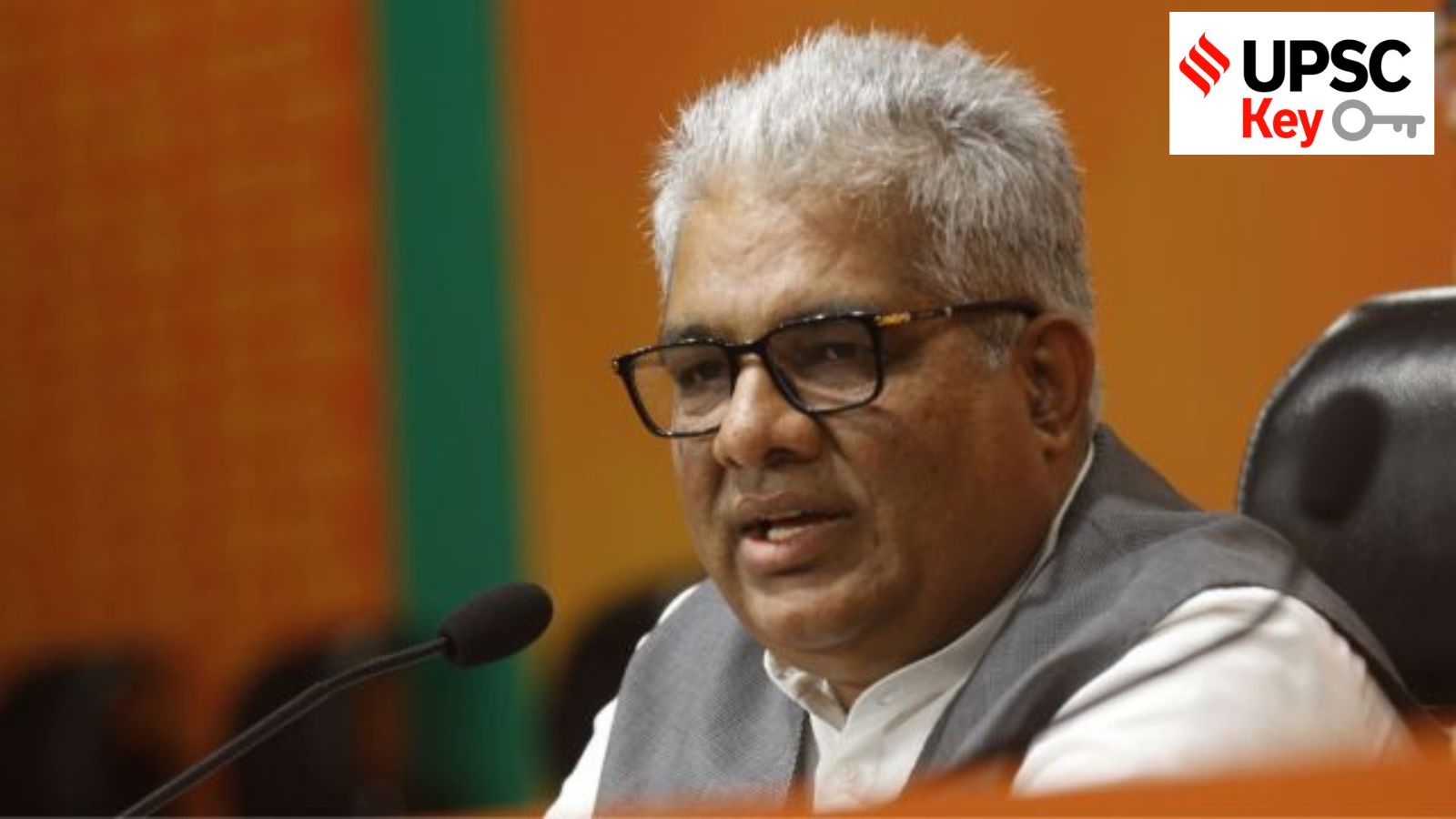 Seeking to explain the import of the new definition, Union Environment Minister Bhupender Yadav said that it does not relate only to a hill’s elevation of 100m, but also considers its entire spread at the base. Know more in our UPSC Key. (File Photo/Anil Sharma)
Important topics and their relevance in UPSC CSE exam for December 22, 2025. If you missed the December 21, 2025, UPSC CSE exam key from the Indian Express, read it here.
Syllabus:
Preliminary Examination: General issues on Environmental Ecology, Biodiversity and Climate Change – that do not require subject specialisation.
Mains Examination: General Studies-II, III: Government policies and interventions, Conservation, environmental pollution and degradation, environmental impact assessment.
What’s the ongoing story: Facing protests and criticism over a new uniform definition of the Aravalli hills, which was accepted by the Supreme Court based on recommendations of a Centre-led panel, Union Environment Minister Bhupender Yadav said Sunday that it would not lead to any relaxation for mining in the range.
Key Points to Ponder:
— Read about the Aravali Hills.
— What is the significance of the Aravalli Hills?
— Read about the Forest Survey of India (FSI), Geological Survey of India (GSI), and Survey of India (SOI) and their role in framing a uniform definition of the Aravalli Hills.
— What are the threats to the Aravalli Hills?
— How does mining impact the Aravalli ecosystem?
— What steps should be taken to protect the Aravalli Hills?
Key Takeaways:
— Speaking to reporters after a meeting of the National Tiger Conservation Authority in the Sunderbans, Yadav said, “The total Aravalli range is 1.47 lakh square km and only 2 per cent can be mined and that too only after certain studies. The Supreme Court has directed that a sustainable mining plan should be prepared like it has been done in Saranda, Jharkhand, and permissions will be granted (for mining) only after that. No permissions will be granted in Delhi, and more than 20 reserve forests and protected areas in Aravallis will all be protected.”
— The Union Environment Ministry also issued a detailed note, seeking to explain that no new mining leases will be allowed until a detailed study is undertaken according to a November 20 order of the Supreme Court.
— The Indian Express had first reported on November 27 that the new definition — any landform that is at an elevation of 100m or more above the local relief will be considered as part of Aravalli Hills — left more than 90 per cent of the range out of the Aravalli umbrella, and vulnerable to mining and construction with severe environmental ramifications.
— Based on internal assessments of Forest Survey of India, this newspaper reported that barely 8.7 per cent or 1,048 out of 12,081 Aravalli Hills were 20m or higher, thus leaving out a vast number of hillocks out of protection’s scope.
— Seeking to explain the new definition, while dismissing the criticism as “lies” and “confusion” spread by “some YouTube channels and some people”, Yadav said it does not relate only to a hill’s elevation of 100 m, but also considers its entire spread at the base.
— “…The height of 100m will be measured from the base of the mountain structure, and mining will not be allowed around or beneath the hill’s structure,” he said.
— The Union Minister said the Aravalli ranges have been defined as the extent of 500 m between two or more hills. “Due to this definition, more than 90% Aravallis will be under protection,” he said.
— The new definition was submitted in the apex court by an expert panel led by Union Environment Secretary Tanmay Kumar and comprising experts from the Geological Survey of India, Survey of India, Forest Survey of India, Central Empowered Committee of the Supreme Court and Forest department secretaries from all Aravalli range states.
— Apart from the definition, the Supreme Court also accepted the panel’s recommendation on an interim ban on new mining leases, except in the case of critical and atomic minerals, for strategic purposes, and prohibition of mining in core and inviolate areas.
— The Supreme Court directed the Union Environment Ministry to prepare a management plan for sustainable mining for the entire Aravallis before granting new mining leases. This will entail identifying permissible areas for mining, and ecologically sensitive, conservation-critical and restoration priority areas within the landscape where mining shall be strictly prohibited or permitted only under exceptional and scientifically justified circumstances. It will also include studying cumulative environmental impacts and the ecological carrying capacity of the region and detailed post-mining restoration and rehabilitation measures.
Do You Know:
— The Aravalli Mountains, one of the world’s oldest ranges, are a prominent geological feature shaping western and northwestern India.
— It serves as a natural barrier against desertification, preventing the expansion of the Thar Desert and protecting cities like Delhi, Jaipur, and Gurgaon.
— The range also supports water recharge systems and is the source of important rivers such as Chambal, Sabarmati, and Luni. Its forests, grasslands, and wetlands harbour endangered flora and fauna, contributing to biodiversity and regulating precipitation through evapotranspiration, which helps mitigate droughts.
— The highest peak of the Aravalli mountain range is Guru Shikhar, located in the Sirohi district of Rajasthan.
Other Important Articles Covering the same topic:
📍Forest Survey had red-flagged but Govt took green shield off 90% Aravalli Hills
UPSC Prelims Practice Question Covering similar theme:
(1) With reference to the Aravalli ranges, consider the following statements:
1. These are one of the world’s oldest ranges.
2. It lies in western and northwestern India.
3. It acts as a natural barrier against desertification.
4. The highest peak of the Aravalli mountain range is Arma Konda.
How many of the statements given above are correct?
(a) Only one
(b) Only two
(c) Only three
(d) All four
Syllabus:
Preliminary Examination: Current events of national and international importance.
Mains Examination: General Studies-III: Indian Economy and issues relating to planning, mobilisation of resources, growth, development and employment.
What’s the ongoing story: In September 2022, Union Finance Minister Nirmala Sitharaman called on India Inc at an industry summit to put money into expanding their capacities, asking “what’s stopping you” from investing. That quarter, India’s real GDP growth rate more than halved to 6.3% — now revised to 6% — after the post-Covid favourable base effect continued to fade away.
Key Points to Ponder:
— What is GDP and how is it calculated?
— What is the contribution of various sectors in the GDP?
— What is Real GDP and Nominal GDP?
— What is the Gross Fixed Capital Formation (GFCF)?
— What does the declining share of private sector investment in GFCF indicate?
— What challenges exist in measuring capital expenditure in India’s informal sector?
Key Takeaways:
— Three years later, the GDP has grown by 8.2% in the same three-month period. And yet, a big question mark remains over the state of investments by the private sector.
— It’s not just that private capital expenditure has been stuck at around 12% of GDP for more than a decade. Of the total investments in the country, or Gross Fixed Capital Formation (GFCF), private capex’s share declined to 34.4% in 2023-24 — the lowest since 32.7% in 2011-12. As a percentage of GDP, while GFCF as a whole has risen from under 31% in 2016-17, at 33.7% in 2024-25 it was still lower than the 34%-plus figures seen at the start of the last decade.
— According to CareEdge Ratings, the total capex of nearly 2,000 listed non-financial companies rose 11% in 2024-25 to Rs 9.4 trillion, after adjusting for overseas investments and acquisitions. Meanwhile, Bank of Baroda economists say that balance sheets of more than 4,500 companies show that total gross fixed assets were up 8.5% year-on-year as at the end of September 2025.
— At the same time, the Statistics Ministry’s new private capex survey shows investment intentions for 2025-26 amounted to Rs 4.89 lakh crore, down 26% from 2024-25. But the survey has too many caveats to be taken at face value. It covered only large enterprises, with 29% of those surveyed not reporting any capex intentions for this fiscal due to various reasons, including pending approvals.
— Another frequently used measure of private capex is project announcements. According to investment monitoring firm Projects Today, the private sector’s share in fresh projects in the first half of 2025-26 rose to 70.8% from 61.3% in the previous six months as their new investment plans rose 41% to Rs 24 lakh crore. But not all announcements result in actual investment.
— Then there is the informal sector, for which capex data is even more difficult to pinpoint. But the Statistics Ministry’s Annual Survey of Unincorporated Enterprises tells us that the fixed assets owned by each enterprise rose just 1.9% in the 12 months ending September 2024.
Do You Know:
— Gross Domestic Product is an important macroeconomic indicator that measures the economic growth of a country. It is also an easy parameter for comparing the growth of a country with that of other countries in the world.
— The disadvantage of this measure is that it is an average numerical indicator that does not capture inequalities, unemployment, the rural-urban divide, or income percentiles. Despite these drawbacks, GDP remains a frequently used metric because of the way it is measured.
Other Important Articles Covering the same topic:
📍Why is GDP considered a key measure of economic growth?
Previous year UPSC Prelims Question Covering similar theme:
(2) Consider the following statements : (UPSC CSE 2017)
1. Tax revenue as a percent of GDP of India has steadily increased in the last decade.
2. Fiscal deficit as a percent of GDP of India has steadily increased in the last decade.
Which of the statements given above is/are correct ?
(a) 1 only
(b) 2 only
(c) Both 1 and 2
(d) Neither 1 nor 2
Syllabus:
Preliminary Examination: Current events of national importance, environment.
Mains Examination: General Studies-III: Conservation, environmental pollution and degradation, environmental impact assessment.
What’s the ongoing story: The Delhi-bound Rajdhani Express collided with a herd of elephants in Assam’s Hojai district in the early hours of Saturday (December 20), killing seven of them. The collision also resulted in the locomotive and five coaches of the train being derailed, although no passengers were injured.
Key Points to Ponder:
— What is the conservation status of Asian elephants?
— What are the key highlights of Synchronous All India Elephant Estimation 2021-25?
— Why are train collisions a major cause of elephant mortality in India?
— What technology-based measures should be taken to prevent train–elephant collisions?
— What are the various initiatives taken by the government for the conservation of elephants?
— What is the Project Elephant?
— What are the Elephant reserves in India?
Key Takeaways:
— In India, which is home to over half the 52,000-strong population of the endangered Asian elephant (Elephas maximus), collision with trains is a leading anthropogenic cause of elephant mortality.
— Between 2010 and 2020, a whopping 1,160 elephants were killed in the country due to non-natural causes, according to data from the Union Ministry of Environment, Forest and Climate Change (MoEFCC), with train hits (186 deaths) the second largest killer after electrocution (741 deaths); even electrocution is frequently caused by the high-voltage overhead line equipment used to power trains.
— Apart from directly killing elephants, linear transport infrastructure (LTI) like railways, road networks, or human-made canals cutting through elephant habitat also exerts pressures on elephant populations that have downstream impact on their health. For instance, railway lines may trap a herd in a small section of the forest, limiting its access to food and water.
— Although elephants do cross LTI, they are often reluctant to do so: a 2017 study found that train-elephant collisions occurred more frequently at night, with males disproportionately affected since they were more likely to cross the tracks more often to embark on crop raiding behaviour during crop harvest season. (Roy, M. & Sukumar, R., Railways and Wildlife: A Case Study of Train-Elephant Collisions in North Bengal, 2017).
— The ‘Handbook to Mitigate the Impacts of Roads and Railways on Asian Elephants’, published by the International Union for Conservation of Nature’s (IUCN’s) Asian Elephant Transport Working Group in 2023, provides a comprehensive set of guidelines to mitigate risks of LTI.
— The handbook begins, however, by saying that “avoidance”, that is consciously designing infrastructure so as to not pass through or near elephant habitat or avoid cutting across migration pathways, is much more effective than any mitigation measure. “We in no way advocate for the pursuit of the Mitigate approach as an alternative to early and thorough consideration of avoidance and/or minimisation strategies,” it says.
— But since avoiding habitats altogether is often unviable, development planners must take all mitigation measures available to them. The foremost among them is to construct well-designed and -conceptualised wildlife crossing structures.
— Crossing structures can either be underpasses, where wildlife travels underneath the LTI (under bridges, flyovers), or overpasses, where wildlife travels over the LTI (over natural or human-made tunnels). The preference for a particular kind of crossing structure depends on the nature of the terrain and known-behaviour of wildlife in the area. But the key is for crossing structures to be well-designed.
— For elephants, this means prioritising openness, so they do not feel confined and choose to not use the structure. The handbook suggests minimum heights of 6–7 m, depending on the length of the crossing.
— While avoidance and structural mitigation (through construction of crossings, fencing) is key, recent technological developments have opened the door for other effective non-structural mitigation measures, specifically, early-warning systems for train operators.
— Sensor-technology can be locomotive- or ground-based. The former usually comprises Forward Looking Infrared (FLIR) cameras, which can help detect obstructions on a track at ranges of up to 750 m, regardless of visibility conditions.
— Ground-based systems, comprising cameras and other acoustic or seismic sensors, can be installed at frequent crossing locations.
In the past, the fundamental constraints of such technology has been the sheer quantum of data that these sensors and cameras generate, which need careful analysis to differentiate between real and false threats. But with machine learning and artificial intelligence (AI), the efficacy of such technologies increases manifold.
— The Railways has already deployed AI-based early warning systems in multiple places, although these are yet to see widespread adoption. In a pioneering initiative, the Northeast Frontier Railway (NFR) in 2023 began using AI to proactively observe and safeguard wild elephants from train collisions.
Do You Know:
— After over a year’s delay, the results of the Synchronous All India Elephant Estimation 2021-25 were released on October 14 in Dehradun by officials of the Union Environment Ministry and Wildlife Institute of India (WII).
— The estimation reported 22,446 elephants in the country, primarily concentrated across the Western Ghats in the southern states, and the hills and plains of the Northeast. And while the exercise followed a different methodology compared to previous SAIEEs, its results reveal significant challenges faced by India’s national heritage animal.
— The Asian elephant (Elephas maximus) is an endangered species. It has been on the IUCN Red List, which details the global conservation status of animal, fungi and plant species, since 1986.
— As per official data, India accounts for the largest population, over 60%, of the endangered species. The largest mammal found in India’s forests, elephants have been counted every five years since the launch of Project Elephant in 1992.
Other Important Articles Covering the same topic:
📍New count: Elephant population dips nearly 18%, Western Ghats remains primary habitat
Previous year UPSC Prelims Question Covering similar theme:
(3) With reference to Indian elephants, consider the following statements: (UPSC CSE 2020)
1. The leader of an elephant group is a female.
2. The maximum gestation period can be 22 months.
3. An elephant can normally go on calving till the age of 40 years only.
4. Among the States in India, the highest elephant population is in Kerala.
Which of the statements given above is/are correct?
(a) 1 and 2 only
(b) 2 and 4 only
(c) 3 only
(d) 1, 3 and 4 only
Syllabus:
Preliminary Examination: Current events of national and international importance.
Mains Examination: General Studies-II: Bilateral, regional and global groupings and agreements involving India and/or affecting India’s interests.
What’s the ongoing story: Kausar Jahan writes- “When India signed a landmark economic partnership agreement with Oman on December 18, it signalled how decisively India’s Middle East policy has been transformed under Prime Minister Narendra Modi. Offering zero-duty access on over 98 per cent of its tariff lines for Indian exports, Oman has entered its first bilateral trade agreement since 2006.”
Key Points to Ponder:
— What is the “Think West” policy?
— What are the areas of cooperation between India and Oman?
— What is the status of trade between India and Oman?
— What is India’s West Asia strategy?
— India has an FTA deal with which West Asian countries?
— Know about the Gulf Cooperation Council (GCC).
— What are GCC countries? What is the objective of the GCC?
— Map work: Location of Oman and surrounding countries.
Key Takeaways:
— “This shift is the result of sustained political entrepreneurship, strategic clarity, and diplomatic energy displayed by PM Modi since 2014. He connected the region to India’s larger civilisational, economic, and strategic canvas. The “Think West” policy became a defining feature of India’s foreign relations. Engagement expanded beyond the six Gulf Cooperation Council (GCC) states to include Egypt, Jordan, Morocco, Tunisia, and North African and African Muslim-majority countries such as Nigeria, Ghana, and Ethiopia. This outreach capitalised on a shifting Arab perception of India’s economic strength and rising global stature.”
— “India’s share in GCC trade rose from 3 per cent in 1992 to 11 per cent by 2012, and has accelerated further over the past decade. By 2020, Saudi Arabia and the UAE were India’s third- and fourth-largest trading partners. In 2023-24, India’s trade with the GCC touched $184 billion, while FDI from Gulf countries crossed $20 billion. This economic deepening has gone hand in hand with strategic realism.”
— “The Modi government has been forthright about concerns over China’s expanding naval and port footprint in the region. In response, India has positioned itself as a net security provider — deploying naval assets to protect sea lanes from piracy and missile threats, while conducting joint military exercises with partners such as the UAE, Saudi Arabia, and Egypt.”
— “Countries that once viewed India through the prism of Pakistan — such as Saudi Arabia and the UAE — now see New Delhi as a long-term strategic partner. Investments announced soon after India’s 2019 Kashmir decision, and the UAE declaring that it viewed the matter as India’s internal affair, reflected a shift in regional calculations.”
— “India today is not neglected by any Persian Gulf state. It is courted, respected, and trusted. Few of India’s external relationships have changed so dramatically in such a short time.”
Do You Know:
— India recently signed a free trade agreement (FTA) with Oman, the second trade deal with a Gulf Cooperation Council country after the UAE, in an effort to expand market access for its exporters in the West Asian market at a time when steep tariffs in the US market are hurting trade and investments.
— Under the deal, Oman has offered zero-duty access on 98 per cent of its tariff lines that could result in $2 billion worth of exports in the near term, according to official estimates, benefitting gems and jewellery, textiles, leather, footwear, sports goods, plastics, furniture, agricultural products and engineering products, among others.
— The Cooperation Council for the Arab Gulf States, often called the Gulf Cooperation Council (GCC), is one of the most important regional organisations in the Gulf and the wider Middle East region.
— The six member states of the GCC, namely Bahrain, Kuwait, Oman, Qatar, Saudi Arabia and the UAE, came together in 1981 to form the regional grouping in the light of the tumultuous politics at the time to develop collective mechanisms to deal with political, security and economic challenges facing the member states.
Other Important Articles Covering the same topic:
📍How Oman deal adds heft to India’s West Asia trade strategy amid rising trade curbs in the West
📍India-GCC relations: From historical bonds to strategic dialogue
Previous year UPSC Prelims Question Covering similar theme:
(4) Which of the following is not a member of ‘Gulf Cooperation Council’? (UPSC CSE 2016)
(a) Iran
(b) Saudi Arabia
(c) Oman
(d) Kuwait
Previous year UPSC Mains Question Covering similar theme:
The question of India’s Energy Security constitutes the most important part of India’s economic progress. Analyse India’s energy policy cooperation with West Asian countries. (UPSC CSE 2017)
Syllabus:
Preliminary Examination: Current events of national and international importance, social and economic development.
Mains Examination: General Studies-II, III: Government policies and interventions for development in various sectors, Indian Economy and issues relating to planning, Agriculture and issues related to direct and indirect farm subsidies and minimum support prices.
What’s the ongoing story: Ashok Gulati and Ritika Juneja write- “Prime Minister Narendra Modi has initiated wide-ranging reforms. They involve income tax, GST, labour laws, insurance, and free trade agreements. Now, even the rural employment scheme is undergoing a churn. The idea is to sustain GDP growth above 7 per cent amid intensifying geopolitical risks, including US President Donald Trump’s tariff pressures. Yet, one crucial sector that has largely escaped reform is agriculture. Perhaps it is still constrained by the political aftershocks of the aborted farm laws. However, the exploding fertiliser subsidy, expected to touch Rs 2 lakh crore in a Union Budget of Rs 51 lakh crore in FY26, demands urgent attention. This is not a call to withdraw support, but to reorient it in a meaningful way.”
Key Points to Ponder:
— How does the fertilizer subsidy work?
— What is the Nutrient-Based Subsidy (NBS) regime?
— What are the issues associated with the fertiliser subsidy?
— What are the consequences of imbalanced N:P:K ratios on soil health and agricultural productivity?
— How does India’s import dependence make fertiliser subsidies fiscally vulnerable?
— What measures should be taken to make
Key Takeaways:
— “The fertiliser subsidy is the second-largest item in the Union budget, next only to the food subsidy — its allocation is more than the Ministry of Agriculture and Farmers’ Welfare allocation of Rs 1.37 lakh crore in FY26. Its rapid increase reflects rising fertiliser consumption and escalating input costs, amplified by India’s heavy import dependence — around 78 per cent for natural gas that goes into urea production, nearly 90 per cent for phosphatic fertilisers (raw materials or finished products), and total reliance on imports for potash. Given the volatility in energy prices and commodity markets, this makes the subsidy fiscally precarious and geopolitically vulnerable.”
— “Urea sits at the heart of this distortion. Nearly two-thirds of the fertiliser subsidy goes to urea, sold at a fixed price of Rs 242 per 45-kg bag — among the cheapest globally. In contrast, DAP and MOP prices have been decontrolled, and a fixed subsidy is given, linked to nutrient content rather than fixed retail prices under the Nutrient-Based Subsidy (NBS) regime since 2010. This sharp price asymmetry skews farmer behaviour towards excessive urea use and under-application of phosphorus and potassium, undermining soil health and productivity.”
— “The outcome is apparent in India’s nutrient-use profile. The N:P:K ratio has deteriorated to an alarming 10.9:4.4:1, far from the agronomically recommended 4:2:1. China offers a revealing counterpoint. With a smaller cropland base of 127.6 million hectares (mha) (arable land plus permanent crops), its agricultural gross value added (GVA) (including crops, livestock, forestry and fishing) was about $1.27 trillion in 2023 (World Bank), supported by fertiliser application of roughly 373 kg/ha and a far more balanced N:P:K ratio of 2.6:1.1:1. India, despite having a much larger cropland (168.3 mha), recorded agri-GVA of only $0.63 trillion — about half of China’s — with fertiliser consumption of 182 kg/ha. The agronomic consequences of distorted nutrient application are clearly reflected in India’s weaker productivity outcomes.”
— “The agronomic fallout is visible across states. Punjab, often seen as India’s breadbasket, applies about 61 per cent more nitrogen than recommended, while underusing potassium by nearly 89 per cent and phosphorus by around 8 per cent, relative to the state’s recommended doses. Excess nitrogen produces lush green fields, but without adequate phosphorus and potassium, yields plateau and grain quality suffers. The illusion of abundance masks declining productivity and rising costs.”
— “The best reform is to gradually dismantle price controls while protecting farmers through equivalent direct income support. A deregulated fertiliser market would spur innovation, improve efficiency, and restore correct price signals for balanced use of nitrogen, phosphorus and potassium. Promoting micronutrients and soluble fertilisers through fertigation and customised blends would further enhance productivity. However, the main constraint lies in identifying tenant farmers, many of whom remain outside formal land records. This can be addressed through triangulation of agricultural data, combining land records, PM-KISAN databases, fertiliser sales, crop sowing information, satellite imagery and procurement records. Advances in AI and machine learning can make such integration feasible.”
— “A credible second-best option is to bring urea under the NBS regime, as was originally envisaged in 2010. Rationalising subsidies by reducing support for nitrogen while increasing it for phosphorus and potassium, without raising the overall subsidy bill, would correct price signals. Such recalibration would nudge farmers towards more balanced nutrient application, raising NUE and improving soil health.”
Previous year UPSC Prelims Question Covering similar theme:
(5) Why does the Government of India promote the use of ‘Neem-coated Urea’ in agriculture? (UPSC CSE 2016)
(a) Release of Neem oil in the soil increases nitrogen fixation by the soil microorganisms
(b) Neem coating slows down the rate of dissolution of urea in the soil
(c) Nitrous oxide, which is a greenhouse gas, is not at all released into atmosphere by crop fields
(d) It is a combination of a weedicide and a fertilizer for particular crops
Syllabus:
Preliminary Examination: Current events of national and international importance.
Mains Examination: General Studies-II: India and its neighbourhood- relations, Bilateral, regional and global groupings and agreements involving India and/or affecting India’s interests.
What’s the ongoing story: Syed Munir Khasru writes- “India-Bangladesh relations remain among the most consequential in South Asia, anchored in geography, trade, connectivity, energy cooperation and shared security interests. Few bilateral relationships in the region are as dense or as strategically intertwined. That depth gives India, the bigger of the two in almost every sense, a unique ability to influence outcomes in Bangladesh. But it also imposes corresponding responsibilities. It is precisely because of this importance that Bangladesh’s forthcoming election on February 12, 2026, has sharpened scrutiny of India’s political posture in Dhaka.”
Key Points to Ponder:
— What is the history of India-Bangladesh bilateral relations?
— What are the areas of cooperation between India and Bangladesh?
— What are the emerging challenges in India and Bangladesh ties?
— How does the political transition in Bangladesh and its impact on India’s foreign policy underscores the importance of neighbourhood diplomacy?
— Map work: Location of Bangladesh and Indian states sharing boundaries with Bangladesh.
Key Takeaways:
— Over the past one-and-a-half decades, India’s responses to Bangladeshi elections, particularly during periods of contested legitimacy, have left a lasting imprint on public opinion in Dhaka that New Delhi’s engagement has been tilted toward a single political force — the then-ruling Awami League led by the deposed Prime Minister Sheikh Hasina. That imprint now frames both expectations and apprehensions as Bangladesh approaches the next polls under a caretaker government headed by Nobel Laureate Muhammad Yunus.”
— {The perception was further reinforced by the blurring of lines between state-to-state relations and state-to-party bonhomie as India’s engagement became closely associated with the Awami League leadership. Following the Monsoon Revolution in 2024, that association turned into a liability. Public scepticism intensified after Hasina sought refuge in India following her resignation. The symbolism of the move reinforced the belief that Delhi had become too invested in a particular political arrangement to appreciate the domestic transition that was underway.”
— “On the other hand, India’s caution toward the Awami League’s main rival, the Bangladesh Nationalist Party (BNP), has historical roots. During the BNP-led government from 2001 to 2006, bilateral relations reached their nadir. Delhi’s security concerns and political mistrust resulted from the BNP’s inept handling of bilateral relations. This strengthened India’s preference for the Awami League as a reliable partner. However, that approach no longer fits a Bangladesh where the political costs of putting all the eggs in one basket are clear.”
— “During Hasina’s rule, Bangladesh experienced sustained economic expansion and deeper regional integration, much of it anchored in cooperation with India. Bilateral trade reached $13.46 billion in FY 2024-25, making Bangladesh India’s largest trading partner in South Asia. Energy cooperation also expanded with over 2,000 megawatts of electricity from India, valued at approximately $1.08 billion in 2024.”
— “Yet the political proximity did not resolve several long-standing bilateral disputes. Border killings continued. The Teesta water-sharing agreement remained unresolved despite more than a decade of negotiations and periods of exceptional diplomatic warmth. These unresolved issues illustrated the limits of political alignment and weakened public confidence in the assumption that proximity between the powerful can, by itself, deliver national interest outcomes.”
— “As Bangladesh approaches its next election, India remains an indispensable partner in trade, connectivity, energy, and regional stability. At the same time, there is apprehension in Bangladesh about how India will conduct itself vis-à-vis the electoral process. For India, the way forward is avoiding either endorsement or disapproval, engaging across the political spectrum, and clearly signalling readiness to work with whichever government emerges from a credible vote. It also means recognising that legitimacy, once questioned, cannot be restored through economic cooperation alone.”
— “India’s External Affairs Minister has stated that New Delhi seeks constructive relations with all political actors in Bangladesh. The principle is widely welcomed. Its credibility, however, will be determined by practice. Post elections, whoever comes to power in Bangladesh should reciprocate with the same openness.”
From the Front Page- Indian mission in Chittagong puts visa operations on hold
— Indian visa operations in Chittagong have been suspended indefinitely following a security incident at the Assistant High Commission of India (AHCI) in the second largest city of Bangladesh.
— The move came in the wake of unrest across the country following the death of Sharif Osman Hadi, a leader of the protests that led to the ouster of Prime Minister Sheikh Hasina and her Awami League government in 2024.
Other Important Articles Covering the same topic:
Previous year UPSC Prelims Question Covering similar theme:
(6) With reference to river Teesta, consider the following statements: (UPSC CSE 2017)
1. The source of river Teesta is the same as that of Brahmaputra but it flows through Sikkim.
2. River Rangeet originates in Sikkim and it is a tributary of river Teesta.
3. River Teesta flows into Bay of Bengal on the border of India and Bangladesh.
Which of the statements given above is/are correct?
(a) 1 and 3 only
(b) 2 only
(c) 2 and 3 only
(d) 1, 2 and 3
Previous year UPSC Mains Questions Covering similar theme:
Critically examine the compulsions which prompted India to play a decisive role in the emergence of Bangladesh. (UPSC CSE 2013)
The protests in Shahbag Square in Dhaka in Bangladesh reveal a fundamental split in society between the nationalists and Islamic forces. What is its significance for India? ( UPSC CSE 2013)
|
ALSO IN NEWS |
|
| Tiger conservation model must be science-based, says Minister | The sixth cycle of the tiger census, known as the All India Tiger Estimation, was officially launched on Sunday, with ground surveys having begun last month. Union Environment Minister Bhupender Yadav, who chaired a high-level joint meeting of the National Tiger Conservation Authority (NTCA) and the Project Elephant Steering Committee at the Sundarbans Tiger Reserve, said India’s conservation model must increasingly rely on science-based management and international collaboration, noting recent delegations from South Africa, Namibia, and Botswana involved in the cheetah reintroduction program. To address the rising challenge of human-wildlife friction, the minister highlighted a three-pronged strategy and the launch of a specialized project, titled ‘Management of Tigers Outside Tiger Reserves.’ |
| Nicobar tribal concerns on NCST table again, islands council flags ‘unanswered concerns’ | The concerns around the future of tribal lands and forest rights to be impacted by the Great Nicobar Island mega project have landed, once again, on the table of the chairperson of the National Commission for Scheduled Tribes (NCST).The tribal council chairman of Little and Great Nicobar Islands has written to the NCST earlier this month, flagging “unanswered” grievances it had raised in the past on the Great Nicobar mega-infrastructure project’s impact on tribal lands and forest rights. |
| How proposed Securities Markets Code Bill,2025, seeks to strengthen SEBI power | In a major overhaul of the Indian securities market regulations, the Securities Markets Code (SMC), 2025 was tabled in Parliament on Thursday. The Bill is a comprehensive framework aimed at strengthening investor protection, easing the compliance burden, improving regulatory governance and promoting ease of doing business in the country. The Bill proposes to give more powers to the markets regulator, Securities and Exchange Board of India (SEBI), decriminalises minor lapses and strengthens market infrastructure institutions (MIIs). The Bill seeks to replace and merge three existing securities laws—the Securities Contracts (Regulation) Act, 1956 (SCRA), the Securities and Exchange Board of India Act, 1992 (SEBI Act) and the Depositories Act, 1996. |
| Delhi & Geneva are shaping an AI future based on trust | Maya Tissafi writes- “India has emerged as one of the world’s leading AI nations, combining technological capability with an inclusive vision of digital transformation. Its decision to host the AI Impact Summit 2026 places it at the centre of the gconversation at a moment when leadership grounded in responsibility is urgently needed. As Switzerland’s Ambassador to India, I have witnessed the remarkable convergence of our two countries’ approaches to AI — not as a race for dominance, but as a shared responsibility to steward a powerful technology. Both recognise that AI’s long-term success depends not only on innovation, but on trust. Switzerland brings to this partnership a distinct set of strengths that are increasingly critical in the age of AI: World-class scientific research, a dense innovation ecosystem, a multilingual and multicultural society, and consensus-based governance. These assets make Switzerland not only a reliable partner, but a credible and forward-looking location for the development and governance of AI.” |
| In push for drug data exclusivity, pharma industry sees a bitter pill | The Indian government appears to be considering implementing “data exclusivity” in the pharmaceutical drugs sector after rejecting demands for the provision during trade deal negotiations with the UK and the European Free Trade Association (EFTA). The lack of a data exclusivity provision is what has given India’s pharmaceutical industry, which thrives on marketing cheaper generics, its edge in the global market. In recent weeks, government officials have held a flurry of meetings with pharmaceutical industry stakeholders in recent weeks to discuss ways in which data exclusivity may be implemented. The government’s potential change in approach appears to be driven by the expectation that the provision could help bring in additional investment in the country. But at stake is the future of India’s pharmaceutical industry. |
| PRELIMS ANSWER KEY |
| 1. (c) 2. (d) 3. (a) 4. (a) 5. (b) 6. (b) |
Subscribe to our UPSC newsletter. Stay updated with the latest UPSC articles by joining our Telegram channel – Indian Express UPSC Hub, and follow us on Instagram and X.
🚨 Click Here to read the UPSC Essentials magazine for December 2025. Share your views and suggestions in the comment box or at manas.srivastava@indianexpress.com🚨

Read UPSC Magazine