9 min read


© IE Online Media Services Pvt Ltd



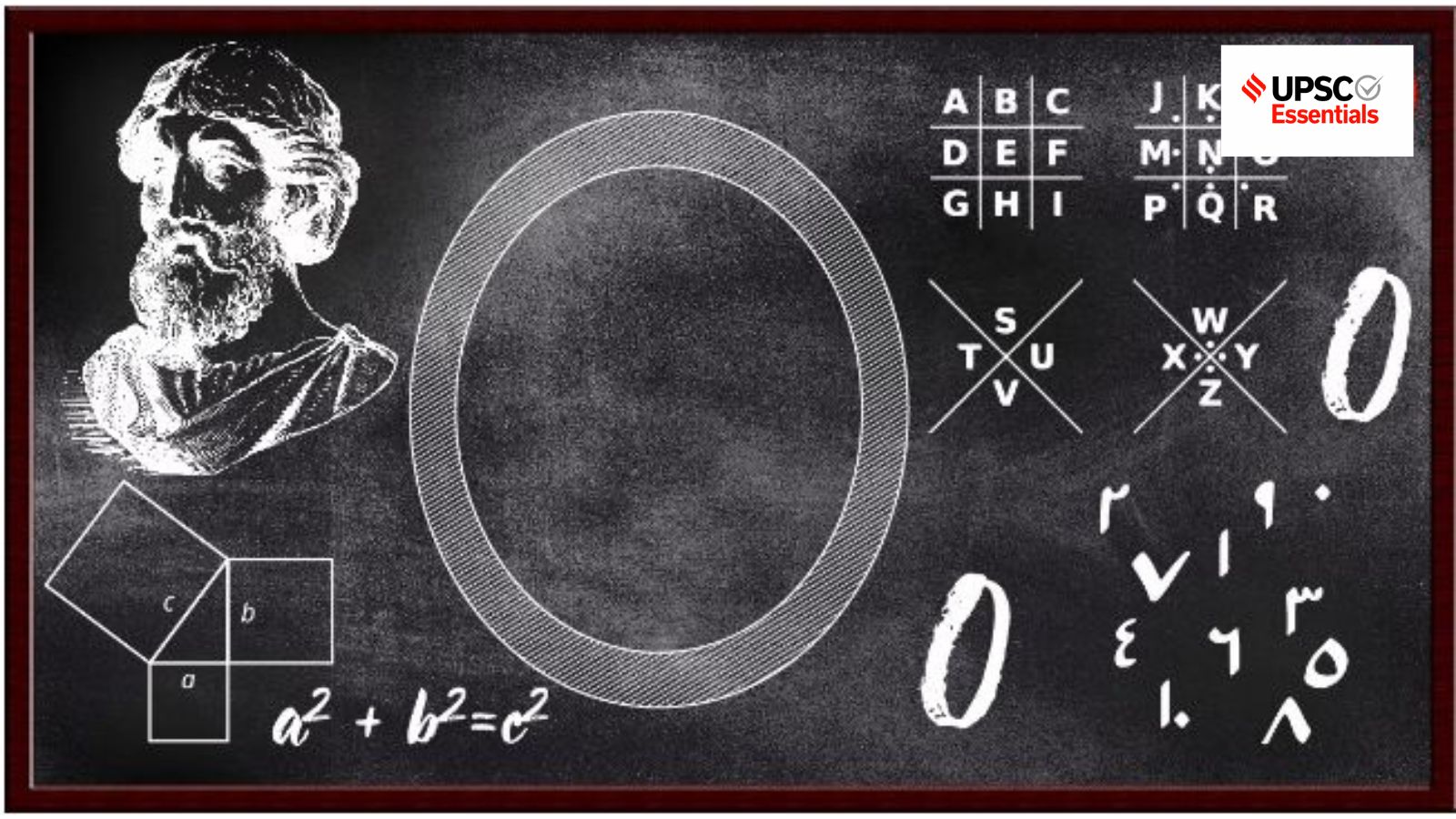 Test your UPSC preparation with today’s History and Culture daily quiz covering zero (sifr), Quit India films, UNESCO sites, and more.
UPSC Essentials brings to you its initiative of daily subject-wise quizzes. These quizzes are designed to help you revise some of the most important topics from the static part of the syllabus. Attempt today’s subject quiz on History and Culture to check your progress. Find links to previous quizzes for UPSC towards the end of the article.
🚨 Click Here to read the UPSC Essentials magazine for December 2025. Share your views and suggestions in the comment box or at manas.srivastava@indianexpress.com🚨
According to Al-Biruni, which work of Brahmagupta was brought to Baghdad by the Indian scholar Kanka, later translated into Arabic on the orders of Caliph al-Mansur, and helped make scholars comfortable with the use of zero (sifr)?
(a) Aryabhatiya
(b) Brahmasphutasiddhanta
(c) Surya Siddhanta
(d) Khandakhadyaka
— Brahmagupta’s major work on mathematics, the Brahmasphutasiddhanta or The Opening of the Universe, was written in 628 AD. More than a century later, around 770 AD according to al-Biruni, Caliph al-Mansur of Baghdad heard about Brahmagupta through a visiting Indian scholar, Kanka, who brought with him a copy of the Brahmasphutasiddhanta and would commission an Arabic translation of his book. The Arabs then gradually became comfortable with the concept of zero, which they called sifr.
Therefore, b is the correct answer.
(For more, refer: The story of shunya — How Indian mathematicians defined zero as a concept)
Consider the following quote:
“All faiths differ on many fundamental questions, but each of them claims to be the only true religion. This is the root of evil.”
The above statement is attributed to which of the following personalities?
(a) Bal Gangadhar Tilak
(b) Mahatma Gandhi
(c) Bhagat Singh
(d) B.R.Ambedkar
— Despite his present-day co-option by parties across the political spectrum, Bhagat Singh was a steadfast atheist and a Marxist with an anarchist tilt.
— Criticising religion, Bhagat Singh wrote in ‘Why I am an Atheist’ (1930), “All faiths differ on many fundamental questions, but each of them claims to be the only true religion. This is the root of evil.”
“One of my friends asked me to pray. When informed of my atheism, he said, ‘When your last days come, you will begin to believe.’ I said, ‘No, dear sir, Never shall it happen. I consider it to be an act of degradation and demoralisation. For such petty selfish motives, I shall never pray,” Singh wrote.
Therefore, c is the correct answer.
(For more, refer: Five things you did not know about Bhagat Singh)
Which of the following films was released during the period of the Quit India Movement (1942)?
(a) Vande Mataram Ashram
(b) Swarajyach Toran
(c) Kismet
(d) Watan
— Gyan Mukherjee’s 1943 film Kismet captured the spirit of India’s Quit India Movement (1942) through its hugely popular song, “Door Hato Ae Duniya Walon, Hindustan Hamara Hai” (Keep Away, Foreigners, India is Ours), penned by Kavi Pradeep, which subtly urged British withdrawal by outwardly targeting Axis powers (Germany/Japan) during WWII, becoming an anthem for freedom fighters and a blockbuster hit that showcased Indian cinema’s early political voice.
Therefore, c is the correct answer.
(For more, refer: indianculture.gov.in)
Which of the following statements is true for the Pinto rebellion in India?
(a) It was a peasant uprising in Bengal against the Permanent Settlement introduced by the British.
(b) It was a revolt in Goa against the colonial administration.
(c) It was a tribal uprising in Kerala against forest laws imposed by the British.
(d) It was a naval mutiny led by Indian sailors against the Portuguese in the Arabian Sea.
— The “Pinto Rebellion” refers to the 1787 uprising in Portuguese Goa, led by Catholic priests (Pinto clan members) against Portuguese rule, highlighting early Goan anti-colonial sentiment.
Therefore, b is the correct answer.
(For more, refer: The Goa revolt led by Catholic priests, 174 years before liberation)
The Man Who Knew Infinity is a biographical work based on the life of:
(a) C. V. Raman
(b) Srinivasa Ramanujan
(c) Satyendra Nath Bose
(d) Har Gobind Khorana
— The Man Who Knew Infinity is a biographical work based on the life of Srinivasa Ramanujan.
— An archived article from The Indian Express (2023) writes: In the Chennai of the early 1900s, few would have noticed the young accountant sprinting down Beach Road to his Madras Port Trust office north of Marina Beach. His coat tail flapping in the breeze, his flowing hair coming undone, a brick red namam (tilak) on his forehead, he would hurry down the road, past the University of Madras. A couple of years later, that sprint was to end at the gates of the university, which took in the “young, dark man”, Srinivasa Ramanujan, as a mathematics research fellow. The rest is infinity — and the subject of The Man Who Knew Infinity, Matthew Brown’s movie that opened the International Film Festival of India in Goa, with Dev Patel playing the mathematician.
Therefore, b is the correct answer.
(For more, refer: The untold story of Srinivasa Ramanujan, the man who knew infinity)
Operation U-Go, mentioned in the context of the Second World War, refers to:
(a) A British offensive to recapture Malaya from Japanese forces
(b) A Japanese plan to invade India through Manipur and Kohima in 1944
(c) An Allied naval operation in the Bay of Bengal against Japan
(d) A German–Japanese coordinated attack on British India
— On March 4,1944, the Japanese launched their last ground offensive in Burma, known as U-Go. It culminated in the Battles of Imphal and Kohima in 1944. Three Nipponese infantry divisions of Renya Mutaguchis 15th army converged on the hill towns of Imphal and Kohima. Bill Slims 14th army used five divisions and by mid June,the Japanese thrusts were defeated. However,in 1944,the English-speaking world did not pay much attention to the struggle that unfolded in the jungle-covered regions of the India-Burma border. The attention of the Western world was on fighting in Italy (Anzio and Rome) and Operation Overlord (June 6,1944).
Therefore, b is the correct answer.
(For more, refer: Long ago,on the eastern front)
Chikri craft refers to:
(a) Leather toys and handicraft from Indore
(b) Wooden handicraft from Jammu and Kashmir
(c) Handloom product from Telangana
(d) Metal Mirror from Kerala
— It is a wooden handicraft from Jammu and Kashmir. the Rajouri Chikri Wood Craft from the Rajouri district of Jammu & Kashmir officially received its Geographical Indication (GI) tag in August 2023.
Therefore, b is the correct answer.
(For more, refer: ipindia.gov.in)
If you are greeted with “Shubh Natal”, which of the following festivals is being referred to?
(a) Phool Dei
(b) Christmas
(c) Nowruz
(d) Makar Sankranti
— An interesting bit of Portuguese influence that can be felt in the Gujarati tongue is their version of Christmas. The Portuguese word for Christmas is Natal, which is how the Gujaratis refer to the festival. Incidentally, the word is also the name of a province in South Africa. It is widely believed that the region was named so since the Portuguese explorer Vasco da Gama discovered it on the day of Christmas. It is no surprise that in Goa too, where the Portuguese had their strongest presence, the festival is known as Natali. So next time, when a Gujarati wishes you “Shubh Natal” (Merry Christmas), know that it is a warm remnant of his Portuguese past which is making its presence felt in his native language.
Therefore, b is the correct answer.
(For more, refer: Why Christmas has a Portuguese name in western India )
Who is the author of ‘The Story of My Deportation’?
(a) Lala Lajpat Rai
(b) Lala Hardayal
(c) Subhash Chandra Bose
(d) Chittaranjan Das
Lajpat Rai was deported to Mandalay, Burma , without trial, in May 1907. In this book Lalaji details his experiences in Mandalay, Burma, where he was banished by the British authorities. The book delves into the reasons behind Rai’s deportation, which stemmed from growing unrest in Punjab, India, at the time. He sheds light on the factors fuelling this discontent. He also writes on the public reaction to his deportation and the ongoing political situation in British India.
Therefore, a is the correct answer.
Which of the following is not a UNESCO World Heritage Site?
(a) Victorian Gothic and Art Deco Ensembles of Mumbai
(b) Champaner-Pavagadh Archaeological Park
(c) Charminar of Hyderabad
(d) Sacred Ensembles of the Hoysalas
Champaner-Pavagadh Archaeological Park : 2004
Sacred Ensembles of the Hoysalas : 2023
Victorian Gothic and Art Deco Ensembles of Mumbai : 2018
Therefore, c is the correct answer.
(For more, refer: whc.unesco.org)
Daily Subject-wise quiz — History, Culture, and Social Issues (Week 135)
Daily subject-wise quiz — Polity and Governance (Week 141)
Daily subject-wise quiz — Science and Technology (Week 141)
Daily subject-wise quiz — Economy (Week 141)
Daily subject-wise quiz — Environment and Geography (Week 141)
Daily subject-wise quiz – International Relations (Week 140)
Subscribe to our UPSC newsletter and stay updated with the news cues from the past week.
Stay updated with the latest UPSC articles by joining our Telegram channel – IndianExpress UPSC Hub, and follow us on Instagram and X.

Read UPSC Magazine