4 min read
© IE Online Media Services Pvt Ltd



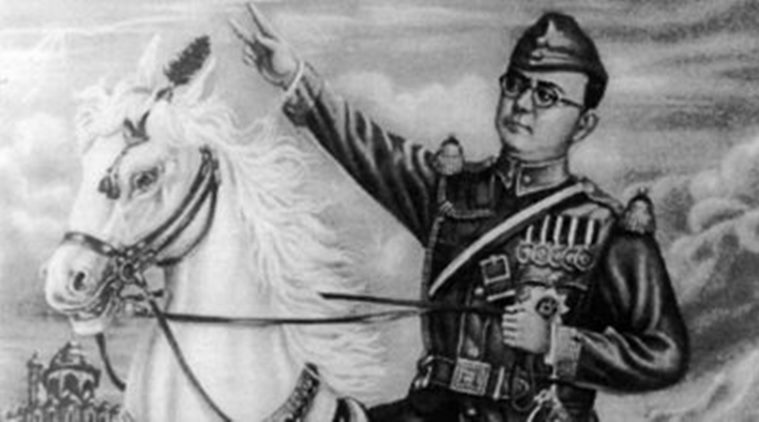 A sketch of Netaji Subhash Chandra Bose. (Source: Express archive photo)
Netaji Subhash Chandra Bose was one of the greatest revolutionaries who dedicated his life to gaining India’s independence. On his 122nd birth anniversary, we answer some questions on the icon and his contributions that you can share with your child.
Subhash Chandra Bose or Netaji was born on 23 January, 1897 in Cuttack, Orissa to Janaki Nath Bose, a lawyer and Prabhavati Devi. He was the ninth child among 14 siblings, which included Sarat Chandra Bose, a barrister and activist in India’s freedom movement.
Subhas Chandra Bose was a brilliant student, topping the matriculation examination and graduating with a first class in Philosophy from Calcutta’s Scottish Church College. He appeared for the Indian Civil Service examination in England in 1920, securing the fourth position in the order of merit. However, affected by the Jallianwalla Bagh massacre, he resigned from his apprenticeship and returned to India.
Subhash Chandra Bose’s daughter is German economist Anita Bose Pfaff, whose mother was Emilie Schenkl, Netaji’s former secretary who he had married in a secret ceremony in Germany.
During World War II, Bose took the support of Nazi Germany and Japan to counter the British in India. In 1942, he was honoured with the title ‘Netaji’ in Berlin, by Indian soldiers along with German and Indian officers of the Indische Legion and Special Bureau for India respectively. He also inspired Indians with his broadcasts from Radio Berlin. In July 1943, after reaching Singapore from Germany, he organised the Azad Hind Fauj (Indian National Army).
Netaji was influenced by Swami Vivekananda, describing him as a “maker of modern India”. He was also inspired by the teachings of the Bhagavad Gita.
Subash Chandra Bose ignited the nationalist spirit in young India with his speech, “Tum mujhe khoon do, mein tumhe azadi doonga” (You give me blood, and I promise you freedom).” He also said, “When we stand, the Azad Hind Fauj has to be like a wall of granite; when we march, the Azad Hind Fauj has to be like a steamroller.” Other famous quotes include, “One individual may die for an idea, but that idea will, after his death, incarnate itself in a thousand lives.”
Netaji’s famous quote was part of a motivational speech for the Indian National Army in Burma on July 4, 1944.
Bose rose to become Congress President in 1938 and 1939, but resigned after the second election, where he had defeated Gandhi’s candidate. While he did not agree with Mahatma Gandhi’s non-violent approach to India’s freedom movement, both leaders had mutual respect for each other.
Netaji died on August 18, 1945, suffering third-degree burns after his overloaded Japanese plane crashed in Formosa (now Taiwan). Many people, however, especially in Bengal, refuse to believe the fact and circumstances of his death. There have been conspiracy theories that persisted ever since his reported death.