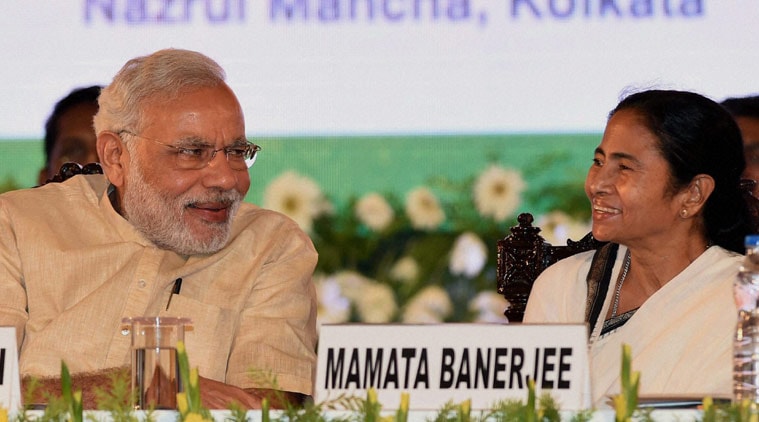

West Bengal Chief Minister Mamata Banerjee’s journey to Bangladesh with Prime Minister Narendra Modi will mark a decisive turn in Indian diplomacy. For the first time, perhaps, the leader of a state — and one ruled by an opposition party — has been acknowledged to have a place in the making and execution of foreign policy. It’s tempting to dismiss the decision as an ego-assuaging concession to a leader who has earned a reputation for being obstructive, by a prime minister whose party is not so comfortably situated in the Rajya Sabha. Banerjee had, after all, sabotaged Prime Minister Manmohan Singh’s hope of settling the Teesta waters dispute and signing the Land Boundary Agreement. To thus read the prime minister’s decision to take Banerjee with him to Dhaka, however, could be to miss the point.
There is something important at play here — the federalisation of Indian foreign policy, a process once little influenced by happenings outside Lutyens Delhi, let alone the states. From Tamil Nadu Chief Minister J. Jayalalithaa’s aggressive lobbying on Sri Lanka, to the multitude of voices on Bangladesh that have emerged from Assam and Tripura on Bangladesh, to Punjab and Jammu and Kashmir’s engagements with Pakistan — states are demanding a direct say in how foreign policy is made and conducted. It doesn’t take a lot to see the perils that could lie ahead. For one, chief ministers have a record of putting chauvinist concerns ahead of strategic imperatives, something that has increasingly complicated India’s dealings with Sri Lanka. Then, the interests of states in dealings with foreign countries might not always converge, which could render decisionmaking fraught. Issues of national security might, conceivably, conflict with state interests in trade. And worse, states could blackmail the Centre on foreign policy decisions, demanding concessions in return for their consent.


