
Opinion Why ED’s conviction of 2 MLAs under PMLA is relevant now
The story of Rai and Ekka is relevant again. Parliament has constituted a committee of its MPs to scrutinise the 130th Constitutional Amendment Bill that provides for the removal of the PM/CMs and ministers if they are arrested for a serious offence and remain in custody for 30 days.
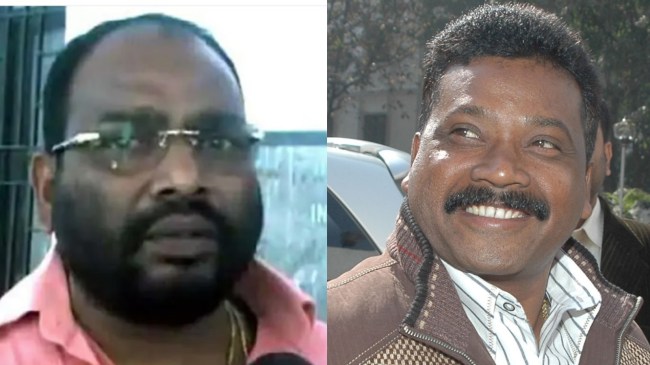 Hari Narayan Rai (left) was the first politician against whom the ED was able to secure a conviction in 2017 under PMLA. Enos Ekka (right) was convicted under the law in 2020.

In March 2005, the Jharkhand police stormed an aeroplane about to take off from Ranchi’s Birsa Munda Airport. They were looking for two newly elected MLAs, Hari Narayan Rai, 42, and Enos Ekka, 35. Finding the MLAs was critical, as they were the missing pieces in deciding the new Chief Minister of Jharkhand.
The story of Rai and Ekka is relevant again. Parliament has constituted a committee of its MPs to scrutinise the 130th Constitutional Amendment Bill that provides for the removal of the PM/CMs and ministers if they are arrested for a serious offence and remain in custody for 30 days. Lok Sabha MP Aparajita Sarangi is the chairperson of the committee.

The Opposition has refused to join it, stating that the legislation gives investigating agencies like the Enforcement Directorate (ED) the power to remove the PM/CMs/ministers before guilt is proven and to destabilise popularly elected governments. Rai and Ekka are the only two political personalities that the ED has convicted in the last decade.
Jharkhand, which became a state in 2000, had its first elections in 2005. For Rai, this was his second election. In the 2000 Bihar election, he was the Bahujan Samaj Party candidate and lost by 5,000 votes. In the 2005 election, he contested as an Independent and won by 6,000 votes.
For Ekka, this was his first election. He was contesting on a Jharkhand Party ticket. His party had fielded 27 candidates and Ekka was the only one to win, defeating his Congress rival by 4,000 votes. While both Rai and Ekka had won their seats, no political party registered a decisive victory.
In a hung Jharkhand legislature, Rai and Ekka, along with three others, became critical in deciding who would be the next CM and form the government in Jharkhand. The NDA and the UPA coalitions initiated conversations with them to seek their support.
The NDA coalition (BJP 30, JD-U 6) was closer to the majority mark. It took Rai, Ekka and others to meet the Governor and stake a claim to form the government. However, the Governor invited the UPA coalition (JMM 17, Congress 9, and RJD 7), and administered the oath of office to them.
The NDA coalition decided to fly its MLAs from Ranchi to Delhi and present them before the President as proof of their ability to form the government. News reports suggest that it was then that the police boarded the aircraft, trying to locate Rai and Ekka, who had decided to support the NDA. But the two of them were not on the plane. They had evaded police checkpoints, driven 500 km from Ranchi to Bhubaneswar in Odisha and flew to Delhi to join the other NDA MLAs at the Rashtrapati Bhavan.
Rai and Ekka’s support led to Arjun Munda becoming the NDA alliance’s CM in Jharkhand. Over the next five years, Jharkhand had three different CMs — Independent MLA Madhu Koda replaced Munda and Shibu Soren replaced Koda. Rai, who admired Lohia, and Ekka, who liked Premchand, played both the NDA and the UPA over these five years and remained ministers, regardless of who was in power.
Rai and Ekka used their ministerial positions to amass assets beyond their known sources of income. In 2008, a public interest plea prompted the authorities to file corruption cases against both. They had used the ill-gotten money to buy properties in the names of relatives and to also route it through firms they had set up. The laundering of funds led the ED to their doorstep.
In 2005, the Centre entrusted the ED with enforcing the Prevention of Money Laundering Act (PMLA), 2002, to prevent the laundering of the proceeds of crime and to confiscate property derived from such activity. Subsequent amendments to the law would make it more stringent and give the ED more teeth. Scrutinising the 2008 PMLA Amendment, a parliamentary panel comprising MPs such as Gurudas Dasgupta, Suresh Prabhu and M Venkaiah Naidu hoped that enforcement agencies would exercise the powers granted to them judiciously.
In 2017, Rai became the first person against whom the ED was able to secure a conviction under the 2002 PMLA law. The court sentenced him to seven years in jail. Ekka would get a similar sentence in 2020.
Earlier this year, the government told Parliament that in the past decade the ED has charged 193 politicians, securing convictions in only two cases.
As Parliament takes up electoral reforms next week and the committee begins scrutinising the 130th Constitution Amendment Bill, MPs will confront two questions raised by the Rai and Ekka case: how to address the long interval between allegations and convictions, and the low conviction rate of prosecuting agencies in political cases.
The writer looks at issues through a legislative lens and works at PRS Legislative Research

 Share
Share


