
Opinion Changing name of labour department is not enough. Bihar needs to take its migration problem seriously
Bihar’s administrative realignment signals a shift in thinking. Its impact will depend on how effectively recognition translates into action
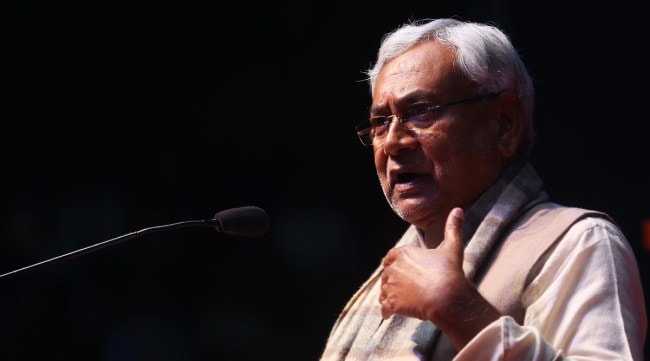 The renaming of Bihar’s labour department presents an opportunity to rethink governance rather than just expand schemes. Studies argue that migration should be treated as a permanent, predictable feature of India’s political economy

By Aviral Pandey
The decision of Bihar’s newly inducted cabinet to change the name of the “Labour Resources Department” to the “Labour Resources and Migrant Workers Welfare Department” marks a significant shift in how the state views its workforce. Migration from Bihar has long been seen as a byproduct of underdevelopment rather than a central feature of its economy. This recognition comes after a period of major disruption following the COVID-19 lockdown, when over 1.08 crore migrant workers returned to their home states. Bihar received a large share of these returnees. It revealed India’s dependence on informal migrant labourers, who lack contracts, social security, and institutional protection. The crisis exposed deeper institutional gaps in migrant welfare. Even five years later, these gaps persist.

A key challenge is the lack of reliable, dynamic data on migrant workers. Panchayat-based data management systems and welfare databases were never effectively used to track workers moving across districts and states, especially seasonal migrants. Addressing this requires a robust digital system capable of capturing the mobility of migrants and linking them to relevant welfare and employment services. Bihar’s Pravasi Kamgar App attempts this by creating a digital register. With around six lakh workers enrolled, it has laid a foundation, but the limited enrolment of migrant workers shows how difficult it is to integrate a highly mobile workforce into formal systems.
In this context, Bihar can no longer treat migration as a peripheral issue. Other states offer clear examples of what proactive governance can look like. Kerala provides hostels, health insurance, facilitation centres, and mobile apps to support incoming workers. Tamil Nadu runs help desks and helplines in industrial zones to resolve documentation and workplace issues. Odisha has recently taken steps to monitor distress migration more systematically, adopting a State Action Plan for the “Safety and Welfare of Inter-State Migrant Workmen” and coordinating inter-State support. Jharkhand has conducted a “statewide migrant survey” to map flows, skills, and vulnerabilities, generating evidence to guide policy.
For Bihar, which experiences both high out-migration and in-migration, it is now imperative for the Labour Resources and Migrant Workers Welfare Department to treat migrant welfare as a core mandate, adopting a holistic strategy that protects workers, integrates them into local systems, and enforces their rights consistently.
The urgency of reform in the governance of migrant workers in Bihar is also growing, driven by broader changes in India’s labour market. New labour codes are redefining employment, and at the same time, automation and artificial intelligence are transforming sectors that employ large numbers of migrant workers. Experience from Europe and East Asia shows that without regulation, technological change tends to displace low-skilled, mobile workers (migrant workers) first, while the benefits accrue to those with secure contracts and recognised skills.
Existing welfare frameworks provide some protection, but access remains uneven. Schemes under the Building and Other Construction Workers’ Welfare Board, including accident compensation and disability assistance, aim to mitigate occupational risks. However, in practice, low awareness, documentation hurdles, and weak local outreach limit impact. For seasonal or contractor-managed workers, continuity of registration is a serious obstacle, undermining the promise of social security portability.
Further, recruitment through contractors, often via the “dadan” or advance-payment system, is widespread in brick kilns, construction, and mining sectors. Comparable international systems, like kafala arrangements, concentrate power in middlemen or employers and can lead to coercion, debt bondage, and child labour. Recent rescues of Bihari workers in other states, including from Assam brick kilns, show that exploitative arrangements continue despite legal bans. Countries such as Germany and Canada demonstrate that governance, not welfare alone, is decisive, with contractor liability and mandatory contracts protecting workers.
The renaming of Bihar’s labour department presents an opportunity to rethink governance rather than just expand schemes. Studies argue that migration should be treated as a permanent, predictable feature of India’s political economy. This means moving beyond crisis responses towards institutions capable of supporting mobility while protecting rights. Better integration of state databases with national platforms like e-Shram, consistent inter-State coordination, and accessible grievance mechanisms could enhance policy effectiveness without new legislation.
Simultaneously, the development dimension remains crucial. Research shows that high out-migration is linked to agricultural underemployment, ecological stress, and limited non-farm opportunities, while more diversified districts experience less distress migration, supporting the “U-shaped” pattern of migration within the State at a given point in time. Skill certification, targeted training aligned with labour demand, and recognition of informal skills can improve wages and bargaining power. These measures are even more critical as automation reshapes labour demand and raises the premium on adaptable, certified skills.
Migration also has a political dimension. Migrant workers are increasingly visible in public discourse and electoral politics, yet their concerns are addressed mostly through ad hoc measures. Lasting progress requires embedding migrant welfare in routine governance, through budgets, administrative capacity, and enforceable standards, rather than episodic crisis response. Bihar’s administrative realignment signals a shift in thinking. Its impact will depend on how effectively recognition translates into action. As India’s economy becomes more mobile, digital, and fragmented, the capacity to govern migration will measure institutional maturity. Bihar now stands at the centre of a national question: Can labour governance evolve to match a changing world of work, or will migrant workers remain visible only in times of crisis?
The writer teaches at Patna University

 Share
Share


