
Opinion Best-selling,even after 70
Remembering Narendra Singh Sarila diplomat,industrialist,historian.
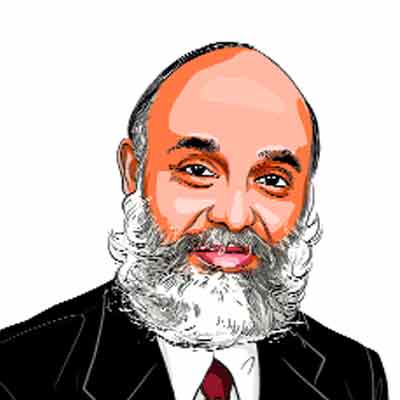

A familiar figure at New Delhis India International Centre,Narendra Singh Sarila (born 1927),who died in Switzerland on Friday morning after prolonged illness,straddled many worlds with considerable charm and quiet competence. Diplomat,author,industrialist,part of Indias erstwhile royalty and a Ranji cricketer to boot,Raja Sahib was the veritable Renaissance man who also adapted to social media. Till illness took its toll,he retained a keen interest in Indias strategic and foreign policy challenges,and my personal interface with him was due to the high esteem that the late K. Subrahmanyam and he had for each other.
Born in what was then the princely state of Sarila in central India when the British Raj was,like a dying candle,at its brightest flicker,the young Narendra Singh or NS grew up in a world that is now part of Indian history and legend. In his wry and self-effacing autobiography,Once a Prince of Sarila: Of Palaces and Elephant Rides,Of Nehrus and Mountbattens,NS reveals his natural talent for insightful personal recollection,and an empathetic connection to the larger historical context leavened with a sense of the turbulence of the moment.

Thus NS is able to give us the story of Indias freedom struggle from the vantage point of a curious young prince,recounting the London Conferences through to the last Delhi Durbar the meeting of the Chamber of Princes on July 25,1947 addressed by the viceroy,Lord Mountbatten where he was deputed to represent his father. The autobiography is rich in detail about NSs own trajectory from the princely India of the Raj to the newly independent,democratic nation led by Pandit Nehru who in turn,as NS often reiterated,was imperceptibly guided by the governor-general and his wife,Lady Mountbatten.
Independent India saw NSs life moving into its second phase. He was chosen to be ADC to Lord Mountbatten in early 1948,for a very brief period. Soon thereafter NS joined the Indian Foreign Service and had an eventful tenure where he was part of the Indian team at the UN in New York; OSD for Kashmir affairs and joint secretary dealing with Pakistan from 1968 to 1972,during the crucial period of the Bangladesh war. Subsequently appointed ambassador to countries including Libya,Switzerland and France,NS retired from government service in 1985 and moved to the next phase of his career: the corporate world. Joining Nestlé India,he later became its chairman emeritus,and was well-known in Europe for his political and business acumen.
It was in the last decade of his life that NS took up the pen with commendable determination. As he once recounted to me,till then his writing had been confined to the newspaper op-eds and the occasional longer essay. But,after May 1998,as India became,as he noted,strategically relevant,he returned to a subject of abiding interest and professional expertise for him: Kashmir. Donning the mantle of a researcher at 70-plus,NS tracked primary-source material pertaining to Partition and wrote his best-selling magnum opus: The Shadow of the Great Game: the Untold Story of Indias Partition (2005).
The core of Sarilas argument was summed up in one pithy paragraph: Once the British realised that the Indian nationalists who would rule India after its independence would deny them military co-operation under a British Commonwealth defence umbrella,they settled for those willing to do so by using religion for the purpose. Their problem could be solved if Mohammed Ali Jinnah,the leader of the Muslim League Party,would succeed in his plan to detach the northwest of India abutting Iran,Afghanistan and Sinkiang and establish a separate state there Pakistan. The proposition was a realisable one as a working relationship had been established between the British authorities in India and Jinnah during the Second World War and he was willing to cooperate with Britain on defence matters if Pakistan was created.
Till as recently as early 2011,NS kept in touch and was always willing to share his experience and insight. Religion,politics,corruption,inadequate governance… there were many current developments that disturbed him,but he retained a distinctive and informed elegance as he patiently studied the world around him,an attitude that NS had acquired as a baby atop an elephant what he described as my pram.
Please do not introduce me as Raja sahib,or Ambassador… I am plain Narendra Singh… that was his last injunction to me,at an IIC round-table discussion.
The writer was formerly director,Institute for Defence Studies and Analyses
 Share
Share


