
Opinion A crisis, an opportunity
In Kashmir and vis-a-vis Pakistan, important tests of government’s leadership and sagacity
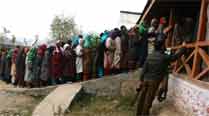


 To the PDP, the irreducible minimum is for the BJP to respect J&K’s ethnic and religious diversity, explicitly distance itself from communal polarisation in Kashmir and other parts of India.
The election results in Jammu and Kashmir have brought to the forefront an issue that has dogged Kashmir’s relations with the rest of India ever since Maharaja Hari Singh signed the Instrument of Accession.
Which part of the state will dominate policy-making — Jammu or Kashmir? — is a question that people in J&K have debated for decades. In the hundred years before Independence, the Dogras from Jammu held the reins of power. Prior to that, while Jammu was a part of the Mughal and, later, Sikh empires, Kashmir had been ruled for more than 500 years by a succession of invaders, ranging from Afghans to Sikhs.

In 1947, therefore, the feeling of disempowerment was far more acute in Kashmir than in Jammu. It was assuaged only when Sheikh Abdullah and the National Conference (NC) came to power in 1947. The Sheikh’s 1945 war cry of “Down with Dogra rule” was not a repudiation of “Hindu” rule, but of domination by rulers from Jammu. The NC’s — and the Sheikh’s — endorsement of the maharaja’s accession to India was wildly popular in the Valley because it shifted the base of power in the state from Jammu to Kashmir. To the educated, politically sensitive sections of Kashmir, this was “independence” after more than 500 years of enslavement.
The need to empower Kashmiris explains the Sheikh’s lack of interest in recovering Gilgit, Skardu and “Azad” Kashmir from Pakistan. He knew only too well that this would make Kashmir’s pre-eminence harder to sustain. The roots of his growing disenchantment with India in the six years that followed the accession, and his eventual, disastrous imprisonment, lay in Jawaharlal Nehru’s failure to understand that waiting for Pakistan to vacate PoK before holding a plebiscite was endangering not only its outcome but also the Kashmir Valley’s — and the NC’s — control over the state. He was privy to the fact that Pathans made up only a fifth of the “raiders” from Pakistan, and that more than two-fifths of the invaders had come from PoK. So, had Nehru gone ahead with a plebiscite in J&K, the Sheikh and the NC would have been happy as a clam because it would not only have fully legitimised the accession in the part India controlled, but also Kashmir’s domination of Jammu in Indian Kashmir.
The reason why the Bakshi Ghulam Mohammed government rigged every election in the Valley from 1957 till 1972 was its need to maintain its dominance of the state in the face of declining popularity. The suppression of dissent in the Valley that this entailed led to the uprising of 1990. The insurgency, however, broke Kashmir’s hold over Jammu. In the ensuing decade, Jammu’s politics became detached from thatof Kashmir and became that of the mainland. This parting of ways, first vividly demonstrated by Jammu’s blockade of Kashmir in July 2008, reached
its consummation last week.
Today, the polarisation between Jammu and Kashmir is almost complete. This has confronted the PDP and the BJP with an extraordinary challenge, but also a unique opportunity.
To its credit, the PDP has been the first to realise that running a stable, functionally efficient and politically equitable government will not be possible if the polarisation is not reversed. This requires cooperation between the PDP and the BJP. But a PDP-BJP coalition can only take shape if there is a broad agreement on the principles and goals of governance.
To the PDP, the irreducible minimum is for the BJP to respect J&K’s ethnic and religious diversity, explicitly distance itself from communal polarisation in Kashmir and other parts of India, and avoid any attempt to change Kashmir’s special position within the Constitution.
Since the BJP’s main concern at the moment is to capture the office of the chief minister, and since Mufti Mohammad Sayeed had shown in 2002 that he is not averse to sharing the post, a deal is possible. But for this, the BJP must agree to the basic principles of governance that Mufti has outlined.
This would have posed no problem for a Vajpayee, but today’s BJP is a different party in all but name. For Narendra Modi, therefore, stepping back from the programmes of communal polarisation that the Sangh Parivar’s hardliners have let loose on the country, and resuming a constructive dialogue with Pakistan will be a supreme test of leadership.
It will also be a test of his sagacity. For, Pakistan’s encounter with the most bestial face of the Taliban has become a defining moment for its government and army. The Nawaz Sharif government has shed the last vestiges of its ambivalence towards Islamist terrorism, and declared an all-out war on it within Pakistan. It has lifted a six-year moratorium on the death sentence with the specific purpose of putting terrorists it held in its jails to death.
Around 500 terrorists are likely to be executed in the next few weeks. It is also revising its criminal code to award harsh punishment to terrorists, and is setting up special military courts for their speedy trial.
This is part of a comprehensive strategy that is designed to cut off
all the insurgents’ sources of income, including donations to charities under whose rubric they received their funds. The government also intends to enact a ban on religious persecution and punish the abuse of the internet for the glorification of terrorism and organisations sponsoring it.
The trigger was, undoubtedly, the killing of 133 children in a Peshawar school, but the demand to lift the moratorium had, in fact, been made by the army chief, General Raheel Sharif, before this barbaric attack. Thus, although it has done so for its own reasons, Pakistan is on the point of meeting Modi’s demand that it should stamp out terrorism within its own country in order to build lasting good relations with India.
In the coming two years, Pakistan will need all the help — military and economic — it can get. India could provide some of it indirectly by enabling it to move its troops from the Indian to the Afghan border. This would go a long way towards healing the scars of Partition. But even if it does not, India will still be much better off with a stable Pakistan, which is no longer hosting terrorists, than it is today.
Jha is a senior journalist and author
 Share
Share


