Journalism of Courage
 3 min read


Omar Abdullah protests too much. He cannot evade all responsibility for the political failures in Kashmir
Addressing a gathering in Charar-e-Sharief on Sunday,Omar Abdullah lashed out at friends in New Delhi,who,he said,seemed to mistake a temporary lull in militant activities for a lasting peace. Peace in the Valley was not permanent,the Jammu and Kashmir chief minister warned,and Kashmiris could not be taken for granted. Incidents like the hanging of Afzal Guru and the killing of two youths in Markundal could prove to be provocations and the peoples patience was running out. The chief minister seems to have slipped back into a familiar garb of chief doomsayer.
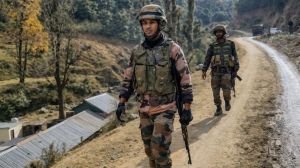
The concerns he raised,however,are valid. Abdullahs speech comes less than a fortnight after Prime Minister Manmohan Singh and UPA chairperson Sonia Gandhi inaugurated a rail link in Kashmir. The visit took place in the shadow of a militant attack that killed eight army jawans. Earlier,at Bemina in March,the first fidayeen attack in three years had already pierced the relative calm. The years of peace in Kashmir have been wasted. The Centre has resorted to a series of stop-gap administrative measures,development schemes and economic packages. These had long been due. But the Centre has also persisted in a policy of evasion,refusing to address basic discontents the dilution of the right to information in the state,the blanket imposition of AFSPA, the incomplete and delayed justice for human rights violations that occurred at the peak of the militancy. To these questions and more,the Centre has failed to formulate a bold political response. Over the last decade,finding a solution for the Kashmir conflict has been consigned to a succession of bureaucratic committees and working groups,whose reports are routinely ignored.
Yet,the failure to engage people politically must also be shared by the state government. When Omar Abdullah came to power in 2008,militancy was already on the wane and the focus had shifted to unarmed civilian protests. But the promise of that moment was frittered away. Abdullah has increasingly taken refuge in loud recriminations against the Centre,in a bid to distance himself from the political failures,while projecting helplessness. After the hanging of Afzal Guru,he foretold a resurgence of militancy,and when a youth was allegedly gunned down by armed forces in Baramullah,he broke down in the assembly. These may also be efforts to channel popular sentiments,or to pre-empt the rival PDP. But as chief minister and an ally of the party that rules at the Centre,he is a political actor with tremendous agency. To protest otherwise would be a gross abdication.