Journalism of Courage
 4 min read



JANUARY 31: In his book-length Davos-spoof, The Agony of Mammon, Lewis H. Lapham, the editor of Harper8217;s magazine and one of America8217;s sharp-tongued leftist intellectuals, provides this interesting trivia: the annual Alpine jamboree on globalisation and Thomas Mann8217;s The Magic Mountain share the same locale. But the pilgrims to Davos have nothing in common with Hans Castrop, who comes to the sanatorium in the magic mountain to sort out his existential crisis.
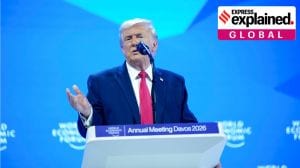
The Davos pilgrims politicians, CEOs, intellectuals, journalists come to the Alpine resort to sort out the crisis of the market. They are there to deconstruct globalisation. In the words of the founder, Klaus Schwab, Davos is 8220;global conversation,8221; a grand euphemism for world8217;s biggest cocktail party in one of the world8217;s esoteric settings entry by invitation only, and the entry fee is 20,000. They talk market, culture, politics, though there is nothing official about the talking; it is about networking, about effective public relation. And thisyear is rather special the thirtieth anniversary of the World Economic Forum. More special because, for the first time in Davos history, an American president has attended it.
What globalisation without an American input? 1,100 executives from companies that reportedly account for eighty percent of global industrial output, and one third of them are Americans does America set the agenda of globalisation? The question was out there in the magic mountain.
Schwab himself has addressed the question: 8220;Emerging market economies and developing countries are less and less inclined to accept that globalisation should proceed according to the priorities and agendas set only by the US and Europe8221;.To avoid a Seattle-like showdown, he has even invited representatives from fifteen NGOs. Even President Clinton admitted in Davos that free trade should take into account the concerns of the developing countries. Still there was a little Seattle in Davos.
Still, there are intellectuals like Dominique Moisi who arguesthat 8220;we do not want the US to become what Microsoft has become to the world of information.8221; Anti-Americanism, in spite of its irrelevance in civil society, works in many ways. Politically, it is a self-serving ism for nationally paranoid despots in places like Baghdad, Havana and Pyongyang.
Intellectually, it is the last resort of the so-called third world intellectuals, mostly from the left. The Europeans too have a problem with the McDonaldisation of culture, a problem born out of a misplaced sense of national exceptionalism. Since Davos is supposed to be global conversation, globalisation8217;s overwhelming American adjective is a defining talking point.
But you have no choice but to talk it with a sense of resignation: if globalisation is freedom, you cannot wish away its patron in wealth, technology and information. Nationally bound beneficiaries have no problem with this fact; it is the problem of national benefactors.
But Davos is not the place where consensus is made. And the organisers of theWorld Economic Forum continue to say that it is not the place where the big daddies of US-European politics and business talk down to the rest of the world. But it is a US-European show. Understandable because the global economy is still defined by America and Europe 8211; others , like China or Japan, have only influence, and some have only protest potential. Lapham has an interesting definition of global economy: 8220;Wonderfully ornate mechanism engineered by wise financiers to guarantee mankind8217;s happiness. Requires participation of investors instead of citizens8221;. If Davos fits a leftist8217;s irony, worry not. The citizen of the market is happy, let the investor party.