Journalism of Courage
 3 min read



Prime Minister Manmohan Singh today gave his government8217;s first clear stance on fuel price hike stating that India cannot insulate the consumer fully from the impact of global commodity prices and oil price inflation.
Referring to the government8217;s policies of not raising prices of scarce natural resources such as water and oil, Singh pointed out that kerosene prices were left untouched in the last four years. 8220;Even petrol prices did not fully reflect world trends. In the case of water, we have been altogether imprudent. This situation cannot continue forever,8221; he said, addressing the annual general meeting of industry chamber Assocham.
Though Singh said in as many words that rising petrol and diesel prices was inevitable, his United Progressive Alliance government is still trying to build a political consensus on the imperative for such a hike. The Cabinet Committee on Political Affairs is slated to meet Wednesday to discuss options including rising LPG prices by Rs 20 a cylinder and that of petrol and diesel by Rs 2 and Re 1 a litre, respectively.
The Prime Minister said while the government was focused on reversing the recent surge in headline inflation that touched 8.1 per cent for the week ended March 19, it was keen not to hurt the 8220;rhythm of the growth process8217;8217;. 8220;I do not wish to see a return to the era of blind controls,8221; he said, referring to demands from a section in the government to invoke provisions of the Essential Commodities Act that go against the grain of market reforms.
At the same time, the Prime Minister drove home the importance of fiscal prudence. 8220;To ensure the stability and sustainability of the growth process, we have to follow more prudent fiscal policies. We cannot allow the subsidy bill to rise any further,8221; he said, adding wider political consensus was need to adopt more rational economic policies.
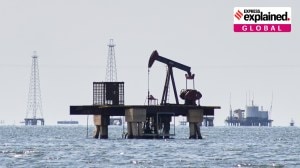
According to Singh, the unrelenting rise in crude oil prices and a growing threat of protectionism from developed countries can spell disruptive consequences for countries such as India. 8220;It rising crude oil prices can have adverse consequences for the global war against poverty. We need a new global compact between oil producers and the developing world. We need global leadership.8221;
Lambasting the developed world for following protectionist policies when developing countries are standing their ground in the face of increased challenges of globalisation, he said, 8220;It is regrettable that the forces of protectionism are gaining political ground in many developed countries8230;.I hope that the developed countries will not forget the development dimension of Multilateral Trade Negotiations. It takes two hands to clap.8221;
Developed nations crying foul and seeking protectionism, was not a happy role reversal, he noted, comparing the situation to a decade ago when developing nations were seeking similar benefits.
8220;There is no reversal of roles possible until we are able to create a more equal world,8221; he said, adding India had a strong stake in the successful outcome of the Doha Round of Trade Negotiations.
The Prime Minister blamed the rising global commodity prices, in particular food prices, as the reason for developing countries to impose controls on commodity exports and increase subsidies on imports.