5 min read

Journalism of Courage




So are you going to see the Rolling Stones?8221; It was no polite enquiry. The middle-aged gent from England who I ran into at a dinner party last week was positively seething with derision at the manic excitement generated by the arrival of the boys from back home in India, and he tried to say as much in the tirade that followed his sneering question.
So much excitement for a bunch of weather-beaten, past-it, over-the-hill lads? I could see his point. Yet how was I to explain to him what it meant to see the Rolling Stones perform in India?
The queue to enter the stadium snaked over half a kilometre. 8220;All of Mumbai is here,8221; exulted a young man somewhere down the middle. He was way off the mark, of course. Some part of the city was racing right in front of us to catch the 123 bus to Tardeo.
Others were drinking sweet filter coffee across the street before heading off to Mahim, Andheri, Goregaon and wherever else they had to go. And there were Mumbaikars, millions of them in their homes or on the streets, who had no interest whatsoever in what was going on in a defunct cricket stadium in the southern end of the city.
And yet, on the other hand, I could quite understand the enthusiasm that generated that bit of hyperbole. For whichever way one looked, one saw recognizable faces. One could identify them by profession: there were journalists, filmmakers, advertising executives, bankers, corporate heads, musicians.
But they were also recognizable for being the faces one had encountered at every rock concert, small or big, in the distant past. More small than big of course, for apart from the stray miracle of a Police concert rumour has it that a bunch of senior citizens and cops actually turned up to witness what they assumed was a police band and the Amnesty concert in Delhi which had trainloads of fans traveling down from Mumbai, who ever came to dusty India but little known groups such as the Boomtown Rats and Wishbone Ash?
Those were the days when rock and pop fans had to scrounge around for music. To pester relatives abroad for a much desired LP or catch a grainy show on television or the radio. Swap apocryphal stories such as the one about The Who giving an impromptu performance at a city discotheque or haunt college socials where local musicians were forced to belt out The Beatles and Moody Blues.
Music, however, was just one area. For that controversial entity, the Westernised, English-speaking elite, the sixties and seventies meant a yearning, to some extent a blind adulation perhaps, for all things foreign and a constant deprivation of the same. There was no foreign news save that which came over the crackle of the BBC, the Voice of America or a dog-eared copy of Cosmopolitan.
Only the rich could afford to travel abroad and that too with limited foreign exchange that invested even the odd bottle of Old Spice or a Mars bar with acute desirability.
Today, of course, we live in a different world. One where our television sets bring the Oscars to our homes the same time as everywhere else. Where sports events and the latest international news are available at the touch of a button. Where our shops heave with more brands than one ever imagined possible and people wear watches with different time zones.
Like my English acquaintance we too are familiar with every sordid downturn in the life of celebrities such as Princess Diana and Mick Jagger.
But if familiarity has not bred contempt, it is perhaps because there are enough people here who still remember a time when things were not so. The people who were in the queue for the Rolling Stones that evening, older and grayer, some accompanied by their children 8212; reminiscing about an old jazz yatra and the stuff they mixed in hip flasks and cigarettes 8212; they remember a different time.
And for them the legend is still pickled in awe. So they are jubilant when the Stones finally arrive, even if it is a few decades late, as they were when Jethro Tull turned up, and Deep Purple, well past their prime.
It is about paying homage to one of the greatest bands ever. It is about depth and longevity in an age of ephemerality. It is about nostalgia for youth and its ideals. But it is also about affection. An affection that is borne out of an acknowledgement of the fact that at a time when the outside world appeared so very far away someone got through and helped to make a connection.

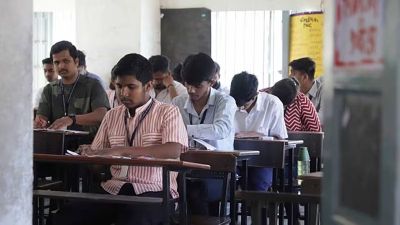
With nearly 18,000 post-graduate medical seats remaining vacant after two rounds of counselling, the cut-off for some of the categories has been reduced to zero percentile again. The NBEMS revised the cut-offs to 7 percentile for general category, 5 percentile for persons with disability belonging to general and EWS category, and zero percentile for SC, ST, OBC candidates.