Journalism of Courage
 3 min read



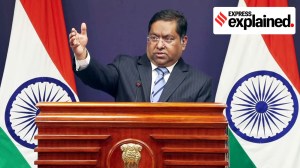
At Cartagena, External Affairs Minister Jaswant Singh sounded like the latest champion of an ethical foreign policy, picking up from where a chastened Robin Cook of Britain8217;s New Labour party left off some time ago. Singh demanded that NAM act to uphold democracy, the rule of law and the preservation of fundamental rights and liberties. In principle this is right.
It is time NAM looked inwards and tried to reform itself. But as an approach to dealing with India8217;s Pakistan problem which, patently, is the basic purpose of Singh8217;s initiative, it is wrong. First, there is NAM itself. There are many departures in practice from the norms of good government among NAM8217;s 115 members. They may be prepared to endorse Singh8217;s ideals in principle but will surely baulk at taking specific steps against one of their number. Singh8217;s call for action creates two kinds of problems.
One is the precedent it sets. NAM should commit itself to a set of common values, India8217;s foreign minister insisted. This is tantamount to laying down new rules of membership. The Organisation of African Unity would like to exclude usurpers of power from membership of that body. So Singh would like to exclude non-democrats from NAM.
After Pakistan, the obvious question is, who8217;s next in line for a bit of punishment? NAM is still lacking in a clear focus and identity ten years after the cold war ended and therefore attempts to differentiate between members on the basis of their democratic credentials are liable to fracture the association. The second problem lies in the hypocrisy of expressing noble sentiments in order to achieve a particular regional goal, in this case, the isolation of Pakistan. It is unclear whether Singh8217;s aim is the suspension of Pakistan from membership of NAM, following the example of the Commonwealth which has done so, or whether strong condemnation of the military regime will be enough. But clearly India hopes one way or another to send a message to the Musharraf regime.
The whole enterprise is vitiated because it is Pakistan-centric. Of course, India can argue that enlightened self-interest is the driving force and the adoption of democratic norms will do all NAM nations good in the course of time. But not many are likely to be impressed with such sophistry. From India8217;s perspective, the tactics at NAM are short-sighted so much so that the government should hope that they will not succeed. Declaring Pakistan a pariah will effectively slam the door on India-Pakistan talks.
The Vajpayee government8217;s current posture of refusing to engage Islamabad at any level as long as Musharraf is in charge will not be viable for very long. Sooner rather than later it will become necessary to return to the table. When that time comes what will be important is what commitments the regime in Islamabad is prepared to make towards curtailing cross-border terrorism, and also whether the regime has the domestic clout to carry out its commitments. At a pragmatic level that is all that matters. Whether there is a military or civilian government is not of the essence here.