Journalism of Courage
 6 min read



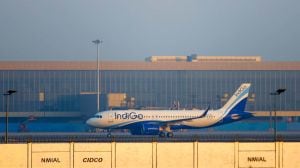
JANUARY 12: The reward of suffering is experience,8221; Aeschylus wrote twenty-four centuries ago. By any standard, the blood-letting at Kargil was suffering indeed. Did India learn from the experience? Precious little if Kargil was a massive intelligence failure, so too was the recenthijacking.
I know expert committees are, or soon shall be, looking into the lessons of the hijack drama. The Central Bureau of Investigation is conducting its own investigations. Yet, we don8217;t need to wait for these bodies to complete their studies to understand that our reflexes are sluggish and our ability to anticipate is notable chiefly for its absence.
We all know how Pakistan seized the initiative in Kargil, the situation being retrieved only by the Indian armed forces. Let us now take a look at the hijacking, specifically at two bodies the Crisis Management Group CMG and the National Security Council NSC. Both organisations were created to handle matters of national security, but their briefs were different. The NSC is supposed to offer a long-term strategic analysis, while the CMG is expected to handle a sudden emergency.
Quite obviously, both failed. It should have been obvious that Islamic fundamentalists were spoiling to attack India in the midst of all the hype about a new millennium; an alert had been sounded in most nations after Ahmed Ressam was caught trying to smuggle sophisticated explosives into the United States in December. Yet India identified as a major target for Muslim militants along with the United States and Russia took no special precautions. Nor was there any sense of impending crisis even though it has long been known that Nepal is home to several ISI operatives. That, coupled with the fact that Indian Airlines is renowned as a soft8217; target, sh-ould have sent alarm bells ringing.
Sadly, the Research and Analysis Wing RAW was virtually emasculated in the Gujral Doctrine8217; era and its freedom of action still hasn8217;t been restored by the powers-that-be. This has reduced it to little more than a rest-home for those bureaucrats and soldiers who don8217;t quite cut the mustard for better jobs. An ex-Army officer was in charge of Kashmir when the Pakistanis strolled into Kargil. If Indian intelligence failed to notice the presence of several thousand Pakistani soldiers in Kargil, I suppose it could scarcely detect a few hundred militants in Kathmandu. But if RAW sleeps on the job, isn8217;t it the duty of the NSC to wake it up?
So much for duties neglected before the hijacking. What happened once the terrorist took control of Flight IC-814? This is when the CMG should have come into its own. Given that impressive title, we had the right to expect cheetah-like reflexes but what we actually got was a pack of headless chickens.
The confusion within the CMG led to one of the most unfortunate incidents in the crisis the inaction at Amritsar. Trained commandos and means of transportation were at the ready. They are on a twenty-four ho-ur alert at all times. But they couldn8217;t swing into action unless they received a green signal from Delhi. By the time the ditherers had got their act together it was far too late.
What signal did this send, not just to the hijackers but to other nations? To answer that, look no farther than the United Arab Emirates. When the hijacked plane touched down in Dubai. India, acting through the United Sta-tes, swung into action. The significant American role is one of the untold tales of the hijack drama.
The Indian position revolved around a single demand: that the United Arab Emirates not permit the plane to take off even if it was necessary to use force. I believe the Am-erican interlocutors received the impression that the United Arab Emirates had agreed. The Indian ambassa-dor was not allowed to be in the negotiating team. Thus wh-en the plane actually took off there was considerable heartburn in Delhi, resulting in the authorities in Dubai getting some bad press in India.
I am sorry, but in this instance the United Arab Emirates had every right to be chary. Why should it, or any other country, have risked doing something that India could have should have done, but did not? If the plane had to be stopped. Amritsar, not Dubai, was the place to do so. And if there is any finger-pointing to be done, then point straight to the mandarins in Delhi.Which ones? Well, the Crisis Management Group is headed by the Cabinet Secretary and the National Security Council functions under the aegis of the Principal Secretary to the Prime Minister. They are, let it be noted, highly competent men in their own fields. Why did their charges fail at crucial times?
For one thing, I am afraid they are trying to juggle far too many responsibilities. No American President has experimented with making the White House Chief of Staff double up as National Security Advisor. Why are we doing so in India? The office of Principal Secretary is a full-time job, an eighteen-hour-a-day kind of occupation. The task of the National Security Adviser is no less than onerous. Unfortunately, nobody has succeeded in cramming more than twenty-four hours into a day.
In Chinese hieroglyphics, the character for crisis8217; also stands for that of opportunity8217;. The hijacking crisis was the Vajpayee ministry8217;s opportunity to demonstrate India had changed since the days when the Narasimha Rao government let militants stroll out unharmed from Hazratbal. This chance was lost thanks to the fumbling in the first crucial hours of the hijacking.
Hoping the United States would use its influence with the United Arab Emirates, hoping the Taliban would take a tough line with the hijackers, hoping this and hoping that the epitaph of the drama reads that the Indian crisis management institutions hoped for much but prepared for nothing.There will, I am sure, be post-mo-rtems, just as there were after Kargil. But I would be happier if there were fewer post-mortems, and more diagnoses cures too! while the patient is still alive. And for that it may be necessary to appoint specialists, rather than overworked general practitioners. India8217;s security is too important to be entrusted to someone as a part-time job, we need men working on it all the time.