Journalism of Courage
 5 min read



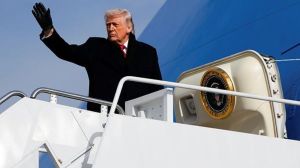
This has been a week when US President George Bush seems to be checking boxes on the legacy list. He opened the week at the United Nations in New York, where he tried to rally support for his Middle East peace initiative and insisted his vision of a new Palestinian state is still 8220;achievable8221; before the end of his presidency. And he pressed for more U.N. action against Iran, acutely aware he has less than 16 months left to stop Tehran8217;s nuclear program. Bush rounded off the week by calling the biggest nations of the world together to press for a plan on climate change by the end of next year.
Success in any of these areas would amount to a singular achievement and, in the view of advisers, could help rewrite Bush8217;s place in history. No president wants to be remembered as the author of an ill-fated war and, while Iraq certainly will be at the core of the Bush administration8217;s record, advisers hope to broaden the picture. Yet analysts said the hour is late to resolve the longstanding Israeli-Palestinian conflict on his watch, critics doubt his sincerity on climate change, and Iran remains as intransigent as ever.
8220;The clock is ticking, and there are certain things you want to accomplish before you go out of the door,8221; said Ron Kaufman, who was White House political director for President George H.W. Bush. 8220;While most of these things are not new to his agenda, there may be a bit of a new urgency given the time.8221;
Even on Iraq, Bush clearly has an eye on the clock. While he no longer harbours hope of winning the war by January 20, 2009, he wants to use his time in office to stabilise the country, draw down some forces and leave his successor with a less volatile situation that would dampen domestic demands to pull out completely. If he can do that, he told television anchors during an off-the-record lunch this month, he thinks even Hillary Clinton, the Democratic front-runner, would continue his policy.
The goal, as national security adviser Stephen J. Hadley told the Council on Foreign Relations recently, is that 8220;a new president who comes in in January 2009, whoever he or she may be, will look at it and say, 8216;I8217;m persuaded that we have long-term interests here. It8217;s important we get it right.8217; And so that a new president coming in doesn8217;t have a first crisis about 8216;let8217;s pull the troops out of Iraq.8217;8221;
Bush has even quietly sent advice through intermediaries to Clinton and other Democratic candidates, urging them to be careful in their campaign rhetoric so they do not limit their options should they win, according to a new book, The Evangelical President, by Bill Sammon of the Washington Examiner.
Bush is also rushing to institutionalise some of the controversial tactics he has employed in the battle with terrorists so that they will outlast his presidency. That was a major reason he agreed to put his National Security Agency8217;s warrant-less surveillance program under the jurisdiction of a secret intelligence court, aides said. And that is why he has pushed to find a way to close the prison at Guantanamo Bay, Cuba, and find other ways of handling suspected terrorists, although officials increasingly doubt they will be able to do so.
White House counsellor Ed Gillespie said the president8217;s team is not panicked about dwindling time but hopes to push steadily toward some goals that will bear fruit before the end of the administration.
The focus on passing time and the coming judgment of history is common at this point in a two-term presidency, of course. In his final months in office, Bill Clinton also launched an intense effort to solve the Middle East conflict only to have Camp David talks collapse. Joel P. Johnson, who was Clinton8217;s senior adviser in the last part of his presidency, remembers his boss holding 8220;a whip and a chair8221; trying to force as much change before surrendering the Oval Office. 8220;It8217;s on your mind every day because you know how long it takes to create a policy and build a campaign around it and enact it or in some way force change before your administration is over,8221; Johnson said.
Yet the most ambitious items on Bush8217;s second-term domestic agenda have died, most notably his ideas for restructuring social security and immigration laws. 8220;They8217;re off the table. They8217;re done. Didn8217;t work,8221; said a senior official.
One of the other things is climate change. Bush once expressed doubt that human activity has anything to do with warming and renounced the Kyoto treaty imposing mandatory limits on greenhouse emissions. On Friday, he summoned representatives from the 15 nations that produce the most greenhouse gases. Senior European officials said they appreciate the newfound interest. 8220;Some months ago, there was no discussion of climate,8221; German Environmental Minister Siegmar Gabriel said on Thursday.
But Bush remains opposed to mandatory emissions caps that environmentalists and many foreign leaders such as Gabriel believe are needed. 8220;I don8217;t think the leopard has changed its spots,8221; said David D. Doniger, a climate analyst at the Natural Resources Defense Council. 8220;Or maybe the better analogy is that the only thing the leopard has changed is his spots.8221;