Journalism of Courage
 3 min read



When is the G-15 going to get its act together? That question hung like a fog over the whole business at sunny Montego Bay, the speeches, the photo-ops at the golf club, the inconclusive search for common strategies ending in resolutions saying no more than before. A sense of deja vu is inescapable. The problem at the heart of the G-15 actually a group of 17 developing countries and what makes it ineffective is the inability to form a cohesive alliance. This was brought out by what Atal Behari Vajpayee and Mohammed Mahathir tried to do in their separate ways. Vajpayee8217;s efforts to strike a moderate tone vis-a-vis the developed countries were necessary. Malaysia and Jamaica, among others, sought a confrontationist voice. This is quite understandable in the present scenario of a protracted financial crisis in East Asia, self-confessed IMF failures to respond appropriately and in good time to that crisis, falling commodity prices and rising protectionist sentiment in the US and elsewhere.
On the other hand,those like Latin America and Egypt with close economic and political ties with the US and OECD countries, preferred the softer option. This too is understandable. There is more Washington can do and is prepared to do to bail a Mexico or Brazil out of immediate troubles than the G-15 could ever do. The task Vajpayee undertook of finding the uncontentious middle path served the purpose of keeping a disparate group with disparate interests intact. Over the years, just keeping the G-15 show on the road has fully stretched its members and there has been little energy left over for working out a set of principles and common strategies. Looking for a G-15 8220;profile8221; is like looking for the holy grail. Everyone wants to find it but it is always out there somewhere, over the horizon and beyond reach. Malaysia8217;s prime minister tried, by being brutally frank, to light a fire under the leaders at Montego Bay. By comparison with the developed countries, he said, 8220;We are weak, we are poor8230;we are linked to each other bythin and friable beliefs that we have something in common8221;. That just about sums it up. The question is will the G-15 settle for reality or try to change it.
The immediate challenge before developing countries is working out a common approach towards the new round of trade and investment talks at the WTO starting in November. Happily, the summit has decided on preparatory G-15 discussions in New Delhi in August or September which provides another chance to coordinate stances. Since developing countries are far from ready to engage collectively in new WTO negotiations and, moreover, have had very mixed or unsatisfactory experiences since the Uruguay round, the tactic appears to be to buy time. This is not a bad thing. It is necessary to review thoroughly the impact of existing agreements and rules and not be railroaded into fresh agreements on labour clauses, environmental standards and investment rules. A concerted effort is required to bring down non-tariff barriers anti-dumping measures for example inthe developed world. If the G-15 can perform well here, maybe it has a future.

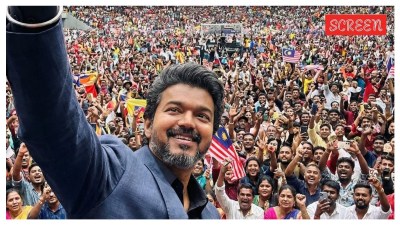
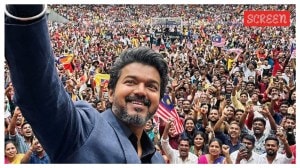
The grand audio launch of Thalapathy Vijay’ swan song, H Vinoth’s action thriller Jana Nayagan, took place in Malaysia on Saturday. As around 90,000 fans of the actor showed up, the actor acknowledged that after Sri Lanka, Malaysia has one of the largest Tamil populations in the world.