Journalism of Courage
 5 min read



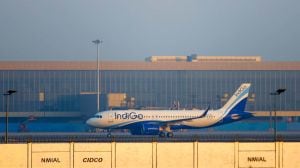
The immediate reason for Foreign Minister Yashwant Sinha8217;s visit to Kabul last week was India8217;s decision to present three Airbus aircraft to the Afghan government. Sinha, in fact, travelled in the first of these aircraft.
The more important and long-term purpose of the visit was to maintain continuity in India8217;s high-level contacts with the present Afghan leaders.
India8217;s primary interest in ensuring continuity in relations with Afghanistan arises from its belief that these ties, to be mutually beneficial, can be sustained only if India supports those policies that help to make Afghans prosperous and the country8217;s polity, stable.
The establishment of a political dispensation which is moderate, representative of all the ethnic segments composing Afghan civil society and which would not be unfriendly towards India, is the first necessary step to meet the above objective,
India has no desire to interfere in the internal affairs of Afghanistan and would deal with whichever government is in authority.
Going by recent experience, India is quite clear in its stand that an Afghanistan dominated by extremist Islamic forces, or having a government which does not represent the pluralistic nature of Afghan civil society, would not serve the country8217;s interests or indeed India8217;s political or geo-strategic interests in the current security environment.
India8217;s active participation in the Bonn, Tokyo and Geneva conferences on the stabilisation of Afghanistan and its economic reconstruction reflect these policy objectives. While nearly 1.8 billion have been pledged by the international community to Afghanistan for its development, the Indian segment of the assistance has been the most operational since January. India has translated its pledges valued at about a 100 million into concrete terms, in the spheres of health, civil aviation, training facilities for Afghan diplomatic, administrative and police personnel, as well as food assistance.
Leaving aside the aim of maintaining continuity in high level interaction, Sinha8217;s visit to Kabul had more substantive objectives.
Despite the successful completion of the Loya Jirga meeting and the establishment of a government under Hamid Karzai, the Afghan government continues to suffer from the internecine competition between various leaders. The antagonisms between the Pashtuns, the Tadjiks, and the Uzbeks have surfaced again.
The differences of opinion between President Hamid Karzai and the Tadjik leader Fahim are out in the open. The regional warlords remain unamenable to the authority of the central government. Uzbek leader, General Dostum, and Shia leader, Ismail Khan, remain alienated. Taliban cadres and other recalcitrant elements merging with various groups of warlords have vitiated the security environment by perpetrating violence to a level where President Karzai has entrusted his personal security to foreign troops of the International Security Force, now under the command of Turkish officers.
By visiting the country, Sinha could arrive at a first-hand assessment about the current political situation and the prospects of political stabilisation in Afghanistan. But more than undertaking such an assessment, the objective of Sinha8217;s trip was to encourage the processes of unity within the local power structure.
In addition, Sinha8217;s visit also aimed at consolidating India8217;s connectivity with the Pashtun leadership.
Thus far, India8217;s interaction with this segment was minimal. Pashtuns, who constituted the main opposition to Soviet intervention in Afghanistan, were alienated from India despite the traditional equations Indian political leaders had with Pashtun leaders since the early decades of the 20th century.
Over the last two decades, India has had closer connections with Northern Alliance leaders, which became more substantial during the Taliban regime8217;s tenure. The balance in India8217;s relationships with leaders of all ethnic groups had, therefore, to be restored and Sinha8217;s visit was an important initiative in this respect. He not only met Fahim but also met General Dostum and Shia leader, Ismail Khan, during this visit. The meetings were generally aimed at emphasising to these leaders the importance of transcending old suspicions and entering agreements with Pashtun leaders, in order to ensure that the difficult processes of political stabilisation and economic reconstruction are not disrupted. If they fail, Afghanistan8217;s unity itself maybe in danger.
India8217;s more specific interest in Afghanistan lies, of course, in expanding its relations with the Central Asian Republics. This is important because it will help counter the effect of Pakistani hostility towards India. If, by some miracle, India8217;s ties with Pakistan also get normalised, then it could help further the economic, technological and socio-cultural cooperation between India and the entire Central Asian region.
Iranian President Khatami visited Kabul within days of Sinha8217;s visit. The views expressed by him during the visit indicated a clear convergence of interests between Iran and India on Afghan issues. It is necessary that both countries work together in stabilising Afghanistan, regardless of the misplaced antagonism of the US against Iran 8212; an antagonism that could work against the stabilisation of Afghanistan.
If the friendly and practical suggestions given by Sinha and Khatami to the Afghan leadership are not heeded, then the likelihood of southern and western Afghanistan emerging as a Pashtun territorial entity gets strengthened, with one part of Afghanistan getting linked to Iran and another to Uzbekistan.
Such a break up would have dangerous implications, particularly for Pakistan. It would also generate demographic and ethnic pressures in Central Asia which would not serve India8217;s specific interests or, indeed, the interests of security and stability in the entire region.