Journalism of Courage
 3 min read



It was with great aplomb that Yashwant Sinha had announced in his 1999Budget speech that a secretary-level post had been done away with. Since asecretary to the government is at the top of a whole pyramidal structure,many saw in the announcement the scrapping of hundreds, if not thousands, ofjobs. After all, it symbolised the government8217;s commitment to downsize thebureaucratic structure.
This time Sinha kept his counsel on the subject, although he spent a longertime reading out a longer speech. Does it mean that the government iswavering on the question? The answer seems to be in the affirmative if thefigures contained in the expenditure budget are anything to go by. Forinstance, the number of central government employees, barring the defenceforces, stood at 3.82 million as on March 1, 2000, against 3.75 millionexactly an year ago.
During the current fiscal year, 28,000 extra employees are projected to beon the payroll of the government. Thus, in the two-year span from the dateof Sinha8217;s announcement, the number of government employees would haveincreased by over 1 lakh. It is significant that a majority of thequot;newcomersquot; are in the telecommunications and railway sectors. Since the twoministries are at present headed by persons who have a reputation forreckless populism, it would be futile to expect a cutting down of flab.
But Ram Vilas Paswan and Mamata Banerjee can hardly be singled out when theUnion Cabinet found it politically inconvenient to discuss and decide areport prepared by Programme Implementation Minister Arun Shourie toquot;rightsizequot; the government. There is, therefore, every reason to doubt thesincerity of the government on this question. This is surprising sincedownsizing is central to economic reforms.
The bloated size of the government is because of the wrong priorities ofthose in power. Earlier, in a misplaced enthusiasm to usher in a socialistsystem, the political leadership allowed the government to enter areas whereit had no right to be. As a result, government jobs became the ultimateambition of the unemployed. More and more departments were sanctioned with aview to providing jobs.
The quot;milkman of the country,quot; Varghese Kurien, had once characteristicallyraised an audacious question: if Krishi Bhavan was bombed one day, whatwould be the effect on Indian agriculture? He went on to provide the answer:it would make no difference to the Indian farmer. At no time did thegovernment consider the consequences of employing so many people. Today, inmany states, there is little left in the exchequer after governmentemployees are paid their salary. With the implementation of the newpayscales for central government employees, at the behest of Paswan and hisilk, the situation at the Centre is only marginally better. The outgo onsalaries now stands at Rs 38,698 crore, against Rs 30,095 crore last year.
Needless to say, much of this expenditure is avoidable. The money could bebetter employed in developmental work, which could in turn throw up moreemployment opportunities. The government8217;s disinve- stment policy will bemeaningless if it is unable to downsize the government. With computers andother modern means of communication, a smaller number of people can do whata large number had once done. Thus downsizing will not be at the cost ofgovernment8217;s efficiency. What is needed is the political will to cut costs.

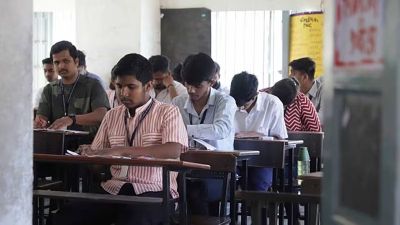
With nearly 18,000 post-graduate medical seats remaining vacant after two rounds of counselling, the cut-off for some of the categories has been reduced to zero percentile again. The NBEMS revised the cut-offs to 7 percentile for general category, 5 percentile for persons with disability belonging to general and EWS category, and zero percentile for SC, ST, OBC candidates.