Journalism of Courage
 3 min read



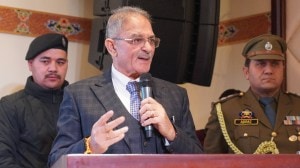
Tuesday8217;s call by the Jammu and Kashmir Chief Minister Ghulam Nabi Azad for a ceasefire between the security forces and the Kashmiri militants could not have come at a more appropriate moment. Floated just days before the Prime Minister Manmohan Singh meets with Pakistan8217;s President Pervez Musharraf in Havana, the proposal has the potential to transform the political environment in J038;K, boost the Indo-Pak peace process and inject new life into the talks between the Centre and the militants. That Azad8217;s call received strong support from his political ally and former chief minister, Mufti Mohammed Sayeed, of the People8217;s Democratic Party and his main opponent, Omar Abdullah, of the National Conference should not surprise any one. Across the spectrum in J038;K, people in the state have been waiting for a big political gesture from New Delhi.
The idea of a ceasefire between the security forces and the militants in J038;K is certainly not new. It was tried out twice, unsuccessfully, during 2000-01. That should not be the reason for rejecting it this time around. The first time in July 2000, the main Kashmiri militant organisation Hizbul Mujahideen offered a ceasefire, but withdrew it under pressure from Pakistan. The second time, the Indian government in November 2000 unilaterally announced a unilateral suspension of offensive military operations against the militants on the eve of Ramzan. The lack of political response forced the government to abandon the initiative in May 2001.
The earlier ceasefire initiatives were in an era that preceded the tumultuous developments of 9/11 and the peace process between India and Pakistan. There have been strong indications from Pakistan that it will encourage the militants to respond positively to a ceasefire initiative from the Indian security forces. Islamabad also hopes that a mutual ceasefire would allow India to alter its military disposition in J038;K and generate strong support for the peace process in Pakistan. This paper has repeatedly argued in favour of a ceasefire and irrespective of General Musharraf8217;s attitude, India owes itself repeated attempts to win the people8217;s trust in J038;K. Notwithstanding the many sceptics in the Indian security establishment, Dr Singh should experiment once again with a ceasefire. There could be no better moment for such an initiative than the holy month of Ramzan, which begins in a couple of weeks.