4 min read
📣 For more lifestyle news, click here to join our WhatsApp Channel and also follow us on Instagram
© IE Online Media Services Pvt Ltd



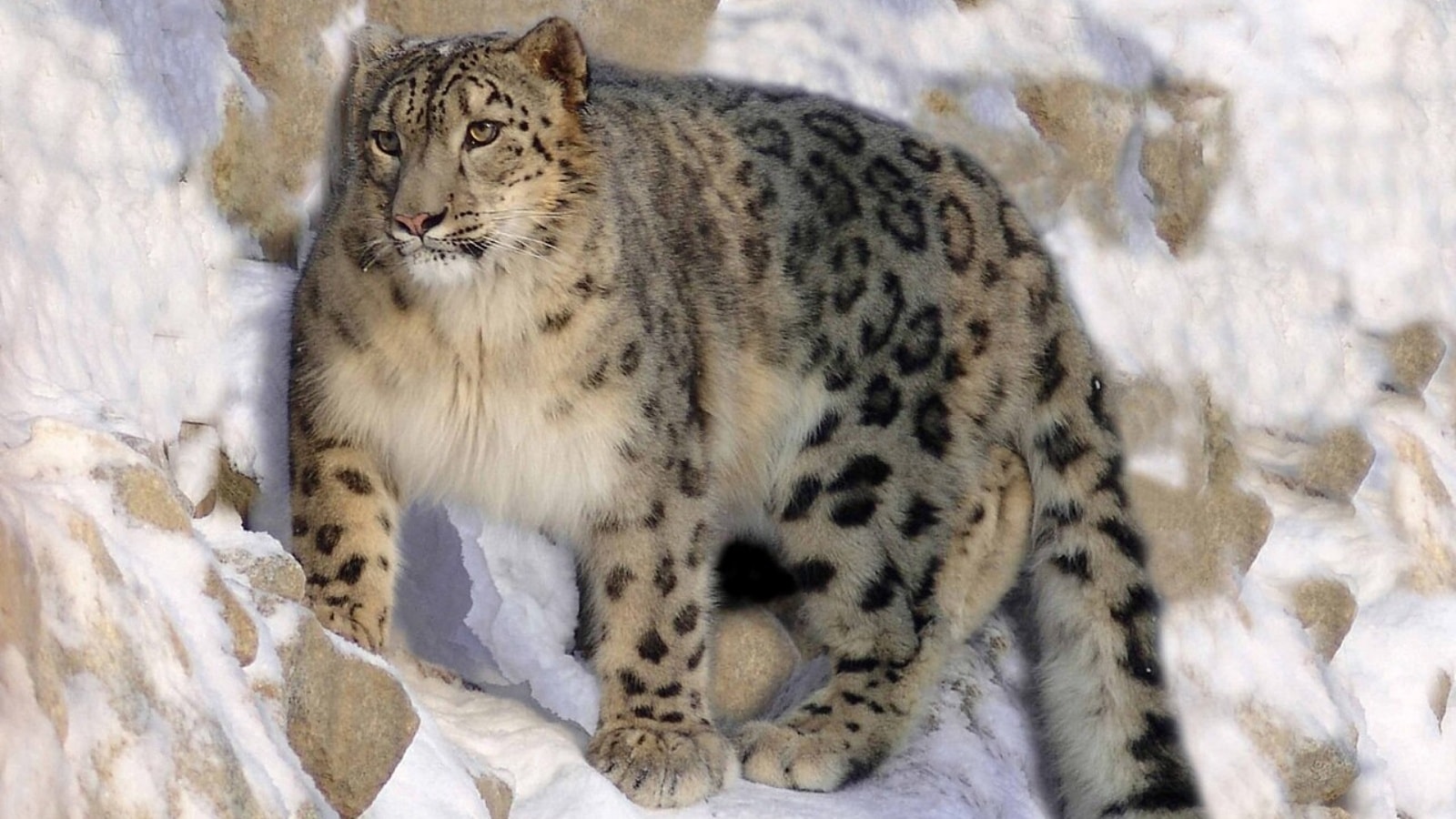 A snow leopard (Photo: Wikipedia)
The snow leopard is one of the world’s most mysterious big cats. It is so elusive that even experienced wildlife experts may never see one in the wild. Its pale grey coat, rosette markings, and long tail help it blend into the icy landscape, which is why it is often called the “ghost of the mountains.” According to the World Wildlife Fund (WWF), the snow leopard is “highly adapted to life on the cold, rocky slopes of High Asia,” using stealth, camouflage, and agility to survive in some of the planet’s harshest terrains. Its presence is not only a symbol of wild mountain ecosystems, but also of the critical services these landscapes provide, with WWF noting that “over 330 million people live within 10km of rivers originating in snow leopard habitat.”
The snow leopard is highly adept at blending into its environment. Its smoky fur, its soft paws leave almost no tracks, and it can climb steep slopes quickly, disappearing in seconds.
Snow leopards are also rare because they need a lot of space. One snow leopard might travel across 200 to 2,000 square kilometres, so seeing them often is very unlikely. They usually live alone and prefer rough, high mountain areas, which makes them even harder to find. Since snow leopards are so elusive, it is challenging to count the number living in India accurately.
According to the Snow Leopard Population Assessment in India (SPAI) Report 2024, there are 718 snow leopards in India, with Ladakh accounting for approximately 477 of them. As of January 30, 2024, the estimated population in other states is as follows: Uttarakhand (124), Himachal Pradesh (51), Arunachal Pradesh (36), Sikkim (21), and Jammu and Kashmir (9). In Himachal, the population has increased from 51 to 83, according to the latest reports.
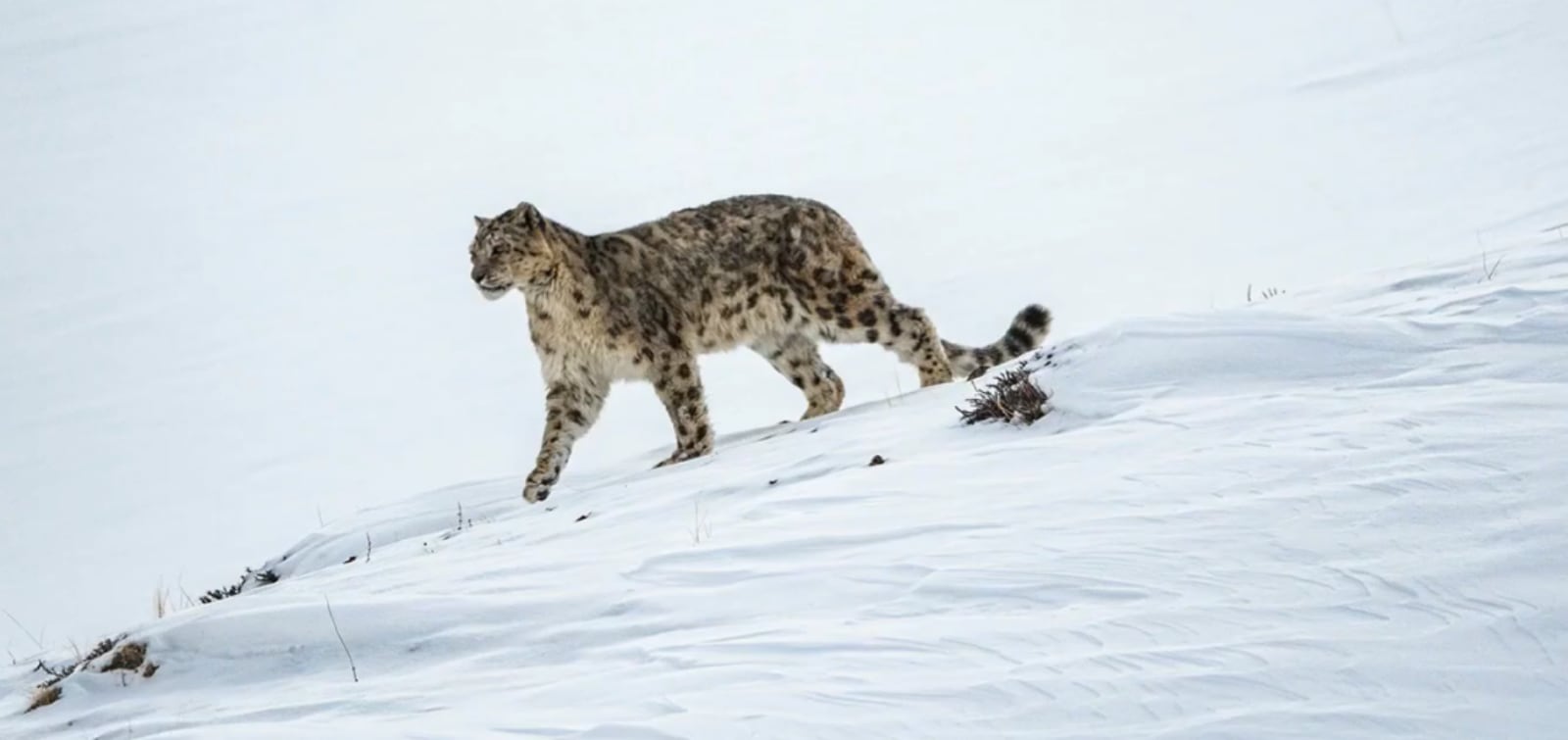 A snow leopard (Photo: Wikipedia)
India has some of the world’s most important areas for snow leopards. These include large parts of the western Himalayas and some places in the eastern Himalayas.
Ladakh
Ladakh’s Hemis National Park is often called the snow leopard capital of India and is one of the best places in the world to see them. Its rocky valleys, little vegetation, and high altitude, usually above 3,500 meters, make it a perfect home for snow leopards.
Jammu & Kashmir
The rugged terrain of the upper Himalayas in Jammu & Kashmir, including Kargil and Gurez, is a safe habitat for snow leopards. In winter, people sometimes spot them moving near villages and pastures.
Himachal Pradesh
Places like Spiti Valley, Pin Valley National Park, and parts of the Great Himalayan National Park are suitable habitats for snow leopards. Up from 51, the state currently has 81 snow leopards. These areas are important because they receive snow and have prey such as blue sheep.
Uttarakhand
High mountain areas in the Nanda Devi Biosphere Reserve and the Gangotri National Park often have snow leopards. These protected places are hard to reach but are very important for the long-term safety of the species.
Sikkim and Arunachal Pradesh
These states are in the Eastern Himalayas, which is a global priority for WWF. Their green, steep mountains and remote valleys have small but steady groups of snow leopards.
The Government of India initiated ‘Project Snow Leopard’ to conserve this endangered species of the high Himalayas. Large-scale monitoring efforts, such as SPAI — involving camera traps, local communities, and scientific surveys — are underway to gauge the snow leopard movement and their population in India.