Journalism of Courage



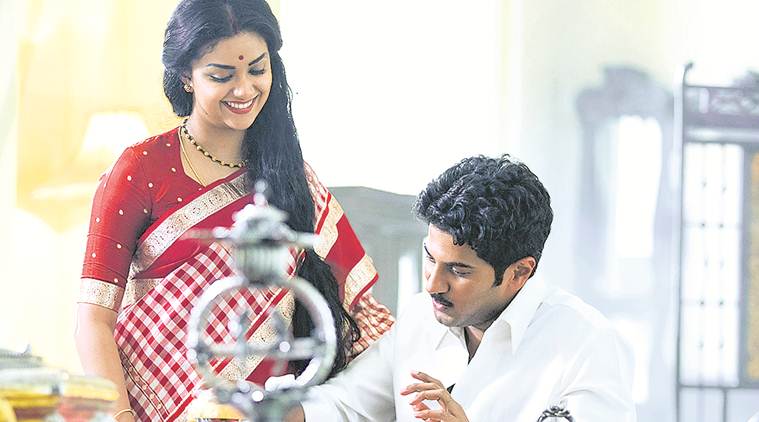 Mahanati is the story of Savitri Ganesan,
At the recent National Film Awards, perhaps one of the least surprising wins was the award given to the Telugu-Tamil biopic Mahanati. The movie tells the story of Savitri Ganesan, who is believed to be the first female superstar of south Indian cinema.
The title role of Savitri, the Mahanati (great actress), is played by Keerthy Suresh — who won the Best Actress National Award for it — while Dulquer Salmaan, Samantha Akkineni and Vijay Deverakonda play the other three leads.
The costumes put together by the team — comprising designers Gaurang Shah and Archana Rao, and stylist Indrakshi Pattanaik Malik — were key to reconstructing the settings in which Savitri’s rise and fall took place. For Delhi-based Pattanaik Malik, sourcing and styling costumes for an entire film was a new challenge.
She had previously styled looks only for lead roles, including Chiranjeevi for the 2017 Telugu action film Khaidi No. 150. The 29 year old, who has most recently completed the costume design for the upcoming Priyadarshan period epic Marakkar: Arabikadalinte Simham, explains how the team drew on interviews, research and a crowd-sourced library of visual references to establish the narrative for Mahanati’s costume design.
Real-life References
Interviews with people who had known or worked with Savitri or her husband Gemini Ganesan — producers, crew members, journalists — were an important resource.
A major challenge, for example, was imagining what the various characters would have worn in their everyday lives. Most of the reference images available for the lead characters, for example, were from publicity or film stills, or from public appearances. This was where inputs from Vijaya Chamundeshwari, Savitri’s daughter, became an invaluable.
“There were so many things that only she could have told us. For example, she told us that her father (Ganesan) liked to see her mother in dark colours, so in the scenes depicting their married life, we’ve put Savitri in dark shades,” says Pattanaik Malik.
Crowdsourced Costumes
Since the team didn’t have much to work with in terms of image references, Pattanaik Malik put out a public appeal on social media, asking for photographs from family albums, which would be relevant to the period and the region in which the movie was set. “People sent in photos from the 1940s to the 1980s, and while we couldn’t use everything for the leads, they became good references when we styled the background characters,” she says.
This, says Pattanaik Malik, was necessary for authenticity. “One of the things that I learned from watching period movies and shows from outside India, like The Crown, is that the story is far more convincing if the background characters also look like they belong to the setting. In a movie like Mahanati, costume occupies prime real estate on the screen, so we could not afford to be careless,” she says. This is why, for example, in the film shooting scenes, the crew members are wearing either white or khakhi. “This was the rule for a long time on film sets, and hierarchy decided whether you would wear white or khakhi,” reveals Pattanaik Malik.
Made to Order
Shah, a Hyderabad-based textile revivalist, dedicated a year to designing and then creating the handloom saris worn by Suresh — the heavy Kanjeevarams and Banarasi silks as well as the simple Mangalagiri cottons. Most of the other costumes (including accessories) for Mahanati were either made from material picked up in various cities, including Mumbai and Hyderabad, or were actual vintage sourced from old markets in India, as well as thrift stores in the US.
Pattanaik Malik says, “While Gaurang (Shah) and Archana (Rao) designed the clothes, I was on the sets every day, co-ordinating everything and making sure that they had all the resources they needed.” Thanks to the scale of the project, the costume department was further divided into sections. One, for example, focused on accessories, while another ensured that, despite multiple shots and retakes, there was continuity in the costumes. “We couldn’t have a shirt collar from the 1950s end up in a shot set in the 1940s,” says Pattanaik Malik.
Story Told in Style
Pattanaik Malik says, “Costumes add essential information to the moment of a scene, of a story, to help achieve the visual and narrative goal of the filmmaker. And that’s honestly where colour becomes our tool.” Since Gemini Ganesan’s favourite colour was red, Savitri’s clothes feature that colour during the early stages of their romance. “In fact, the first time that the colour red appears in her clothes is when we’re introduced to Gemini Ganesan. Savitri is wearing a polka-dotted sari with a red stripe at the border,” says Pattanaik Malik.
The love between the two begins to wane towards the middle of the film and red slowly begins to fade from the palette, to be replaced, increasingly, with green. “As Savitri becomes more successful, her husband starts to grow jealous. During this part of the film, she’s also wearing saris with more gold in them, along with elaborate jewellery, hairstyles and more make-up. All of this is to reflect her growing stature as a ‘Mahanati’,” says Pattanaik Malik.
Sweating the Small Stuff
To achieve visual authenticity, details matter. “There were small things, which are generally overlooked but which we had to pay close attention to. For example, in the 1940s, hairclips and rubberbands were not widely used, so we could only use ribbons to tie hair in the scenes set during that period. There were no stick-on bindis at the time, and nail polish wasn’t available in India, so we couldn’t use either,” says Pattanaik Malik.

 6 min read