Journalism of Courage



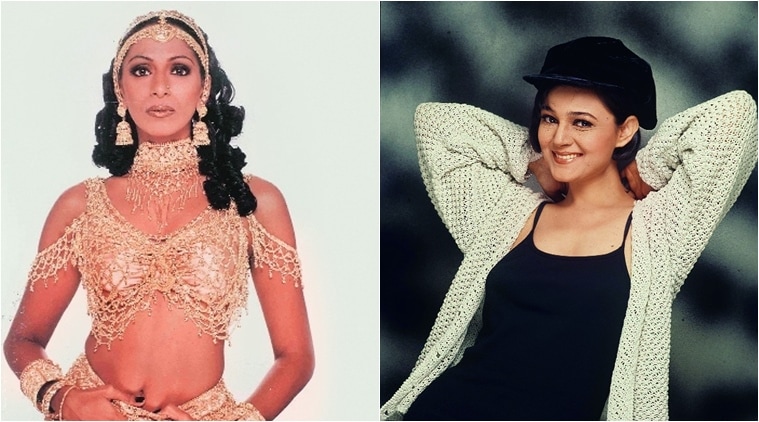 Pop icons like Shweta Shetty and Alisha Chinai were the antithesis to the the delicate and shy women of Hindi cinema
As A student at St Mary’s High School, Shillong, Ananta Das was often put in charge of minding the class. But she hated the idea as she “wanted to be liked by everyone”. She found a way out: she decided to sing and hold everyone’s attention to keep them off mischief. Her song of choice was Shweta Shetty’s 1997 hit Deewane toh deewane hain. “It was a very popular song and everyone loved it,” says Das, now in her thirties.
It wasn’t just the music that captured Das’s imagination. It was Shetty herself, with her undeniable glamour. Curly hair, dark complexion and husky voice — Shetty did not fit the mainstream image of an “attractive woman”. In the way she held herself and the way she dressed (that gilded outfit from Deewane toh… will remain seared in the memory of teenagers of the ’90s), Shetty was bold like only Hindi film vamps usually were. Unlike those vamps, however, she was never on the sidelines, simpering and seducing the hero. She didn’t need to. As she sang “Lakhon hain majnu, kisko apna banaoo”, a group of well-muscled young men danced around her, vying for her attention. “In her (Shetty’s) videos, she was clearly the protagonist and completely in charge of the story. Unlike the women in Hindi cinema, she didn’t need to be delicate and shy in order to be appealing to men. They loved her the way she was — bold and in your face,” says Das.
Briefly, in the 1990s, the reign of Bolly-wood music was challenged by a wave of Indipop. It made stars out of Shetty, Alisha Chinai, Suneeta Rao, Mehnaz and Anaida, and provided the soundtrack for a more cosmopolitan India that emerged with economic liberalisation. But its most enduring influence was on young women and girls, who suddenly found new ways of looking at themselves and the world around them.
That decade taught them how to be an Indian woman in the modern world. The Madonna/whore dichotomy of Hindi cinema may not have disappeared completely, but it was mitigated to some extent by new models of femininity. American shows such as The Wonder Years, Friends, and Ally McBeal, and Indian shows like Banegi Apni Baat, Hip Hip Hurray and Tara gave young female television viewers a glimpse of ambitious, intelligent women characters who had a more complex relationship with love than the average Hindi film heroine. Bangalore-based Shraddha Easwaran says, “Women like Shweta Shetty, Mehnaz and Anaida were making bold videos in which they were singing about what they wanted. They weren’t pining away. They were smart, sexy, fashionable and we wanted to be like them.”
They didn’t shy away from desiring a certain kind of man, perhaps best represented by Milind Soman. “He was one of the most prominent male sex symbols of the ’90s. There was the Tuffs shoes ad, but the most powerful memory I have of him is the first time I saw him rising from the box, in Chinai’s Made in India (1995),” says 34-year-old Preeti Chaudhary. For the first time on Indian television, love and desire were seen so explicitly through the female gaze, as a bare-chested Soman stood before Chinai. “He was always described as a ‘Greek God’, and in that moment, to many of us girls and women, he truly was. That moment marked our he coming-of-age,” says the Mumbai-based copywriter.
Of course, parents still controlled what their children watched on TV, so “adult content” like Baywatch and The Bold and the Beautiful were strictly off limits. But, as Easwaran points out, there was something to learn even from the shows meant for children. “Until then, I thought of romance and dating as ‘adult’. But watching Harriet pursue Jamie in Small Wonder, for example, showed me that age is no bar. Even if you’re only 10 or 11, you can still have crushes on people, and that’s completely normal.”
Historical or mythological heroines like Rani Laxmibai and Sita might have been feminine ideals in moral science textbooks, but for the ’90s girl, the women on TV were her new role models, whether she was a singer like Shetty and Chinai, or a model like Aishwarya Rai, or a VJ like Shenaz Treasurywala. Delhi-based Susmita Roy recalls watching, as a pre-teen in Bhopal, Sushmita Sen being crowned Miss Universe in 1994 and how it changed her idea of beauty. “It struck me that there isn’t a single kind of beauty, and that beauty and brains can be a potent combination. It was incredible that she had achieved so much at 18,” says the 32-year-old.
Numerous girls across India, in pursuit of a dream like the one realised by Sen, Rai and others, left home to take their chances alone in metros, where there were suddenly jobs to be had as models, designers, air stewardesses, VJs and RJs, actors and copywriters. But it wasn’t just career opportunities that drew them to the big cities. Young girls had caught a glimpse of what an independent, adult life looked like and they wanted it. Easwaran was one of them.
Growing up in Ahmedabad, the 32-year-old was an avid viewer of Friends. “I knew that I wanted to leave home and live with friends like Monica, Phoebe and Rachel, and be in charge of my own life,” she says. The girls followed that dream. Many of them realised that they needed to leave home in order to do so. Das, for instance, moved from Shillong to Delhi to attend college, and then to Mumbai, where she lives now. “It was important for us to leave home if we wanted to be like the women we idolised. There was too much personal history in our hometowns, and that would have held us back,” she says.
“I wouldn’t say that the person I am today is because of the idols of the ’90s,” Das continues. “But that decade’s pop culture definitely shaped the way I thought. It showed us things we could do with our lives, and that we could do so much without the baggage of history.”

 6 min read