Premium
This is an archive article published on May 21, 2019

A student of psychology at Symbiosis is also a meme-maker and curator of a series of exhibitions in Goa

One of the aims of the exhibition is to set a precedent for memes to be recognised as a legitimate art form. There is a curatorial walk, where visual and audio aspects of memes are explained, from the old jokes to historical landmarks.

An exhibition in Goa, curated by Anuj Nakade, is celebrating the meme as a democratic art form.

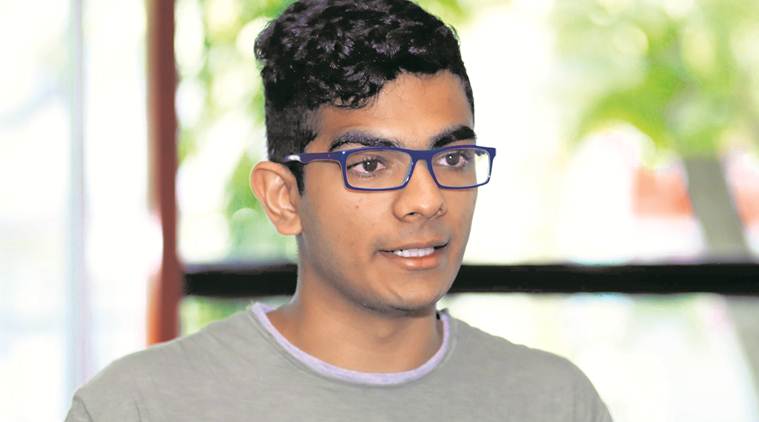
According to internet lore, behind every meme is a person trying to make somebody laugh. Anuj Nakade is such a person. In a cafe in Pune’s Kalyani Nagar, Nakade is trying to connect his laptop to the wi-fi. “Do you want to go to the junkyard? I won’t budge,” he tells it. The machine yields. Nakade, 22, disappears in it. A student of psychology at Symbiosis, he is also a meme-maker and curator of a series of exhibitions in Goa, titled “Meme Regime”, which explore the importance of memes. Organised by Pune-based TIFA Working Studios, the exhibition will end on May 22. Excerpts from a conversation with Nakade:

How do you define a meme?

The word goes back to 1976. Richard Dawkins coined it because he couldn’t find a term for a trope that travels from society to society but without genetic information, such as cultural information. From a historical perspective, meme is the most amplified and accessible art form ever. There is no aesthetic or structural restriction and platforms and audiences are readily available in a way that has not happened for an art form before. The fact that memes are not serious but we are doing it seriously is a joke. There are deep-fried memes (memes in which a photo or screenshot is passed through so many filters that the original image and its meaning becomes blurred) that are not funny at all.

What have been some of the great memes recently?

Last year, we had several great memes, such as E. It is the face of Markiplier (a YouTuber) plastered on Farquaad, the villain from Shrek, and he is saying E, and that’s it. It is an anti-joke. You don’t want older people to get your joke, that’s why you meme. Cat memes have always been around. In India, there’s Gutka Boy. He is talking about how he will be the PM and make girlfriends mandatory for everybody and so on. It is important to note that 70 percent of the memes we consume are without knowing who made them.

When did you begin?

I have been around since 2007. The entry-level meme I had was Doge. It was based on a Shiba Inu dog, whose picture somebody had posted on the internet. I put a chef’s hat on a Doge and wrote ‘Onion-cut much fry wow’ in colourful text over the picture because I thought it was funny and it got hundreds of likes. You need one initiation meme and then you are sucked in and it is like a spiral. Initially, I used to share memes on Facebook but, eventually, moved on to sites such as Reddit.

What explains the popularity of memes?

One of the reasons for the popularity of memes is the information overload. The kids know too much for their age. All information is given by the internet and there is no room to grow psychologically. There’s a meme called Doomer Boomer Zoomer Bloomer. A Boomer and a Bloomer are, respectively, an extremely old or an extremely young person. They stay happy and give benign advice to people, such as ‘Stay Happy’. Then, there are people who know that some things are not in your control, such as the way you feel. If this makes you sad, you are a Doomer and if it makes you happy, you are a Bloomer.

What does the exhibition “Meme Regime” feature?

One of the aims of the exhibition is to set a precedent for memes to be recognised as a legitimate art form. There is a curatorial walk, where visual and audio aspects of memes are explained, from the old jokes to historical landmarks. We have also organised talks about ‘memesters’ (people who make memes) and Q&A sessions.

What is the lifetime of a meme?

There are different tiers in memes. A Tier II to Tier III meme is one that will live around a month. A Tier IV is one that will die quickly — a week is what I will give it. There are super memes, which are relevant at a particular time, such as the (American YouTube star) James Charles’ scandal at present. Game of Thrones and Avengers will always have memes. Spongebob, Minecraft and Halo memes will come and go but not disappear.

Dipanita Nath is a Senior Assistant Editor at The Indian Express, based in Pune. She is a versatile journalist with a deep interest in the intersection of culture, sustainability, and urban life. Professional Background Experience: Before joining The Indian Express, she worked with other major news organizations including Hindustan Times, The Times of India, and Mint. Core Specializations: She is widely recognized for her coverage of the climate crisis, theatre and performing arts, heritage conservation, and the startup ecosystem (often through her "Pune Inc" series). Storytelling Focus: Her work often unearths "hidden stories" of Pune—focusing on historical institutes, local traditions, and the personal journeys of social innovators. Recent Notable Articles (December 2025) Her recent reporting highlights Pune’s cultural pulse and the environmental challenges facing the city during the winter season: 1. Climate & Environment "Pune shivers on coldest morning of the season; minimum temperature plunges to 6.9°C" (Dec 20, 2025): Reporting on the record-breaking cold wave in Pune and the IMD's forecast for the week. "How a heritage tree-mapping event at Ganeshkhind Garden highlights rising interest in Pune’s green legacy" (Dec 20, 2025): Covering a citizen-led initiative where Gen Z and millennials gathered to document and protect ancient trees at a Biodiversity Heritage Site. "Right to breathe: Landmark NGT order directs PMC to frame norms for pollution from construction sites" (Dec 8, 2025): Reporting on a significant legal victory for residents fighting dust and air pollution in urban neighborhoods like Baner. 2. "Hidden Stories" & Heritage "Inside Pune library that’s nourished minds of entrepreneurs for 17 years" (Dec 21, 2025): A feature on the Venture Center Library, detailing how a collection of 3,500 specialized books helps tech startups navigate the product life cycle. "Before he died, Ram Sutar gave Pune a lasting gift" (Dec 18, 2025): A tribute to the legendary sculptor Ram Sutar (creator of the Statue of Unity), focusing on his local works like the Chhatrapati Shivaji statue at Pune airport. "The Pune institute where MA Jinnah was once chief guest" (Dec 6, 2025): An archival exploration of the College of Agriculture, established in 1907, and its historical role in India's freedom struggle. 3. Arts, Theatre & "Pune Inc" "Satyajit Ray, Ritwik Ghatak were not rivals but close friends, says veteran filmmaker" (Dec 17, 2025): A deep-dive interview ahead of the Pune International Film Festival (PIFF) exploring the camaraderie between legends of Indian cinema. "Meet the Pune entrepreneur helping women build and scale businesses" (Dec 16, 2025): Part of her "Pune Inc" series, profiling Nikita Vora’s efforts to empower female-led startups. "How women drone pilots in rural Maharashtra are cultivating a green habit" (Dec 12, 2025): Exploring how technology is being used by women in agriculture to reduce chemical use and labor. Signature Style Dipanita Nath is known for intellectual curiosity and a narrative-driven approach. Whether she is writing about a 110-year-old eatery or the intricacies of the climate crisis, she focuses on the human element and the historical context. Her columns are often a blend of reportage and cultural commentary, making them a staple for readers interested in the "soul" of Pune. X (Twitter): @dipanitanath ... Read More


📣 For more lifestyle news, click here to join our WhatsApp Channel and also follow us on Instagram

Latest Comment
Post Comment
Read Comments
Advertisement
Advertisement
Advertisement
Advertisement