4 min read
© The Indian Express Pvt Ltd



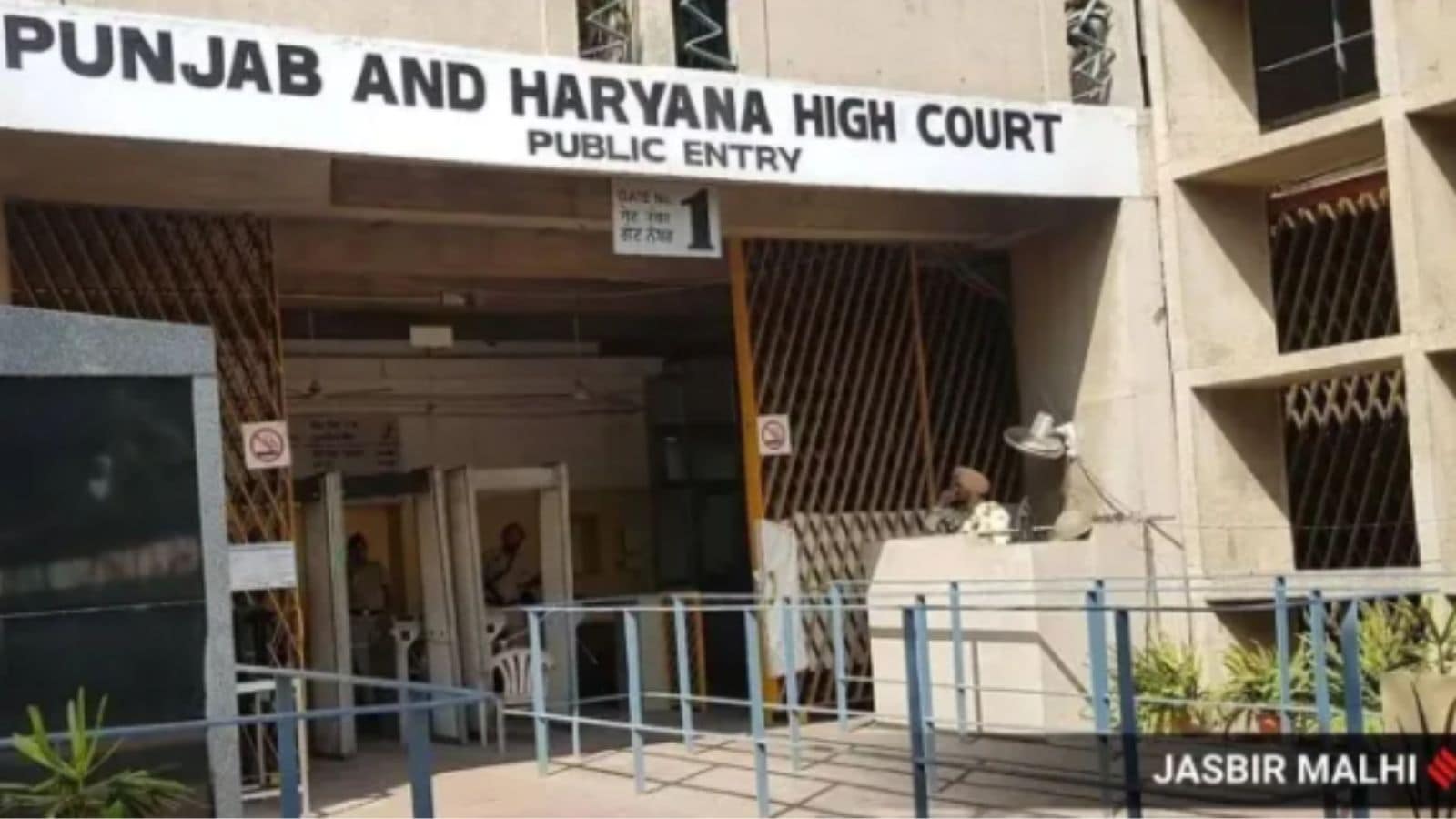 The Punjab and Haryana High Court is examining whether the NGT has the jurisdiction to strike down Punjab's "Green Habitat" farmhouse policy. (File)
The Punjab and Haryana High Court on Monday examined whether the National Green Tribunal (NGT) has the jurisdiction to test the legality of Punjab’s newly notified “Green Habitat” farmhouse policy, even as it was pointed out that the tribunal had already stayed the policy’s operation till February 4, 2026.
The issue arose during the hearing of a petition challenging a November 20 government notification that seeks to regulate and regularise residential constructions on around 55,000 hectares of delisted Shivalik-Kandi land. The policy has been assailed as being contrary to environmental safeguards and central government conditions under which the land was denotified.
A division bench of Chief Justice Sheel Nagu and Justice Sanjiv Berry heard senior advocate R S Bains, who appeared for the petitioners, and Deputy Advocate-General Salil Sabhlok, who represented the state.
At the outset, the state informed the court that the same notification was already under challenge before the NGT’s principal bench in New Delhi, which on December 18 granted an interim stay on the policy’s implementation until February 4, 2026, the next date of hearing. On this ground, the state urged the high court to decline interference to avoid parallel proceedings.
Questioning the tribunal’s competence to adjudicate on the validity of the policy itself, Bains argued that the NGT, being a creature of the statute, is confined to the four corners of sections 14 and 15 of the National Green Tribunal Act 2010, which deal with compensation, restitution, and relief for environmental damage.
“The NGT can grant relief only after damage is demonstrated. It cannot, at the inception, declare a policy unconstitutional or ultra vires Article 21,” Bains submitted.
Bains warned that the policy posed a grave ecological risk in a state that already has one of the lowest forest covers in the country. Referring to official data, he pointed out that Punjab’s forest cover stands at barely around three to four per cent of its geographical area. “In such a situation, even permitting the policy to operate for a single day will cause irreversible environmental damage,” he argued.
Bains contended that the policy effectively seeks to regularise existing illegal constructions and permit concrete structures, access paths, and large farmhouses on land denotified strictly for agriculture and livelihood purposes. He said this was in direct conflict with the conditions imposed by the Union Government while allowing the delisting of forest land.
During the exchange, the bench observed that while tribunals cannot examine the vires of their parent statutes, the question of whether the NGT could assess the legality of an executive policy required closer scrutiny. Bains repeatedly referred to the limited relief framework under section 15, which focuses on compensation and restitution after environmental harm has occurred.
Bains maintained that waiting for actual damage would defeat the very purpose of environmental protection. “By the time the tribunal reaches final relief, the damage would already be done,” he argued, stressing that constitutional challenges to policy decisions squarely fall within the high court’s writ jurisdiction.
The state countered that no permissions had been granted under the policy at the time the NGT passed its interim order, and that the tribunal was already seized of the matter.
After hearing both sides at length, the bench indicated that the question of maintainability would be taken up separately. The matter is likely to be considered in January 2026, with the NGT scheduled to hear the case next on February 4, 2026.
The Punjab Government’s “Green Habitat” policy aims to regulate low-impact residential development on delisted land, but critics allege it opens the door to large-scale regularisation of farmhouses near forest areas, undermining environmental protections imposed at the time of denotification.