Journalism of Courage



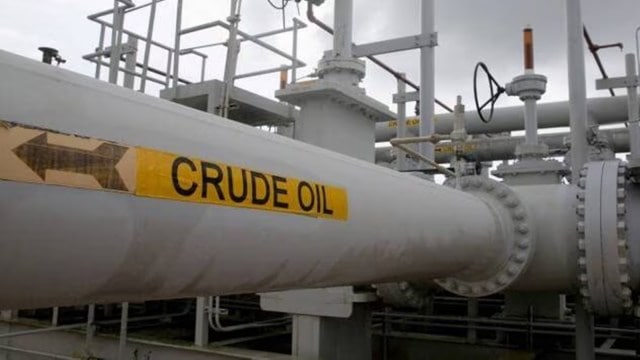 From being a marginal oil supplier to India prior to the war in Ukraine, Russia is now India’s biggest supplier of crude.(Representational Image)
The sweeping sanctions package announced earlier this month by the US against Russia’s oil trade has already had an impact on near-term supply of Russian oil to Indian refiners, who are finding it hard to secure enough cargoes for Moscow’s crude. The situation is forcing Indian refiners to look elsewhere—mainly to the Middle East—to replace volumes from Russia, currently India’s largest source market for crude.
India’s second-largest public sector refiner Bharat Petroleum (BPCL) is unable to get sufficient cargoes of Russian oil for March delivery, the company’s Director (Finance) Vetsa Ramakrishna Gupta said in a call with analysts on Thursday. Officials in other Indian refiners also said that getting Russian oil supplies for delivery beyond February has become difficult due to the recent sanctions, which have seemingly crippled the fleet of tankers transporting Russian crude.
Industry officials, however, maintain that enough oil supply is available in the global market and replacing the lost Russian oil volumes should not be difficult.
“Crude availability is not an issue…Only the commercial benefits of (discounted) Russian crude may not be available,” Gupta said, adding that the supply disruption from Russia is likely to be “a temporary phenomenon” that can be mitigated with some rebalancing of the market.
According to him, the share of Russian crude in BPCL’s import basket could fall sharply to 20 per cent in March from 31 per cent in the December quarter.
On January 10, the US sanctioned 183 tankers—a sizable part of the so-called shadow fleet that has kept Russian oil flowing to major consumers such as India and China—apart from sanctioning two Russian oil majors—Gazprom Neft and Surgutneftegas—and Russian insurance companies, among others involved in the Russian oil sector and trade.
The sanctions were announced by the outgoing Joe Biden administration in the US at a time when Indian refiners were beginning to seek Russian oil cargoes for March delivery.
These sanctions are the latest in the list of actions the Western powers have taken to curtail Russia’s revenue from oil exports, which they claim is helping Moscow fund its war in Ukraine. According to the US Department of the Treasury, the latest action substantially increases the sanctions risks associated with the Russian oil trade. A large number of the now sanctioned vessels have been delivering oil to India and China.
Indian refiners are now primarily looking at their traditional suppliers in West Asia to increase oil purchases and meet the shortfall in Russian oil, industry officials and trade sources indicated. They are looking to increase supplies under long-term contracts, apart from seeking additional cargoes from the spot market from Middle Eastern suppliers. They are also understood to be in the market for more oil from Africa and the US.
From being a marginal oil supplier to India prior to the war in Ukraine, Russia is now India’s biggest supplier of crude, thanks to Moscow offering oil at significant discount after the West started shunning Russian oil. In 2024, Russian oil accounted for nearly 38 per cent of India’s total oil imports, per tanker data.
Prior to the Russia-Ukraine war, Iraq, Saudi Arabia, and the UAE were India’s top three source markets for crude oil. They are currently at the second, third, and fourth spot, respectively, in the list of India’s top oil suppliers. India is the world’s third-largest consumer of crude oil and depends on imports to meet over 85 per cent of its requirement.
According to sources in the Indian government, the country’s refiners will refuse oil deliveries on the sanctioned vessels, except for the cargoes booked before January 10, which can be delivered using these vessels till March 12. This wind-down period has been provided by the US to enable the existing contracts for Russian oil to be fulfilled.
Although India itself is not part of the sanctions regime against Russia, like most other countries, New Delhi has generally followed a policy of not falling foul of US sanctions due to fear of secondary sanctions. While the India-Russia oil trade is unlikely to be seriously impacted during this wind-down period, beyond that, industry insiders expect a hit to Russian oil supplies to India in the near term.

 5 min read